

Nice!I watched it too but for some reason the end was cut off.
In my case it hurt so bad I didn't talk to the doctor for years.
My brother was asking for advice when his son was born but I couldn't give him any tips.


Circumcision
- Thread starter Robert Mugabe
- Start date
No-one can as women are impossible to figure out. What do gay men say?provide scientific evidence that women prefer cut men. i am not interested in your typical emotional rantings that are often posted from circed men who likes to attack uncircumcised men.
Bottle your hurt and disgust as Justin will add that letter for you in the LGTBQ+!
As I understand it, it is similar to cutting the “hood” off that hide the female clitoris.
The reason it is similar because that part protects and keeps the sex organ sensitive. If you are cut, you will never know sex the way it was intended and how sensitive your head becomes. If you are uncut, make sure to clean under the hood.
Why do we tolerate disfiguring males but not females? The search for rationale reasons doesn’t seem necessary.
Other than an appendix, our bodies like other animals do not require removal of anything to function properly.
Religion isn’t a justifiable reason to because it is a belief and faith. Although science says neither harms you in the long run, that just means cutting isn’t necessary.
The reason it is similar because that part protects and keeps the sex organ sensitive. If you are cut, you will never know sex the way it was intended and how sensitive your head becomes. If you are uncut, make sure to clean under the hood.
Why do we tolerate disfiguring males but not females? The search for rationale reasons doesn’t seem necessary.
Other than an appendix, our bodies like other animals do not require removal of anything to function properly.
Religion isn’t a justifiable reason to because it is a belief and faith. Although science says neither harms you in the long run, that just means cutting isn’t necessary.
Boom. Pure Science:
https://www.cps.ca/en/documents/position/circumcision
https://www.webmd.com/sexual-conditions/guide/circumcision
https://www.healthline.com/health/mens-health/circumcised-vs-uncircumcised#risk-of-cancer
https://www.ncbi.nlm.nih.gov/pmc/articles/PMC2878423/
https://www.parents.com/baby/care/bath/facts-and-feelings-about-circumcision/
https://www.cps.ca/en/documents/position/circumcision
https://www.webmd.com/sexual-conditions/guide/circumcision
https://www.healthline.com/health/mens-health/circumcised-vs-uncircumcised#risk-of-cancer
https://www.ncbi.nlm.nih.gov/pmc/articles/PMC2878423/
https://www.parents.com/baby/care/bath/facts-and-feelings-about-circumcision/

No-one can as women are impossible to figure out. What do gay men say?
Bottle your hurt and disgust as Justin will add that letter for you in the LGTBQ+!
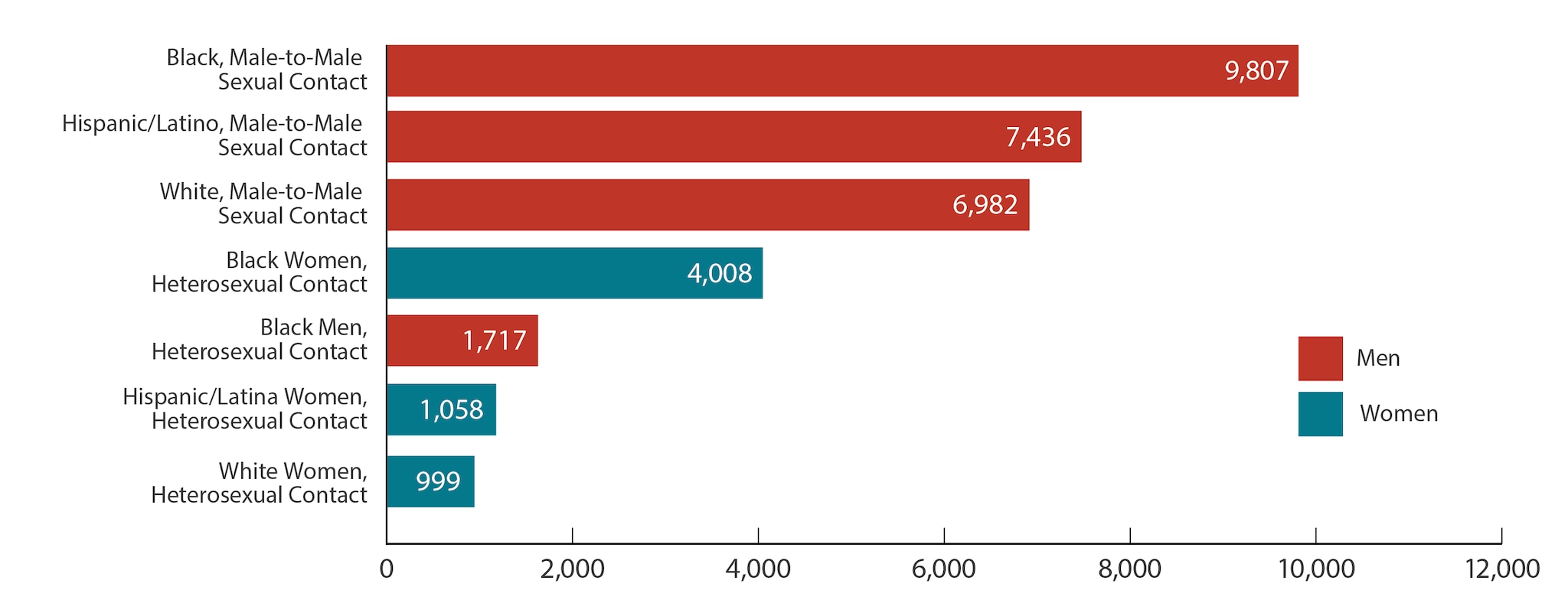
men having sex with men have the highest HIV rates this is from the CDC in the U.S.A where most men are circumcised
circumcision is big businessBoom. Pure Science:
https://www.cps.ca/en/documents/position/circumcision
https://www.webmd.com/sexual-conditions/guide/circumcision
https://www.healthline.com/health/mens-health/circumcised-vs-uncircumcised#risk-of-cancer
https://www.ncbi.nlm.nih.gov/pmc/articles/PMC2878423/
https://www.parents.com/baby/care/bath/facts-and-feelings-about-circumcision/
Foreskins For Sale
"Parents should be wary of anyone who tries to retract their child's foreskin, and especially wary of anyone who wants to cut it off. Human foreskins are in great demand for any number of commercial enterprises, and the marketing of purloined baby foreskins is a multimillion-dollar-a-year industry."
Where Is My Foreskin? The Case Against Circumcision
Paul M. Fleiss, MD
Mothering (The Magazine Of Natural Family Living)
Winter 1997, page 39
Since the 1980s, private hospitals have been involved in the business of supplying discarded foreskins to private bio-research laboratories and pharmaceutical companies who require human flesh as raw research material. They also supply foreskins to transnational corporations such as Advanced Tissue Sciences of San Diego, California, [1] Organogenesis, [2] and BioSurface Technology, [3] who have recently emerged to reap new corporate profits from the sale of marketable products made from harvested human foreskins. In 1996 alone, Advanced Tissue Sciences could boast of a healthy $663.9 million market capitalization performance.[4]
A short history of the institutionalization of involuntary sexual mutilation in the United States. Hodges F. in: Denniston GC, Milos MF (eds). Sexual Mutilations: A Human Tragedy. New York: Plenum Press. 1997:17-40.
[1]. Forget pork bellies, now it's foreskins. Manson B. San Diego Reader (May 4, 1995): 12, 14 passim.
[2]. New skin twin life- and look-save. Brewer S. Longevity (September 1992): 18.
[3]. Companies see $1.5b market in replacement skin products. Rosenberg R. Boston Globe (October 19, 1992): 22-23.
[4]. Biotech's Big Discovery. Hall CT. San Francisco Chronicle. October 25, 1996: E1, E4.
.
The after market for human foreskin is where the real money is made. Foreskins are sold to biomedical companies, which use them in the manufacture of insulin. They're also sold to middlemen, who package them for sale to research companies that in turn use them for biochemical analysis. Corporations such as Advanced Tissue Sciences (ATS), Organogenesis, BioSurface Technology, Genzyme, and Ortec International are taking cells from amputated foreskins and experimenting with artificial skin. Products like Dermagraft-TC, which sells for about $3,000 per square foot, are grown from the cells in infant foreskins and used as a temporary wound covering for burn patients. One foreskin contains enough genetic material to grow 250,000 square feet of skin.
Circumcision. Daecher M. Icon 1998;2(2):70-3.
.
ICCPR's [International Covenant on Civil and Political Rights, UN GA Resolution 2200 A (XXI)] slavery, forced labor, and traffic in persons includes the industry of a growing number of American medical hospitals and medical professionals colluding with scientific agencies harvesting neonatal foreskins for skin grafts, i.e., as compulsory organ donation.
Associations like Organogenesis (Canton, MA) have received approval from the USA's Food and Drug Administration (FDA) for its foreskin-based GraftskinTM, and has served Western Pennsylvania Hospital, with additional studies conducted at Yale University and Boston University (Stephen Brewer, New Skin Twin Life- and Look-Saver. Longevity September 1992: 18).
Another profit-oriented tissue engineering company, Advanced Tissue Sciences (La Jolla, CA), retrieves foreskins from hospitals so one foreskin can create 250,000 square feet of dermis ... [T]he annual market for dermis could be $1 billion to $2 billion. Advanced Tissue Sciences has sold about $1 million worth of cultured dermis to Proctor & Gamble, Helene Curtis, and other such businesses for pre-market testing. Advanced Tissue Science's foreskin-derived merchandise held a $32 million stock offering in the beginning of 1992 (Julie Pitta. Biosynthetics. Forbes 10 May 1993: 170-171). [The 32-page Advanced Tissue Sciences, Inc. 1997 Annual Report refers to "fibroblasts" but does not contain the word "foreskin."]
A Boston Globe frontispiece to its Business section reads: Companies See $1.5b Market in Replacement Skin Products. This article reveals another enterprise of genital mutilation-cum-scientific advance: BioSurface Technology of Cambridge, MA. All three companies face no shortage of hoarding and retailing foreskins, and are motivated by individuals like Dr. Tania Phillips, professor of dermatology at Boston University of Medicine, insisting foreskin gathering and cultivating is scientifically and technologically "very promising." (Ronald Rosenberg. 19 October 1992: 22-23).
The International Human Rights Challenge of Genital Mutilation & the United Nations: Initiating a Global Dialogue on the Transcultural, Multireligious, & Interdisciplinary Dimensions of Appropriating Universal Human Rights Paradigms. Zavales A. Ecumenics International Press, 1994, p. 49, footnote 34.
.
THE WOODLANDS, Texas--(BUSINESS WIRE)--May 16, 1995-- LifeCell Corporation (Nasdaq:LIFC) today announced the culturing of human neonatal foreskin keratinocytes onto AlloDerm(R), LifeCell's universal dermal tissue graft, to form a fully differentiated, epidermal skin layer which was then successfully grafted to an animal model. The research demonstrates the potential for generating a durable, off-the-shelf cultured skin graft product which exhibits reduced complications from blistering or scarring, according to Paul Frison, president and chief executive officer ... CONTACT: LifeCell Corporation, The Woodlands / Jane Lea Hicks, 713/367-5368.
The Internet. Transmitted: 95-05-16.
.
One educated nurse from San Antonio told me they have to save infants' amputated foreskins because the hospital's Department of Oral Surgery uses them for reconstructive surgery of the inner lining of the mouth!
Report on the 1995 American Academy of Pediatrics San Francisco Convention. DeSeabra R. Intact Network Newsletter 11/1/95.
.
Lajolla, California. A U.S. Food and Drug (FDA) Committee recommended FDA approval of Dermagraft, artificial skin made from circumcised baby foreskins to treat diabetic foot ulcers, on condition that manufacturer Advanced Tissue Sciences, Inc., do a post-marketing study. NOCIRC's attorney was given just five minutes to speak to the Committee in defense of the babies whose foreskins are cut off a marketed without their consent.
NOCIRC Annual Report, Spring 1998
.
Into these tubs, the workers add skin cells harvested from the foreskins of circumcised newborns ... The two companies are independently seeking approval: Organogenesis Inc. of Canton, Mass and Advanced Tissue Sciences Inc. of La Jolla, Calif ... each starts with a baby's foreskin, a consistent, readily available source. Plus young skin grows better. One piece of foreskin can produce four acres of engineered skin with a five-day shelf life."
The Latest From The Labs: Human Skin, The FDA is about to approve
commercial use of living tissue grown by two biotech outfits.
Business Week, May 1998, Science and Technology, page 118-122
.
WASHINGTON (Reuters) - A new product made of human skin cells won FDA approval for use in treating certain kinds of wounds Tuesday [May 26, 1998].
The product, called Apligraf, is made of human skin cells mixed with collagen from cattle. It is made by Canton, Massachusetts-based Organogenesis.
The Food and Drug Administration said it had approved the product for use in treating venous skin ulcers, which are hard to heal because of a lack of blood flow to the skin.
"This condition is estimated to affect thousands of Americans each year, and its treatment often requires multiple surgeries," the FDA said in a statement.
"Although Apligraf will not eliminate the need for standard treatment, it use may enhance and shorten the healing process."
Novartis Pharmaceuticals Corp. has global marketing rights to Apligraf, the company said in a statement.
In addition to venous leg ulcers, Apligraf has been studied in burns and in skin surgery. A trial is under way in diabetic ulcers and one is expected to begin in bedsores, also known as pressure sores, later this year.
Experts say tissue engineering is starting to transform the way patients with flesh wounds are being treated.
Apligraf is made with live cells from the foreskin of a newborn's penis -- used because babies are regularly circumcised and the tissue is young and available -- mixed with tissue from a cow.
"Its special composition allows it to provide wound protection and to foster the growth of healthy new skin," the FDA said.
Reuters, 29 [?] May 1998
http://www.foreskin.org/f4sale.htm
Kate Beckinsale is the latest celebrity to try the treatment, which uses a serum derived from babies’ circumcised penises
https://www.theguardian.com/fashion...skin-facial-kate-beckinsale-serum-anti-ageing
https://www.dailymail.co.uk/news/ar...odd-beauty-treatment-involving-foreskins.html
this is why circumcision is always pushed cosmetic companies and biotech companies make money from cutting males
https://www.theguardian.com/fashion...skin-facial-kate-beckinsale-serum-anti-ageing
https://www.dailymail.co.uk/news/ar...odd-beauty-treatment-involving-foreskins.html
this is why circumcision is always pushed cosmetic companies and biotech companies make money from cutting males
I watched this documentary two nights ago and was going to start a thread on this too.Watched part of a documentary on this last night on Netflix before I dozed off. Something that has probably been discussed here before, but I never thought about it much before. Although I am quite happy to be cut, I probably didn't enjoy it at the time, but can't remember,thankfully.
The film started out with a disturbing close up of an infant lying down about to be circumcised. The look on his face was kind of heartbreaking. He seemed to be aware something was about to happen to him but was helpless and frightened.
The documentary included lots of repetitive droning on and on which didn't help. But made me think. How much suffering is inflicted. Do they make it as painless as possible. Quite the trauma on an infant.
The health benefits seemed to be debunked. Seemed to be more of a medical cult aspect to it all. The proponents of it came across as full of shit. What with statistics etc.
So is having a foreskin just another of nature's mistakes? Seems that it is practiced around the world on a tribal ritual basis. Some primitive cultures use it as a rite of passage. Young men can opt out, but that disqualifies them from access to pussy. This is in cultures where they put it off till adolescence.
Jim Jeffries said he had his son circumcised so women would enjoy putting his dick in their mouths. He castigated the uncircumcised in the crowd for being disgusting. "it's not even a fetish in porn" Milo Yiannopolous said it is "just good grooming"
Lack of smegma would be a strong argument for having it done. I dunno.
I know many women and families that shar the sediments of the documentary so they opted not to have the operation done on their son's. One of my friends who is Jewish has two boys and wouldn't allow either of his sons to have the procedure done despite himself being cut.
I agree with what others have said. I don't think anyone should have the right to chop off a part of your body without your consent until your an adult (meaning you need to be at 18).
One of the guys in the documentary committed suicide shortly after because he could never get over the emotional scars.
Are you old enough to be on this board?Canada-Man, that is Bunk Science!!! Those women just wanted the "Anteater" to feel better about themselves! New Zealand doesn't even have real doctors! It is like you're referencing study from Estonia...
Lick her pussy, spit on your dick, rub her clit, kiss her mouth, suck on her tits and fuck her like a real CUT man! A cut man doesn't worry about their weapon as it is ready to go!
"Anteaters" need to be treated gently... Their feelings are hurt faster than their torn foreskin.
Come on, CUT BROTHERS! Let's turn this into a 12 page thread!
As with the majority of the world.In the UK it is just the opposite.
In Canada the circumcision rate is 32%(2003 stats)I was surprised to learn that in Canada and US 90% are circumcised. In the UK it is just the opposite.
In Canada, the rate is only 32% however the vast majority of older Canadian men will be cut and in Ontario and Alberta the rate is much higher at around 45% of newborns being cut.I was surprised to learn that in Canada and US 90% are circumcised. In the UK it is just the opposite.
https://www.huffingtonpost.ca/2016/05/02/male-circumcision_n_9722692.html
In the US circumcision is still done on the vast majority of men. In 2010, the rate was 77% of newborns being cut.
https://www.cbsnews.com/news/circumcision-rates-declining-health-risks-rising-study-says/
lol, ok, circ dicks don't have cottage cheese, :der: it's a wonder you even have one.Here we go again ...with the circumcision thread LOL Girls love circumcised dick, no cottage cheese when they pull down the skin...:rofl:
