Carney Makes An Absurd Statement

niniveh

Well-known member
Jun 8, 2009
2,170
1,284
113
Cool, so you have been giving all the intel Carney has to be able to clearly say without a shadow of a doubt he's lying? I'm so impressed you have been given a security clearance while Pee Pee has refused to get his. Well done, Niniveh, well done.
Are you being silly for the sake of argument or are you really that daft. Go read ( they're in English) DNI reports (all unclassified).
 

squeezer

Well-known member
Jan 8, 2010
28,633
23,823
113
Are you being silly for the sake of argument or are you really that daft. Go read ( they're in English) DNI reports (all unclassified).
I see, so you see what the PM sees, and I'm the one being silly?? Gotcha...

Follow up: so should have Carney completely shit on Trump and rip into him for going into Iran when Trump is trying to Taco out of it right before trying to reason with the Madman about tariffs and CUSMA? Tell me how silly I am in thinking that would be a very stupid way to proceed into the negotiations with a madman.
 

HungSowel

Well-known member
Mar 3, 2017
3,454
2,454
113
It is just an attempt to kiss up to Trump. Carney waited until he was sure the hostilities are over to make the statement, otherwise his statement might have had an actual impact. If hostilities resume, then Carney will probably try to walk it back.
 

HungSowel

Well-known member
Mar 3, 2017
3,454
2,454
113
I think Carney is going to contribute to the 300 billion rebuilding slush fund to curry favor with Trump over CUSMA. Carney is just laying the lubrication now for that eventuality.
 

squeezer

Well-known member
Jan 8, 2010
28,633
23,823
113
O’Toole on navigating CUSMA negotiations | CTV Power Play with Vassy Kapelos


niniveh

Well-known member
Jun 8, 2009
2,170
1,284
113
"Conflict was worth it......if it means Iran will not have nuclear weapons".

If he is trying to impress Trump by repeating the WH slogans and trying to get a better deal on CUSMA he is more delusional than I had imagined.
No condemnation of an illegal, immoral war of agression from a guy who was pretentitious enough to write a tome on VALUES.
Really Mark Carney, Worth It?


The Costs of the Iran War: Thousands of Lives and Billions of Dollars
The human toll and economic costs mounted rapidly after the United States and Israel attacked Iran on Feb. 28.


Listen · 5:30 min

  • Share full article


Service members carrying the remains of one of six U.S. soldiers killed in Kuwait during the dignified transfer at Dover Air Force Base in March.Credit...Tierney L. Cross/The New York Times
Edward WongAruni Soni
By Edward Wong and Aruni Soni
Edward Wong reported from Washington, and Aruni Soni reported from New York.
June 19, 2026, 5:04 a.m. ET


The war against Iran lasted just over 15 weeks before a preliminary U.S.-Iranian peace deal was reached this week. But the human and economic toll mounted rapidly, with consequences far beyond the region.
Facing pressure at home and abroad, President Trump announced on Monday that he and Vice President JD Vance had electronically signed a document with the Iranians formally ending the war, which began on Feb. 28 when the United States and Israel attacked Iran.
On Wednesday, the president signed the agreement again in France at the Palace of Versailles, where an ill-fated treaty was signed to end World War I more than a century ago.
The costs of the war are still being tallied as a 60-day period for further negotiations begins. Here is what we know.


Death Toll
Image

A funeral in April for three emergency workers killed during an Israeli strike in Tyre, Lebanon.Credit...Daniel Berehulak/The New York Times
More than 3,000 Iranians were reported to have been killed in the conflict. Israel says 26 Israelis have been killed. Thousands of people in both countries have been injured.
The U.S. military says 13 of its members have been killed.
Israel renewed attacks on Lebanon on March 18 as part of the wider war, and about 3,700 people have been killed there, according to Lebanon’s health ministry.
Strikes, mainly by Iran, have also killed people across the Middle East, including workers from South Asian countries in the Persian Gulf.
The U.S. military killed three Indian civilian sailors in a strike on a commercial ship near Oman, raising tensions between the United States and India.


In the deadliest known civilian casualty incident, a U.S. missile strike demolished an Iranian school, killing at least 175 people on the first day of the war, according to Iranian officials.
Financial Costs
Image

The U.S. Navy aircraft carrier Gerald R. Ford arriving in Greece after participating in operations against Iran.Credit...Carl Court/Getty Images
Iran’s economy was already deeply troubled before the war. But now it is in free fall. Prices for food and other basic goods have skyrocketed, and daily life is a struggle.
The scale of devastation has been great, with hundreds of schools and health care facilities damaged or destroyed in the war, according to the Iranian Red Crescent Society, the country’s primary humanitarian relief organization.
For U.S. taxpayers and consumers, the cost of the war is at least $132 billion, according to an estimate by Moody’s Analytics. That factors in military spending, rising energy and commodity prices and interest rates, said Mark Zandi, the company’s chief economist.


A top Pentagon official told Congress last month that the cost had risen to around $29 billion for the military. That estimate did not include the price of repairing more than a dozen U.S. bases in the region damaged by Iranian attacks.
The costs of repair and maintenance, as well as keeping carrier strike groups at sea, also need to be factored in. “It costs a lot of money to just keep everyone and all this apparatus deployed there,” said Linda Bilmes, a public finance expert and senior lecturer at the Harvard Kennedy School.
Iran also severely damaged other U.S. assets in the region, including a valuable military radar jet on a tarmac in Saudi Arabia and the U.S. Embassy compound in Riyadh.
Energy Prices
Image

Credit...The New York Times
Americans have paid roughly $60 billion more for gasoline and diesel since the conflict began as a result of higher prices, according to an Iran War Energy Cost Tracker from Brown University. That’s about an extra $460 per household.


When the United States and Israel started the war with Iran, Americans were paying, on average, $2.98 a gallon at the pump, according to AAA, the motor club.
Since then, gas prices have seen large spikes and are now around $4 a gallon.

How High Are Gas Prices Where You Live?

Oil prices surged when the Iranian military attacked some commercial ships in the Strait of Hormuz, a vital passageway for shipping. That disrupted the global flow of petroleum. Crude oil is the main ingredient for gas.
The global benchmark for crude oil has dropped since a peace agreement framework was announced days ago. It is currently near $80 a barrel. At one point in March, prices climbed to around $120 a barrel.
Those high fuel prices have trickled down the chain and inflated many other costs tied to fuel, like airline fares and the transportation of commodities and manufactured goods.


Fertilizer and Food
Image

A grocery store in Kalispell, Mont.Credit...Aaron Agosto for The New York Times
Disruptions to global trade from the closure of the Strait of Hormuz have squeezed prices of commodities such as sulfur, a key ingredient of certain fertilizers.
A Council on Foreign Relations report earlier this month by Máximo Torero Cullen, the chief economist of the Food and Agriculture Organization, said the disruptions in the strait would have consequences that “extend well beyond agriculture, threatening higher food prices, higher food inflation, reduced economic growth and increased hunger worldwide.”
Farnaz Fassihi contributed reporting.
Edward Wong reports on global affairs, U.S. foreign policy and the State Department for The Times.
See more on: U.S. Politics
 

Frankfooter

dangling member
Apr 10, 2015
114,256
35,434
113
I see, so you see what the PM sees, and I'm the one being silly?? Gotcha...

Follow up: so should have Carney completely shit on Trump and rip into him for going into Iran when Trump is trying to Taco out of it right before trying to reason with the Madman about tariffs and CUSMA? Tell me how silly I am in thinking that would be a very stupid way to proceed into the negotiations with a madman.
Yes.

Trump is so senile there is no point holding back, he won't remember tomorrow. Nothing Carney says will impact the daily rant or stupid statement from trump and he's got bigger things to worry about now. His entire party will be after him for Iran, Israel is going to drop whatever dirt they have on him as they panic about peace. The american economy is in the tanks, he's less popular than Nixon and they can't keep him awake for 20 minutes straight.

This is what's on trump's mind.


niniveh

Well-known member
Jun 8, 2009
2,170
1,284
113
Yes.

Trump is so senile there is no point holding back, he won't remember tomorrow. Nothing Carney says will impact the daily rant or stupid statement from trump and he's got bigger things to worry about now. His entire party will be after him for Iran, Israel is going to drop whatever dirt they have on him as they panic about peace. The american economy is in the tanks, he's less popular than Nixon and they can't keep him awake for 20 minutes straight.

This is what's on trump's mind.


Global Notes
The Spectacular Failure and Ruinous Costs of the Iran War
Even though an agreement has been reached, nations around the world will be feeling the effects of the war for some time.

By Ishaan Tharoor
June 18, 2026
Donald Trump points with an American flag in the background.

Photograph by Mandel Ngan / AFP / Getty


You’re reading Global Notes, Ishaan Tharoor’s weekly column on international politics.
“Ships of the world, start your engines,” President Donald Trump urged Sunday, on Truth Social. “Let the oil flow!” He was writing after announcing an apparent deal with Iran to halt the ongoing war and reopen the Strait of Hormuz, a choke point in global supply chains which the Iranian regime has largely blocked since the United States and Israel began their bombing campaign at the end of February. The terms of the initial memorandum of understanding were leaked in the media and later corroborated by U.S. officials. The memorandum also provides for an end to the U.S. blockade of Iranian ports and vessels, and an over-all cessation of hostilities, including in Lebanon, which is in the grip of an Israeli invasion. In the early phase of the war, Trump said he was gifting Iranians a chance to overthrow their theocratic rulers, but, though weakened, the regime remains in place, as does its arsenal of ballistic missiles and other offensive capabilities. Over the weekend, Trump told the Wall Street Journal that he “never cared about regime change” and that the current leadership in Tehran marked “the most rational group yet.” According to the leaked draft, Iran will vow not to pursue nuclear weapons, a reiteration of a pledge made many times before. Reports also suggest that Iran expects to receive, through some unspecified payment mechanism, potentially hundreds of billions of dollars in de-facto reparations for damage caused by the war. A number of regional intermediaries, including Pakistan and Qatar, helped broker this framework agreement, which was reportedly signed by Trump and Iranian officials on Wednesday, two days before an announced signing ceremony in Switzerland was supposed to take place. Israel appears to have been sidelined as the truce was worked out, much to the chagrin of its political leadership.
 

nuta22

Well-known member
Feb 15, 2004
284
259
63

niniveh

Well-known member
Jun 8, 2009
2,170
1,284
113
Frank I agree with you

the con is on and all politicians are involved

maybe one day we will realize that it's not left against right

it's us against them

and the them are represented by governments all over the world


Opinion | Trump’s Iran deal is a disaster. Why is Carney so pleased about it?
Updated 20 mins ago
June 19, 2026
3 min read
Save
Gift this article


(119)

How Trump decided to sign a deal with Iran at Versailles palace (copy)

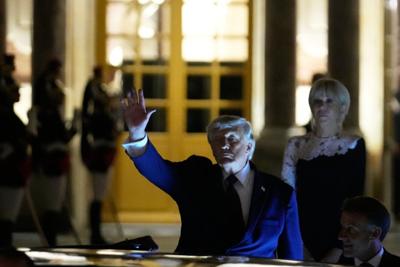
U.S. President Donald Trump departs following a dinner at the Palace of Versailles, in France, on June 18, 2026.
Michel Euler/The Associated Press


Justin-Ling
By Justin LingStaff Columnist
Justin Ling is a staff columnist for the Star and an investigative journalist based in Montreal. Reach him by email: jling@thestar.ca

Mark Carney says Donald Trump’s peace deal with Iran is a “game changer.”
If that game is Risk, then the U.S. president just rolled snake eyes, announced he didn’t want to play anymore and began eating some of the plastic soldiers.
I remain perplexed as to why our prime minister continues to commend a war that has always been an unmitigated disaster, but that’s what he’s been doing. “We’re very pleased with the deal that’s been struck,” Carney told CNN this week. “It’s exceeded my expectations.”
Mark Carney touts U.S.-Iran peace deal as a ‘game-changer’ that could shift wars in Ukraine and Lebanon
Federal Politics
Mark Carney touts U.S.-Iran peace deal as a ‘game-changer’ that could shift wars in Ukraine and Lebanon

It’s great news that Trump’s misguided war on Iran is over, but the terms of his deal with the regime are nothing short of calamitous.


Over the past four and a half months, Trump and his minions have insisted this war is necessary to free the Iranian people, topple Tehran’s murderous mullahs, install a more pliable Ayatollah, destroy Iran’s ballistic missile program, stop Iran from acquiring a nuclear weapon, prevent an imminent attack on the United States and/or Israel, preserve international access to the Strait of Hormuz, cut off funds to Hamas and Hezbollah and permanently neutralize the threat Iran poses to the world.
With the war at an end (probably, at least for now), he has not managed a single one of those things. In most cases, he has accomplished the opposite.
The text of Trump’s peace deal, termed a memorandum of understanding, essentially gives Iran everything it wants — and then some.
Before the war, Iran claimed control over the Strait of Hormuz, but few took that claim seriously, and Tehran exercised little of its supposed power there. The war showed that the state could readily throttle traffic in the strait, particularly oil tankers. The new MOU recognizes Iran’s shared control (with Oman), opening the door for the country to charge huge transit fees to any ships passing through. That alone could raise billions of dollars for a regime that, recall, was broke and faced with widespread unrest earlier this year.
Trump’s regime change also didn’t quite work as planned. (Meet the new Ayatollah Khamenei, same as the old Ayatollah Khamenei.) And the president has given Iran’s supreme leader a giant welcome present: total sanctions relief, waivers for Iran to sell crude oil — and a $300 billion slush fund for the regime to boost economic development (and fund its proxies in Palestine, Yemen and Lebanon).
That money could also build a lot of ballistic missiles, as Iran is free to do under the terms of the peace deal. Asked about it earlier this week, Trump shrugged and said, “If other countries have them, it’s a little unfair for them not to have some.”


Gargoyles in the Trump administration and the media have been out in full force, lauding the deal for putting an end to Iran’s nuclear program. Except it doesn’t do that at all.
The MOU clearly states that Iran agrees not to “procure or develop nuclear weapons,” and to dispose of its stockpile of enriched uranium (which, according to U.S. intelligence, has been trapped underground since an American bombing run last year). Not much of a win there. Iran hasn’t had a nuclear weapons program since 2003, and the peace deal says nothing about the country’s uranium enrichment program — it stipulates only that “Iran will maintain the current status quo of its nuclear program,” pending a final deal.
This is significantly weaker than President Barack Obama’s 2015 deal, which severely limited Iran’s ability to enrich uranium. Trump killed that one in 2018.
One of the diciest parts of this deal concerns Lebanon. Iran has long insisted further hostilities against Lebanon would (and do) constitute a violation of any ceasefire. It’s arguably the most sympathetic position Iran has taken thus far, given Beirut’s civilian government has pleaded for the ceasefire to be respected. And the MOU is iron-clad: The U.S. and “their allies” must respect Lebanon’s sovereignty and territorial integrity, and accept “permanent termination of the war on all fronts, including in Lebanon.”
Well, Trump clearly didn’t run that passage by Benjamin Netanyahu. The Israeli prime minister has been throwing brazen, lawless attacks at Lebanon for more than two years, despite two separate ceasefire deals. In the months since the last ceasefire, agreed to in April, Israel has killed more than 1,000 people in Lebanon, including dozens of children and health-care workers. Israeli troops are pushing deeper into the country and may try to annex parts of it.
The war in Iran has not achieved a single one of Trump’s incoherent objectives. Conflict still looms, the regime is emboldened and enriched, and American prestige has become even more of a punchline. Given all this, it’s absurd that Carney has opted to endorse the war, repeat fallacious casus belli and celebrate total U.S. capitulation as if it were some masterful gambit.
Strategic flattery is today’s diplomatic weapon of choice — but, as former Canadian foreign minister Lloyd Axworthy writes in the Star: “Canada’s long-held leadership in preventing war, mitigating its impacts, protecting civilians and building peace is being replaced by ‘let’s make a deal.’”
Perhaps Carney should stop playing Risk and take up Diplomacy instead.
 

nuta22

Well-known member
Feb 15, 2004
284
259
63
Opinion | Trump’s Iran deal is a disaster. Why is Carney so pleased about it?
Updated 20 mins ago
June 19, 2026
3 min read
Save
Gift this article


(119)

How Trump decided to sign a deal with Iran at Versailles palace (copy)

U.S. President Donald Trump departs following a dinner at the Palace of Versailles, in France, on June 18, 2026.
Michel Euler/The Associated Press


Justin-Ling
By Justin LingStaff Columnist
Justin Ling is a staff columnist for the Star and an investigative journalist based in Montreal. Reach him by email: jling@thestar.ca

Mark Carney says Donald Trump’s peace deal with Iran is a “game changer.”
If that game is Risk, then the U.S. president just rolled snake eyes, announced he didn’t want to play anymore and began eating some of the plastic soldiers.
I remain perplexed as to why our prime minister continues to commend a war that has always been an unmitigated disaster, but that’s what he’s been doing. “We’re very pleased with the deal that’s been struck,” Carney told CNN this week. “It’s exceeded my expectations.”
View attachment 608136
Federal Politics
Mark Carney touts U.S.-Iran peace deal as a ‘game-changer’ that could shift wars in Ukraine and Lebanon

It’s great news that Trump’s misguided war on Iran is over, but the terms of his deal with the regime are nothing short of calamitous.


Over the past four and a half months, Trump and his minions have insisted this war is necessary to free the Iranian people, topple Tehran’s murderous mullahs, install a more pliable Ayatollah, destroy Iran’s ballistic missile program, stop Iran from acquiring a nuclear weapon, prevent an imminent attack on the United States and/or Israel, preserve international access to the Strait of Hormuz, cut off funds to Hamas and Hezbollah and permanently neutralize the threat Iran poses to the world.
With the war at an end (probably, at least for now), he has not managed a single one of those things. In most cases, he has accomplished the opposite.
The text of Trump’s peace deal, termed a memorandum of understanding, essentially gives Iran everything it wants — and then some.
Before the war, Iran claimed control over the Strait of Hormuz, but few took that claim seriously, and Tehran exercised little of its supposed power there. The war showed that the state could readily throttle traffic in the strait, particularly oil tankers. The new MOU recognizes Iran’s shared control (with Oman), opening the door for the country to charge huge transit fees to any ships passing through. That alone could raise billions of dollars for a regime that, recall, was broke and faced with widespread unrest earlier this year.
Trump’s regime change also didn’t quite work as planned. (Meet the new Ayatollah Khamenei, same as the old Ayatollah Khamenei.) And the president has given Iran’s supreme leader a giant welcome present: total sanctions relief, waivers for Iran to sell crude oil — and a $300 billion slush fund for the regime to boost economic development (and fund its proxies in Palestine, Yemen and Lebanon).
That money could also build a lot of ballistic missiles, as Iran is free to do under the terms of the peace deal. Asked about it earlier this week, Trump shrugged and said, “If other countries have them, it’s a little unfair for them not to have some.”


Gargoyles in the Trump administration and the media have been out in full force, lauding the deal for putting an end to Iran’s nuclear program. Except it doesn’t do that at all.
The MOU clearly states that Iran agrees not to “procure or develop nuclear weapons,” and to dispose of its stockpile of enriched uranium (which, according to U.S. intelligence, has been trapped underground since an American bombing run last year). Not much of a win there. Iran hasn’t had a nuclear weapons program since 2003, and the peace deal says nothing about the country’s uranium enrichment program — it stipulates only that “Iran will maintain the current status quo of its nuclear program,” pending a final deal.
This is significantly weaker than President Barack Obama’s 2015 deal, which severely limited Iran’s ability to enrich uranium. Trump killed that one in 2018.
One of the diciest parts of this deal concerns Lebanon. Iran has long insisted further hostilities against Lebanon would (and do) constitute a violation of any ceasefire. It’s arguably the most sympathetic position Iran has taken thus far, given Beirut’s civilian government has pleaded for the ceasefire to be respected. And the MOU is iron-clad: The U.S. and “their allies” must respect Lebanon’s sovereignty and territorial integrity, and accept “permanent termination of the war on all fronts, including in Lebanon.”
Well, Trump clearly didn’t run that passage by Benjamin Netanyahu. The Israeli prime minister has been throwing brazen, lawless attacks at Lebanon for more than two years, despite two separate ceasefire deals. In the months since the last ceasefire, agreed to in April, Israel has killed more than 1,000 people in Lebanon, including dozens of children and health-care workers. Israeli troops are pushing deeper into the country and may try to annex parts of it.
The war in Iran has not achieved a single one of Trump’s incoherent objectives. Conflict still looms, the regime is emboldened and enriched, and American prestige has become even more of a punchline. Given all this, it’s absurd that Carney has opted to endorse the war, repeat fallacious casus belli and celebrate total U.S. capitulation as if it were some masterful gambit.
Strategic flattery is today’s diplomatic weapon of choice — but, as former Canadian foreign minister Lloyd Axworthy writes in the Star: “Canada’s long-held leadership in preventing war, mitigating its impacts, protecting civilians and building peace is being replaced by ‘let’s make a deal.’”
Perhaps Carney should stop playing Risk and take up Diplomacy instead.
it's all a big "Kabuki theater"

he says one thing today and opposite tomorrow

you can't figure this guy out

and behind the curtain the real game is being played

and we really have no idea what is going on

except that most likely, it's going to cost us more money
 
Ashley Madison
Toronto Escorts