


In this climate of uncertainty I cannot help but notice a major increase in whorophia. Sex work has always been stigmatise but some of us sometimes step up for our community like in this article in The Star yesterday.
I felt touched by her words as I can clearly relate receiving threats and others on a daily basis. Maybe sharing that here will open further discussion in the right direction.
The Ontario government shut down strip clubs. More so, they’ve continued to dehumanize sex workers, like myself
ByxxBarbara SarpongxxContributor
Fri., Oct. 2, 2020
I have to admit when I was initially approached to write this article, I was very reluctant. As a dancer in a strip club, the current media attention, as well as our government’s actions surrounding sex work, has been dehumanizing for me and my peers.
In this time of a pandemic — when we’re all doing our best to stay afloat — bars can remain open, casinos can reopen, but sex work continues to be mocked. As fellow dancer Nicki Rampage said, “We just want to keep our regulated safe work environment. We are happy to continue with mask wearing, all the safety precautions, and the new curfew. We just don’t want the industry to be singled out and shut down.”
If those other establishments are allowed to open, why aren’t we able to continue working?
As a Black woman, a dancer, and a mother, I hope to bring to light the unseen and unheard struggles. I am hopeful we can move toward the destigmatization of the industry, because after all, sex work is work.
The day starts when my alarm goes off. I get up, meditate, exercise, squeeze in a healthy breakfast, and set goals for the day. I am on my way to work, but I don’t walk into an office. I walk into a strip club. The morning routine remains the same whether it’s 9 a.m. or 9 p.m.
My job is solely commission based. I go to work, typically not expecting a pay cheque. As an independent contractor, I receive no company benefits, and have to pay a floor fee the establishment charges to work there. If I do not gross any commission from the evening’s sales and gratuities from customers, I'll be leaving work with less money than I came with. It is literally the cost of doing business.
It is a risk that dancers face on a regular basis. There can be many hidden costs of doing business within the industry. Some direct out of pocket expenses consist of licensing fees, criminal background checks, transportation and accommodation if working out of town. Add hair, makeup, wardrobe and it can sometimes feel like a full performance art production.
Other realities are less visible, such as struggling to fill a resume, as well as the generally accepted misogynistic attitude toward sex workers in our society. Constant rejection and being judged on a regular basis allows one to develop a thick skin, and, an entertainer definitely needs one. But why is my work different than yours if it feeds my family and I?
Another common question a dancer gets asked is ‘Do you like your job,’ or ‘Why are you doing this?
I enjoy my job. My coworkers have become a part of my social circle. We share stories, create memories, build relationships. This job has given me the opportunity to network, travel, expand my knowledge, cross things off my bucket list, develop business etiquette, and form bonds with regulars who are supportive of the industry. It has also allowed me to be in control of my schedule as much as one would hope to be. To be honest, it would be my dream job if I could do it forever. Who wouldn’t be enticed by the opulence and the freedom often displayed on social media being an entertainer?
Ironically, I didn’t aspire to be a dancer. It usually wasn’t a common aspiration for someone who grew up in a small town. But I had trouble finding a job in spite of my educational background, and was facing lingering student loan debt. So when I realized that I was in my mid 20s, still living at home with $500 to my name, I made the conscious decision to give dancing a try.
I noticed right away that locating a Gentleman’s Club that was eager and willing to hire a Black girl with a darker complexion proved to be difficult. It was an industry reserved for the blond and blue, and this was an obvious roadblock for me. I’ve even had one club charge me $10 more because of a silly technicality that prohibits a certain amount of Black girls from being able to perform on stage at certain times, yet charges dancers in general a penalty of $10 for not doing shows. I’ve been straightforwardly told “no Black girls,” by certain clubs. I’ve even been set up and sabotaged by bouncers and other staff who did not want me to make money in their club. Intersectionality within the industry has always been an issue. Thankfully, the best establishments have understood the need for diversity.
My shift typically starts with preparation in the change room if I don’t show up ready from home. This has been where I’ve personally gotten to know the dancers best because we can talk the most candidly about our experiences. Coming with little information about what a stripper is really like, I discovered that most were regular everyday women who desired moderate returns in their income, and needed flexibility in their schedule. One of the greatest ironies is that some of the most capable athletes, artists, psychologists, and sales representatives work in Gentlemen's Clubs right now, and we might not even realize it. Many move onto other professional ventures. It’s the stigma of stripping that holds us back.
There are many elements to the job. It’s not just dancing and collecting money, like many out there seem to think. The ability to communicate, present oneself, build rapport and set realistic goals which all are elements not just sex work, but any employment opportunity.
My sharing isn’t to simply glorify sex work, but at the very least, humanize sex work. With recent restrictions and shutdowns within the industry, it’s important that voices are heard. Many sex workers are not readily able to share their stories, and there is constant resistance from those who argue to invalidate the industry in general.
At the end of the day, we are all human. Let’s challenge each other to amplify understanding and rise up against the stigmatization of sex work, because sex work is work!
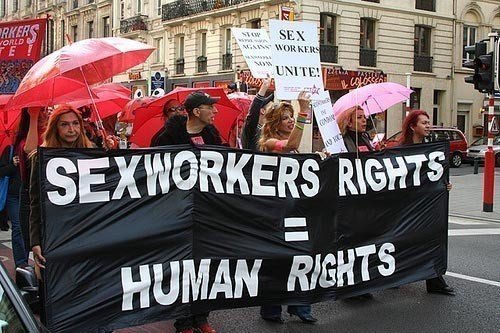

Sex work is work and I agree with her points of SW's being stigmatized by our government and the general public as a whole, I also agree with the experiences she posts about and it's sad to read and see it's still happening in the strip club industry but her argument about strip clubs being unfairly targeted currently during the pandemic is false.
What people need to understand regarding strip clubs re-openings and subsequent shutdowns is this:
The Ontario government (Conservative Doug Ford) was more than fair with the strip clubs about re-openings.
Strip clubs were allowed re opening their establishments before the government allowed bars/nightclubs to reopen which shows that the government treated them more fairly than others, they put the onus on the strip club owners/management, staff (including dancers) and customers to follow the guidelines, but the very high majority in every single category Owners/Management, Staff/Dancers, Customers failed the test miserably.
The strip club owners failed in making sure their staff and customers were adhering to the guidelines. The staff (including dancers) failed in following and enforcing the guidelines on customers. The customers failed in following the set guidelines. But this shouldn't be of any surprise to anyone as the way strip clubs operate (stage shows/contact dances) is something that doesn't combine well with the preventive measures needed (Social distancing/masks) against COVID.
These guidelines are adhering to mask, social distancing rules on the premises meaning not just the floor, but also the VIP and change rooms for staff and having customers follow these rules, as well as other contact tracing and other preventive measures.
Non compliance issues of COVID-19 guidelines is evidence of it and so are the numerous posts on this board. They (owners, staff, customers) have no one to blame but themselves.
When you have someone writing an article using the false argument of "strip clubs are being unfairly targeted" as an attempt to bring awareness to SW's being stigmatized by the general public and our government it takes away her credibility and doesn't help their cause in any way, they are not going to gain any support from the general public which is what is needed if they ever want any changes to the current system, they will even drive people's support away who understand a part of their argument is false.
Important thing to note today SW's are significantly less stigmitized by the general public not withstanding the politicians than they were 10, 20, 30 or even more years ago, view of SW has become a lot more tolerant and understanding in the last few decades in Canada and specially in Ontario.
As fellow dancer Nicki Rampage said, “We just want to keep our regulated safe work environment. We are happy to continue with mask wearing, all the safety precautions, and the new curfew. We just don’t want the industry to be singled out and shut down.”
If those other establishments are allowed to open, why aren’t we able to continue working?
Strip club owners, dancers and the strip club industry in general from the beginning should have taken the guidelines the government set in the fight against the Coronavirus more seriously rather than now claiming they are willing to follow the set guidelines of masks and social distancing as well as others when they didn't to begin with.
They didn't follow the guidelines and now they are complaining and wondering why they are facing secondary shutdowns. The lack of self awareness as a whole by those in the strip club industry is mind boggling.
Last edited:


 , Hence, clients are at high risk due to been in indoor setting for long period of time.


