


You are using an out of date browser. It may not display this or other websites correctly.
You should upgrade or use an alternative browser.
You should upgrade or use an alternative browser.


Diego Maradona RIP
- Thread starter Toronto Passions
- Start date
Sad. One of the greatest ever. That 2nd goal after the “Hand of God” is still amazing.


The Oracle
Pronouns: Who/Cares

It was and is amazing.The greatest goal ever scored.
Sadly, today he would cynically have been taken down before he reached the 18 yard box.

As with many talented people in all walks of life, he was great at his chosen profession but a train wreck
Give the link to your thread?How do I combined my thread in the General Forum with this one?
Give the link to your thread?
https://terb.cc/xenforo/threads/diego-maradona-cardiac-arrest.731265/page-2#post-6880210
True.On a positive note, his “Hand of God” goal, the first goal in the same 1986 match, would have been overturned by VAR.
Actually, I am personally against the VAR technology in soccer. I think the game lose a bit from it.
So what if a referee makes a mistake or fail to see an infraction. It is just a game, being taken too seriously.
When number 10 was on his day he could do anything with the ball . Sad day for me learning of his passing and for the sport .... and with out a doubt one of if not the greatest to ever play the beautiful game ... RIP El Pibe de OroSad. One of the greatest ever. That 2nd goal after the “Hand of God” is still amazing.

Maradona not only scored the greatest goal of the World Cup, what is less well known is that he also delivered the greatest pass during the 1990 World Cup.
The Brazilian defense is bamboozled. I remember it to this day.
The Brazilian defense is bamboozled. I remember it to this day.
I am posting this Eulogy also here, because I think it is very beautiful:
George Galloway: Diego Maradona was audacity personified on the pitch, in life and in causes he supported
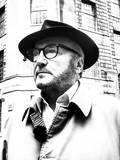
George Galloway
was a member of the British Parliament for nearly 30 years. He presents TV and radio shows (including on RT). He is a film-maker, writer and a renowned orator. Follow him on Twitter @georgegalloway
26 Nov, 2020 11:47
Diego Maradona was an icon and a true people’s hero – just like his own icons, the revolutionaries Fidel and Che.
“A working-class hero is something to be...”
John Lennon’s priceless observation seems to fit like a tracksuit the icon Diego Armando Maradona.
“L’audace, encore l’audace, toujours l’audace.” The slogan of the French revolutionary hero Danton might have been stencilled on the flesh of Diego Maradona alongside his own heroes Fidel Castro (with whom his death anniversary is now eternally entwined) and his compatriot Che Guevara.
Audacity was Maradona’s leitmotif.
I saw him play for Argentina in 1979 in Glasgow when he was just 18, although he had won his first international cap at 16. It was in Glasgow he scored his first international goal but it was a simple one. It was the goal he laid on for a team-mate that day which etched his audacity into my mind, leaving a Scotland team of greats like Kenny Dalgliesh and Alan Hansen with twisted blood as they “birled” this way and that seeking, impossibly, to get to grips with the teenage sensation. They might as well have tried catching moonbeams.
Diego Maradona was born into a family of 10 in impossibly impoverished circumstances in the slum of Villa Fiorito where the only running water came through the roof or ran through the shanty-town in the open sewers.
And as the Guardian obituary – the best I have read so far – put it, he forever-after “carried the whiff of the street urchin about him even as the millions rolled in.”
It was perhaps this which so endeared him to the masses of Naples where his virtual beatification is already underway. For the Italian elite, Africa begins in Naples and there was always a whiff of Africa about Diego Maradona. The condescension of the Italian elite turned into a burning hatred as Maradona carried Napoli to titles and trophies never-before attained. He was always the underdog and beloved by underdogs everywhere.
Fidel Castro, whom I knew well, adored Maradona, once taking off his military jacket and draping it around Maradona’s shoulder. It was one of the most touching of their encounters. The adoration was mutual. Maradona was to his core a revolutionary man.
When he won the World Cup virtually single-handed (five goals, five assists) for Argentina in 1986 – just four years after the Falklands War – the feat required him to slay England on the way. In the game, he scored first with a magnificent header and then with a mazy run beginning well inside his own half, leaving five England players for dead. His leap of joy was unconstrained (as is the Argentine commentary) and had everything to do with the Argentines fallen in the Malvinas.
“We did it for them,” he said. “We knew they had mowed our young men down like little birds.”
A list of Maradona’s causes would take too long but would stretch from Northern Ireland to the Middle East and of course through all righteous struggles in Latin America. His friendships with Fidel, with Hugo Chavez in Venezuela and Daniel Ortega in Nicaragua were based not merely upon the mutual attraction of superstars but on Maradona’s perfectly educated hatred of “Yankee imperialism.” The whiff of the street urchin was not dispelled by his millions. Maradona was a people’s champion.
When I broke the news of his demise to my own six-year-old football prodigy son known by all the parents watching him as the “little Maradona” for his bounce-back ability and dribbling skills, he asked me: “Did he die of the coronavirus?”
“No, son, he died of a heart attack,” I replied.
After a minute’s silence, he asked: “Who attacked his heart, Daddy?”
“Life, son,” I replied. “An extraordinary life.”
Argentina is deep in national mourning, its extravagant relationship with football compounded by its extravagant relationship with one of its greatest sons.
It should be consoled by the wave of sadness rolling in from around the world for the street urchin from the slums of Villa Fiorita. Don’t cry too much, Argentina. The truth is he never left us. He will shine on forever. Eternalmente.
George Galloway: Diego Maradona was audacity personified on the pitch, in life and in causes he supported
George Galloway
was a member of the British Parliament for nearly 30 years. He presents TV and radio shows (including on RT). He is a film-maker, writer and a renowned orator. Follow him on Twitter @georgegalloway
26 Nov, 2020 11:47
Diego Maradona was an icon and a true people’s hero – just like his own icons, the revolutionaries Fidel and Che.
“A working-class hero is something to be...”
John Lennon’s priceless observation seems to fit like a tracksuit the icon Diego Armando Maradona.
“L’audace, encore l’audace, toujours l’audace.” The slogan of the French revolutionary hero Danton might have been stencilled on the flesh of Diego Maradona alongside his own heroes Fidel Castro (with whom his death anniversary is now eternally entwined) and his compatriot Che Guevara.
Audacity was Maradona’s leitmotif.
I saw him play for Argentina in 1979 in Glasgow when he was just 18, although he had won his first international cap at 16. It was in Glasgow he scored his first international goal but it was a simple one. It was the goal he laid on for a team-mate that day which etched his audacity into my mind, leaving a Scotland team of greats like Kenny Dalgliesh and Alan Hansen with twisted blood as they “birled” this way and that seeking, impossibly, to get to grips with the teenage sensation. They might as well have tried catching moonbeams.
Diego Maradona was born into a family of 10 in impossibly impoverished circumstances in the slum of Villa Fiorito where the only running water came through the roof or ran through the shanty-town in the open sewers.
And as the Guardian obituary – the best I have read so far – put it, he forever-after “carried the whiff of the street urchin about him even as the millions rolled in.”
It was perhaps this which so endeared him to the masses of Naples where his virtual beatification is already underway. For the Italian elite, Africa begins in Naples and there was always a whiff of Africa about Diego Maradona. The condescension of the Italian elite turned into a burning hatred as Maradona carried Napoli to titles and trophies never-before attained. He was always the underdog and beloved by underdogs everywhere.
Fidel Castro, whom I knew well, adored Maradona, once taking off his military jacket and draping it around Maradona’s shoulder. It was one of the most touching of their encounters. The adoration was mutual. Maradona was to his core a revolutionary man.
When he won the World Cup virtually single-handed (five goals, five assists) for Argentina in 1986 – just four years after the Falklands War – the feat required him to slay England on the way. In the game, he scored first with a magnificent header and then with a mazy run beginning well inside his own half, leaving five England players for dead. His leap of joy was unconstrained (as is the Argentine commentary) and had everything to do with the Argentines fallen in the Malvinas.
“We did it for them,” he said. “We knew they had mowed our young men down like little birds.”
A list of Maradona’s causes would take too long but would stretch from Northern Ireland to the Middle East and of course through all righteous struggles in Latin America. His friendships with Fidel, with Hugo Chavez in Venezuela and Daniel Ortega in Nicaragua were based not merely upon the mutual attraction of superstars but on Maradona’s perfectly educated hatred of “Yankee imperialism.” The whiff of the street urchin was not dispelled by his millions. Maradona was a people’s champion.
When I broke the news of his demise to my own six-year-old football prodigy son known by all the parents watching him as the “little Maradona” for his bounce-back ability and dribbling skills, he asked me: “Did he die of the coronavirus?”
“No, son, he died of a heart attack,” I replied.
After a minute’s silence, he asked: “Who attacked his heart, Daddy?”
“Life, son,” I replied. “An extraordinary life.”
Argentina is deep in national mourning, its extravagant relationship with football compounded by its extravagant relationship with one of its greatest sons.
It should be consoled by the wave of sadness rolling in from around the world for the street urchin from the slums of Villa Fiorita. Don’t cry too much, Argentina. The truth is he never left us. He will shine on forever. Eternalmente.
Maradona: the Bolivarian Soccer Genius
BY DANNY SHAW – WILLIAM CAMACARO
The fighting peoples of the world lost a humble legend yesterday. Diego Armando Maradona was 60-years-old. Arguably the greatest soccer player to ever grace the pitches, the spirited striker combined unparalleled skills in his sport and an unflinching outspokenness before oppression. No other sports figure’s public statements and transformation has equally captured the changing momentum across Latin America.
The hundreds of thousands of tributes being paid throughout the world portray a particular image: Maradona in close solidarity with the biggest progressive leaders of the social reformist wave embraced by the peoples of Latin America, the so called Pink Tide. In fact, Maradona put to the service of the Bolivarian revolution in Latin America all his fame, his influence and his skilled legs. He embraced the peoples of Cuba, Venezuela, Brazil, Bolivia, Nicaragua, Argentina and more, by developing deep friendships with Fidel, Raúl, Lula, Evo, Hugo, Nicolás, Daniel, the Kirchners, and many more.
Maradona was for the people of South America what Mohamed Ali was for Black America.
The Falklands War
Born in the oppressed community of Villa Fiorito in the outskirts of Buenos Aires, “the golden kid’s” (pibe de oro) talent from an early age fetched him million dollar contracts first in his homeland and then in Barcelona and Napoli.[1] No stranger to controversy, “the soccer god,” with his rebellious natural hair, was irreverent before elites and defiant to the core. When a Spanish player hurled racist epithets at him because of his indigenous ancestry, Maradona headbutted him leading to a brawl that was broadcast before King Juan Carlos, in front of a hundred thousand fans in the stadium and with half of Spain watching on television.
Maradona, who was 22-year-old years old at the time, was radicalized by England’s 1982 Falklands War assault on his homeland, known in Latin America as “la guerra de las Malvinas” and “la guerra del Atlántico Sur”. Causing untold agony and trauma, hundreds of soldiers died on both sides and hundreds of veterans committed suicide for years after. Reagan’s US claimed to be a “mediator” but stayed faithful to their junior colonial partner led by the ultra-conservative Margaret Thatcher.
This was the backdrop of the 1986 semi final showdown between the two countries, without diplomatic relations, at the World Cup in Mexico City. Argentina was South America and South America was Argentina.
During this fateful match, Maradona famously scored a crafty goal where slow motion highlights show he illegally used his hand to redirect the ball into the English net. When the English team accused him after the game at the press conference of cheating by using his hand, he responded that “sería la mano de dios,” “it must have been the hand of god.”[2] Sports analysts applauded the “picardía” or Argentine cunningness behind the maneuver.[3] The second goal was a miracle of human athletic skill. Maradona made a full sprint, starting on the Argentinian side, far from the English goalkeeper, and clearing a path through a minefield of English defenders, to execute a stunning goal that went down in sports history as “the goal of the century.” [4]
These heroic acts sealed Diego’s destiny as an idol of the masses combatting neo-colonialism.
To beat England in Latin America was to exact revenge on the invading enemy. The soccer field was an extension of the battlefield; the arrogant English were expelled. This was the symbolic recuperation of Argentine and South American dignity.[5]
“Patria es humanidad” (“The homeland is humanity”)
Jose Marti wrote that “our homeland is humanity.” The relationship Maradona established with Cuba was the full expression of the Cuban poet’s words.
In 2000, an overweight and beleaguered Maradona travelled to Cuba to treat his drug addiction.[6] Fidel Castro visited him in his worst moments and helped take care of him. The Cuban president took off his military coat and gave it to the patient. Maradona said he adored Fidel because he was “genuine and cared about human problems that others brushed aside.”[7] The down-and-out “wretched of the earth” was not rejected in Havana; he was accepted, treated like a dignified human being and loved. This moment of healing was another of Maradona’s entry points into the tide of resistance that was flowing across the Americas.
The same year, Japan denied Maradona a visa because of strict laws barring anybody from the country who had a history with drugs.[8] Today, however, past and present Japanese soccer players pay tribute to Maradona.[9]
The Frontlines in the Battle of Ideas
The Argentinian took great pride in the rising of Latin America’s second independence which began on December 6th, 1998 with Hugo Chávez’s electoral victory in Venezuela.
In 2005, the Frente Amplio’s Tabaré Vázquez received George Bush in Uruguay in a move that was considered a betrayal by his party and the region. Bush was promoting the FTAA, the Free Trade Agreement of the Americas.[10] “Free trade” to Maradona and millions of Latin Americans is the freedom of the U.S. and transnational capital to expand its tentacles across more of the continent.
The Bolivarian Revolution was advancing across Latin America and had recently paid off Argentina’s foreign debt. Hugo Chávez traveled to Argentina to contest the interventionist and free trade agenda of the U.S. leader. La Plata river divided the two countries and the two sides of history. Rising to the historical occasion, with Diego by his side donning a “Stop Bush” t-shirt, the Venezuelan leader famously chanted: “El que no brinca es yankee” (If you don’t jump you’re an imperialist.) Maradona gave credence to Evo Morales’ catch phrase: “the empire stands with the right wing, football stands with the left.”[11]
This was the battle of ideas Castro spoke of.
A strong backer of the Pink Tide
It is perhaps difficult to appreciate Maradona’s greatness in a country whose sports loyalties are divided between baseball, North American football and basketball. In South America and Europe, soccer is king. In Napoli, restaurants have alcoves reserved for hanging religious idols. There beside them is Maradona. The mayor has announced the famed Saint Paul stadium should be renamed after one of the city’s most beloved.[12]
The mainstream press is also remembering the football titan but consciously shying away from his political commitments. Other outlets are accusing Maradona of being anti-American. Like the political leadership he so admired, Maradona never expressed ire towards the people of the United States but rather towards its political leadership who thought they were “the county sheriff.”[13]
Through the years of the Pink Tide, Maradona was a regular on television programs and at rallies with Luiz Inácio Lula da Silva, Daniel Ortega, José “Pepe” Mujica and other anti-imperialist figures of the continent. His tattoos of Ernesto Che Guevara and Fidel Castro brought a new meaning to the phrase “he wore his feelings on his sleeve.” His program “De Zurda” on TeleSUR in 2014 with Víctor Hugo Morales, the famed Uruguayan sportscaster, combined humor, sports analysis and leftest political commentary. Last year, following a coaching win in April, he stated: “I want to dedicate this victory to Nicolás Maduro and all Venezuelans, who are suffering. These Yankees, the sheriffs of the world, think just because they have the world’s biggest bomb they can push us around. But no, not us.”[14]
Those who had the honor to meet Dieguito remember him as a people’s person who was always accessible. Though he had his own personal struggles, he never wavered in his commitments to elevating the voices of the poor and defending the underdog. Yesterday, on the fourth anniversary of Fidel Castro’s passing, one of his students and admirers joined him in eternity, having left so much for us all to savor and learn from.
Money is the root of all evil. I know you are right, but I am still sad that it has come to this seriousness. It is afterall just a ballgame.Perhaps it is just a game in MLS. But in the major professional leagues where there are promotions and relegations, it is not just a game. It is survival so it’s absolutely worth it to review goals scored and penalties to ensure accuracy.
Can we say that in Canada hockey is just a winter sport?Money is the root of all evil. I know you are right, but I am still sad that it has come to this seriousness. It is afterall just a ballgame.
