

Yes you are.ROTFLMFAO!!! I'm not the one arguing against the settled biological consensus.


Lia Thomas exposed 'male genitalia' in women's locker room after meeting
- Thread starter AndrewX
- Start date

First of all, trans women are not "obliterating women in women's sports", nor do I want to see that. Nor does dick-reveals in women's lockers rooms sound a good idea. But I want you to actually look up and read scientific articles on this point. Because the science seems to be far more complicated than you think and the Olympic Committee appears to agree with me.What relevance does the above have to the discussion?
Testosterone turns boys into men. It's not relevant whether men with more or less testosterone perform better athletically. What's relevant is that MEN perform significantly better than WOMEN.
Are you deliberately ignoring your own senses for the sake of ideology? What is underlying your desire to see men obliterate women in women's sports and pull out their dicks in women's locker rooms?
Do you think that the difference in performance between men and women is the result of socialization? Let us in on your line of thinking so we can correct it ASAP.
Don't mistaken logic or condescension for anger.
So you find something which says that post adolescent transitioners have already acquired muscle mass and size, then maybe that's a starting point. And then we're talking about whether that edge erodes over time and whether adolescent transitioners are appropriately matched with biological women. See where I'm going?
Its very relevant as its the biggest reason why men perform better.What relevance does the above have to the discussion?
Testosterone turns boys into men. It's not relevant whether men with more or less testosterone perform better athletically. What's relevant is that MEN perform significantly better than WOMEN.
Are you deliberately ignoring your own senses for the sake of ideology? What is underlying your desire to see men obliterate women in women's sports and pull out their dicks in women's locker rooms?
Do you think that the difference in performance between men and women is the result of socialization? Let us in on your line of thinking so we can correct it ASAP.
Don't mistaken logic or condescension for anger.
Puberty blockers block testosterone and trans on puberty blockers will have their growth stifled and perform worse.
This whole thread is based on really stupid thinking designed to target an already targeted and very tiny minority.

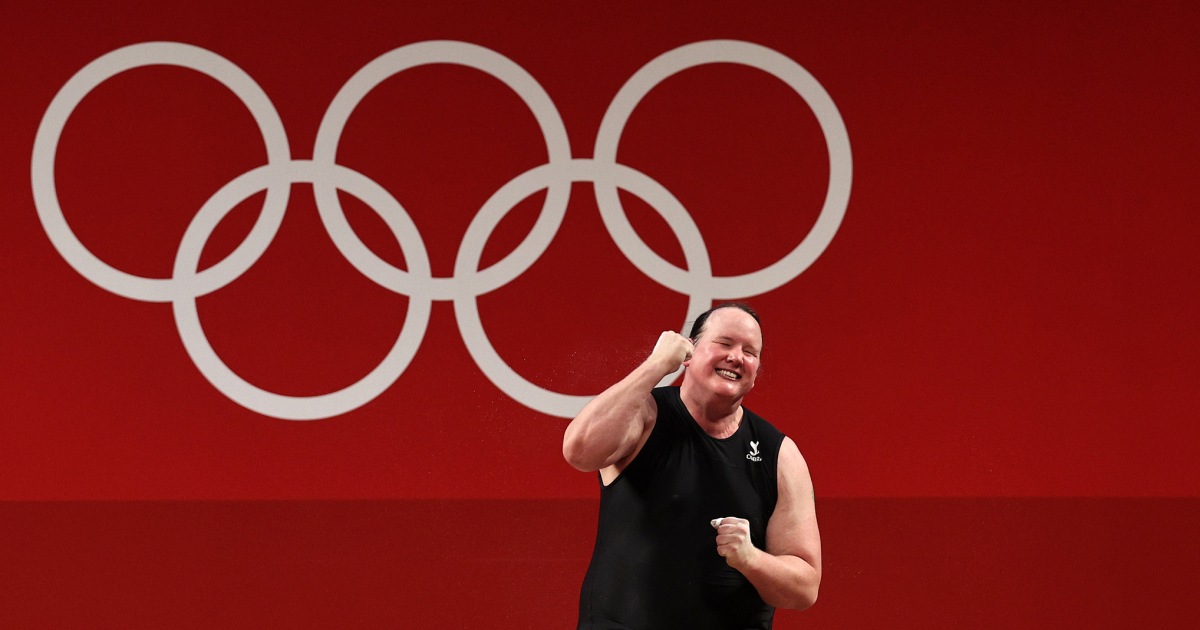
International Olympic Committee issues new guidelines on transgender athletes
Athletes will no longer be required to undergo “medically unnecessary” hormone treatments to compete, the IOC said.
This is the current Olympic policy on trans athletes. Are the Olympics "woke marxist commie extremists" as well?

Trans women retain athletic edge after a year of hormone therapy, study finds
The findings raise questions about current Olympic guidelines, but the lead author cautions against using them to back bans in recreational and school sports.

Four Myths About Trans Athletes, Debunked | ACLU
Upholding trans athletes' rights requires rooting out the inaccurate beliefs underlying harmful policies sweeping through state legislatures.
 www.aclu.org

Fact check: Do trans women have unfair athletic advantage? – DW – 03/20/2025
Sports federations are making it harder for transgender women to participate in female competitions. Are these steps justified?
 www.dw.com

Frequently Asked Questions About Sexual Health
WebMD answers common questions about circumcision, male menopause, birth control, and more.
 www.webmd.com
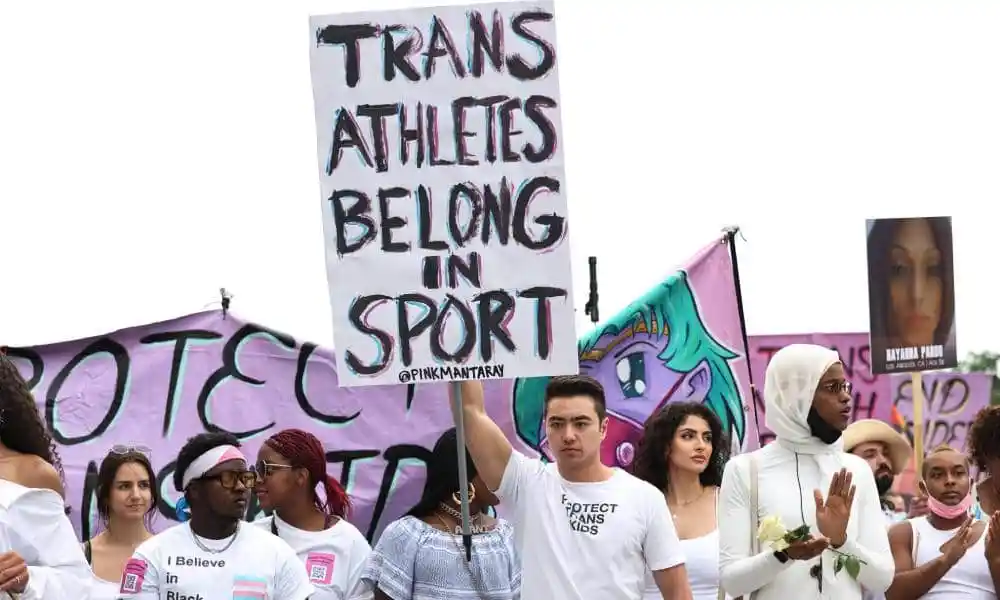
Trans women have no advantage in elite sport, new report finds
A new report has found that trans athletes do not have a biological advantage from things such as lung capacity and bone density.
 www.thepinknews.com
Abstract
Objective To examine the effect of gender affirming hormones on athletic performance among transwomen and transmen.
Methods We reviewed fitness test results and medical records of 29 transmen and 46 transwomen who started gender affirming hormones while in the United States Air Force. We compared pre- and post-hormone fitness test results of the transwomen and transmen with the average performance of all women and men under the age of 30 in the Air Force between 2004 and 2014. We also measured the rate of hormone associated changes in body composition and athletic performance.
Results Participants were 26.2 years old (SD 5.5). Prior to gender affirming hormones, transwomen performed 31% more push-ups and 15% more sit-ups in 1 min and ran 1.5 miles 21% faster than their female counterparts. After 2 years of taking feminising hormones, the push-up and sit-up differences disappeared but transwomen were still 12% faster. Prior to gender affirming hormones, transmen performed 43% fewer push-ups and ran 1.5 miles 15% slower than their male counterparts. After 1 year of taking masculinising hormones, there was no longer a difference in push-ups or run times, and the number of sit-ups performed in 1 min by transmen exceeded the average performance of their male counterparts.
Summary The 15–31% athletic advantage that transwomen displayed over their female counterparts prior to starting gender affirming hormones declined with feminising therapy. However, transwomen still had a 9% faster mean run speed after the 1 year period of testosterone suppression that is recommended by World Athletics for inclusion in women’s events.
Objective To examine the effect of gender affirming hormones on athletic performance among transwomen and transmen.
Methods We reviewed fitness test results and medical records of 29 transmen and 46 transwomen who started gender affirming hormones while in the United States Air Force. We compared pre- and post-hormone fitness test results of the transwomen and transmen with the average performance of all women and men under the age of 30 in the Air Force between 2004 and 2014. We also measured the rate of hormone associated changes in body composition and athletic performance.
Results Participants were 26.2 years old (SD 5.5). Prior to gender affirming hormones, transwomen performed 31% more push-ups and 15% more sit-ups in 1 min and ran 1.5 miles 21% faster than their female counterparts. After 2 years of taking feminising hormones, the push-up and sit-up differences disappeared but transwomen were still 12% faster. Prior to gender affirming hormones, transmen performed 43% fewer push-ups and ran 1.5 miles 15% slower than their male counterparts. After 1 year of taking masculinising hormones, there was no longer a difference in push-ups or run times, and the number of sit-ups performed in 1 min by transmen exceeded the average performance of their male counterparts.
Summary The 15–31% athletic advantage that transwomen displayed over their female counterparts prior to starting gender affirming hormones declined with feminising therapy. However, transwomen still had a 9% faster mean run speed after the 1 year period of testosterone suppression that is recommended by World Athletics for inclusion in women’s events.
5
• The higher levels of red blood cell count experienced by cis men is
removed within the first four months of testosterone suppression;
• There is no basis for athletic advantage conferred by bone size or
density, other than advantages achieved through height. Elite
athletes tend to have higher than average height across genders, and
above-average height is not currently classified as an athletic
advantage requiring regulation;
• On average, trans women who are pre-testosterone suppression still
have lower Lean Body Mass (LBM), Cross Section Area (CSA), and
strength than cis males. This indicates that the performance benefit
experienced by these individuals cannot be generalized by examining
cis male athletes;
• Non-athletic trans women experience significant reduction in LBM,
CSA, and strength loss within 12 months of hormonal suppression. It
is important to note that this 12-month threshold is arbitrarily
defined, and no significant studies examine the rate of LBM, CSA or
strength reduction over time;
• When adjusting for height and fat mass, LBM, CSA, and strength after
12 months of testosterone suppression, trans women still retained
statistically higher levels than sedentary cis women. However, this
difference is well within the normal distribution of LBM, CSA, and
strength for cis women (Jassen et al., 2000);
• LBM, CSA, and strength loss continues for trans women after the 12-
month initial testosterone suppression;
• The limited available evidence examining the effect of testosterone
suppression as it directly affects trans women’s athletic performance
showed no athletic advantage exists after one year of testosterone
suppression (Harper, 2015; Roberts et al., 2020; Harper, 2020);
• Post gonad removal, many trans women experience testosterone
levels far below that of pre-menopausal cis women.
Available evidence indicates trans women who have
undergone testosterone suppression have no clear
biological advantages over cis women in elite sport.
3.
6
Key Sociocultural Findings
1. Biomedical studies are overvalued in sports policies in
comparison to social sciences studies.
• The literature on trans sport policies, their implementation, people
who write them and apply them, consequences for athletes, and the
debates they frame is constitutive of the social hierarchy of
knowledge, within which some sciences are discredited to the
benefit of others;
• Excluding certain types of knowledge from the restricted definition of
‘scientific’ makes it possible for sport governing bodies to obscure
the power relations at play in the creation, maintenance, and
legitimization of regulations;
• There are troubling links between some researchers, sport
organizations, and third organizations with anti-trans agenda;
• Some sport organizations use science strategically, drawing solely
and uncritically on data which appears to support their claims;
• Only certain biomedical factors are policed under a mandate of
‘fairness’ in elite sport, despite strong evidence that financial
material resources (such as access to infrastructure and equipment,
nutrition, time to train, higher salaries) are associated with advantage
in sport.

Until the science is settled on the impact of puberty blockers at certain ages and other hormones, the current best solution is the one that's been established since the first human sporting events took place. Men vs men, women vs women.
It's ironic isn't it. Some/many/most biological women have claimed they are as good as biological men in sports. Now it appears they have a chance to prove it.
"FC Dallas under-15 boys squad beat the U.S. Women's National Team in a scrimmage"
Champions League Top 50: Real Madrid, Man City, Chelsea, Bayern, Napoli, Inter, Benfica, AC Milan's, best (cbssports.com)
"FC Dallas under-15 boys squad beat the U.S. Women's National Team in a scrimmage"
Champions League Top 50: Real Madrid, Man City, Chelsea, Bayern, Napoli, Inter, Benfica, AC Milan's, best (cbssports.com)

Waiting for radical left ideologues to say this isn’t scienceIt's ironic isn't it. Some/many/most biological women have claimed they are as good as biological men in sports. Now it appears they have a chance to prove it.
"FC Dallas under-15 boys squad beat the U.S. Women's National Team in a scrimmage"
Champions League Top 50: Real Madrid, Man City, Chelsea, Bayern, Napoli, Inter, Benfica, AC Milan's, best (cbssports.com)

He certainly has a point of view. OTOH, his views appear in line with majority professional association views.
The wiki article refers to this book and pans it.

Irreversible Damage - Wikipedia
 en.wikipedia.org
And this book:

Johnny the Walrus - Wikipedia
en.wikipedia.org
You're saying the outcome of a soccer game was science?Waiting for radical left ideologues to say this isn’t science

Lol You picked one anthropologist that agrees with your claim....and now it's gospel.... I'm sure she had extensive training in her field.... and so are guys from other schools...The notion of transgender girls having an unfair advantage comes from the idea that testosterone causes physical changes such as an increase in muscle mass. But transgender girls are not the only girls with high testosterone levels. An estimated 10 percent of women have polycystic ovarian syndrome, which results in elevated testosterone levels. They are not banned from female sports. Transgender girls on puberty blockers, on the other hand, have negligible testosterone levels. Yet these state bills would force them to play with the boys. Plus, the athletic advantage conferred by testosterone is equivocal. As Katrina Karkazis, a senior visiting fellow and expert on testosterone and bioethics at Yale University explains, “Studies of testosterone levels in athletes do not show any clear, consistent relationship between testosterone and athletic performance. Sometimes testosterone is associated with better performance, but other studies show weak links or no links. And yet others show testosterone is associated with worse performance.” The bills’ premises lack scientific validity.
There you go.
I don't have a dog in this race. OTOH, I don't want to sit back and let a bunch of angry guys ignore science and just rant about "self evident truth". Back in the 70's, my racist dad told me it was "self evident" that Blacks were dumber than whites and all his white drinking buddies agreed.
So go find some SCIENCE on this point and I'll listen.
might have been...Kindly explain to me a group of 15 year olds and younger beat a national level adult female soccer team by a wide margin....scientfically....You're saying the outcome of a soccer game was science?
Let's put it another way. There is no soccer team of 15 year-old females on the planet or in human history that would EVER beat a national men's soccer team.You're saying the outcome of a soccer game was science?
Your ilk can re-write history and weaponize politics, but you can't change biological realities.
No...He certainly has a point of view. OTOH, his views appear in line with majority professional association views.
It never ceases to amaze me, the depth of human stupidity. I honestly thought that the lefties could never top "equity ". Not in the million years, I thought. And here we are. Individuals who are actually arguing for men competing against women....in sports. Truly Einstein was right that human stupidity is unlimited.
Explain. My understanding is that the major US professional associations support what that doctor writes.No...
JC, go read all the articles I linked. They say that bio men lose their athletic advantage when they take hormones and lose their nuts.It never ceases to amaze me, the depth of human stupidity. I honestly thought that the lefties could never top "equity ". Not in the million years, I thought. And here we are. Individuals who are actually arguing for men competing against women....in sports. Truly Einstein was right that human stupidity is unlimited.
So here's an open challenge to you, Dirty, Orry and anyone. Post a scientific article that discusses this and supports your position. I just want to get a discussion going and avoid a bunch of guys saying "it's self-evident that..... "
