

So the Conservatives are stupid according to your opinion??
I'm guessing you prefer governments like the Liberal one in Canada, which our climate commissioner says has the worst record in the G7 since the Paris agreement was reached in 2015.


So the Conservatives are stupid according to your opinion??
No, that reference was not the cost of investing in "green energy." That number was the cost for infrastructure improvements.
Surely, you don't believe that spending over $4 trillion a year to transition from fossil fuels is less than the cited $400 million a year that your link says is spent on "climate disasters"?
By the way, that link you provided only had numbers for "developed countries." As the Indian government would be happy to explain to you, the cost burden would be much greater in the developing world.

Climate finance isn't charity, says Indian minister at COP26
India's environment minister says climate finance is not charity and rich countries should deliver on an unfulfilled promise to raise $100 billion a year to help poor nations adaptabcnews.go.com

I'm guessing you prefer governments like the Liberal one in Canada, which our climate commissioner says has the worst record in the G7 since the Paris agreement was reached in 2015.


...................
But do You support what that British Conservative Minister stated in regards
to moving away from cars in the future?
To repeat: I'm not the one championing the rapid elimination of fossil fuels. The advocates of this plan to overturn the world economy are the ones who have a duty to present the cost/benefit analysis.
But if you want to rely on me to provide the numbers, so be it. Here's the analysis by Bjorn Lomborg, the economist who has crunched the numbers using the UN's own projections.

Biden’s climate ‘fix’ is fantastically expensive and perfectly useless
Across the world, politicians are going out of their way to promise fantastically expensive climate policies. President Biden has promised to spend $500 billion each year on climate — about 13 perc…nypost.com
It appears it would cost the U.S. and the E.U. alone more than $5 trillion a year to implement their plans to eliminate fossil fuels.
And I still think it's fascinating that thousands of virtue signallers went to their climate gabfest in Glasgow with no economic analysis of the impact of the net-zero target.
Bjorn Lomborg’s new book False Alarm: How Climate Change Panic Costs Us Trillions Hurts the Poor, and Fails to Fix the Planet attempts to convince readers that the impacts of climate change have been exaggerated, particularly by the media, and that much of the current effort to tackle rising greenhouse gas emissions represents an over-reaction.
He has been characteristically energetic in persuading right-wing newspapers, particularly those owned by Rupert Murdoch’s News Corp, such as The Wall Street Journal, the New York Post and The Australian, to advertise his book for free in their opinion columns.
But, like his previous contributions to this issue, Dr Lomborg’s arguments are based on fantastical numbers that have little or no credibility. Overall, the numbers presented by Dr Lomborg, who has a PhD in political science, understate the potential economic impacts of climate change and exaggerate the costs of cutting greenhouse gases. And he has promoted them apparently secure in the knowledge that they will not be fact-checked by book publishers or newspaper comment editors.
This commentary details five examples of Dr Lomborg’s misuse of outdated, concocted and misinterpreted numbers that are central to his ‘lukewarmer’ argument in the following ways:
- Ignoring the costs of fossil fuel subsidies
- Illegitimately doubling the cost estimates of action by the European Union
- Misrepresenting the impact of the Paris Agreement on climate change
- Cherry-picking an outdated model estimate of the costs of climate change impacts
- Miscalculating the ‘optimal’ level of global warming.
 www.lse.ac.uk
Does that mean moving the 40-50% emission reduction target by 2030
or something like that to the future? I will be willing to support that if
Norway and the U.K are going to cut oil production in North Sea by more
than 30% as well. But I guess they most likely will squeeze every drop of
oil they can get their hands on from the North Sea to the Arctic sea.
Do you people think that the only use of fossil oil is for burning?
12% .Only a small fraction of crude oil produced is needed for
petrochemical production. I guess may be like 5%. I do
think the world has to come up with some plan to begin
conservation of the remaining oil reserve simply because
it is a non-renewable resource.
Do you people think that the only use of fossil oil is for burning?
Future generations will shake their heads in disbelief that we burned oil.
Petrochemical feedstock accounts for 12% of global oil demand, a share that is expected to increase driven by increasing demand for plastics, fertilisers and other products.
"Feedstocks make up anywhere from 60 to 70 percent of the cost to manufacture petrochemicals" according to the American Fuel and Petrochemicals Manufacturers.
So you agree that every dollar invested in green energy will provide $4 in savings, as your source clearly stated.

A quick recap:
- Frankfooter has falsely attributed a statement in one blog post to the post that I cited, which was using entirely different numbers (more than 10 times larger, in fact).
- Frankfooter falsely described the cost estimate for infrastructure improvements for "adaptation" as the cost of "green energy."
I sure hope the mods aren't asked to investigate this thread.
Future generations will shake their heads in disbelief that we starved millions of people to death because of a 0.01% change in atmospheric composition

You don't think building renewable energy is 'infrastructure'?
So say no more about this politically motivated individual whose numbers are exaggerated. However, if nothing is done to address Climate Change, then it is going to cost the USA itself close to $2 trillion annually. Let's go by the real facts:
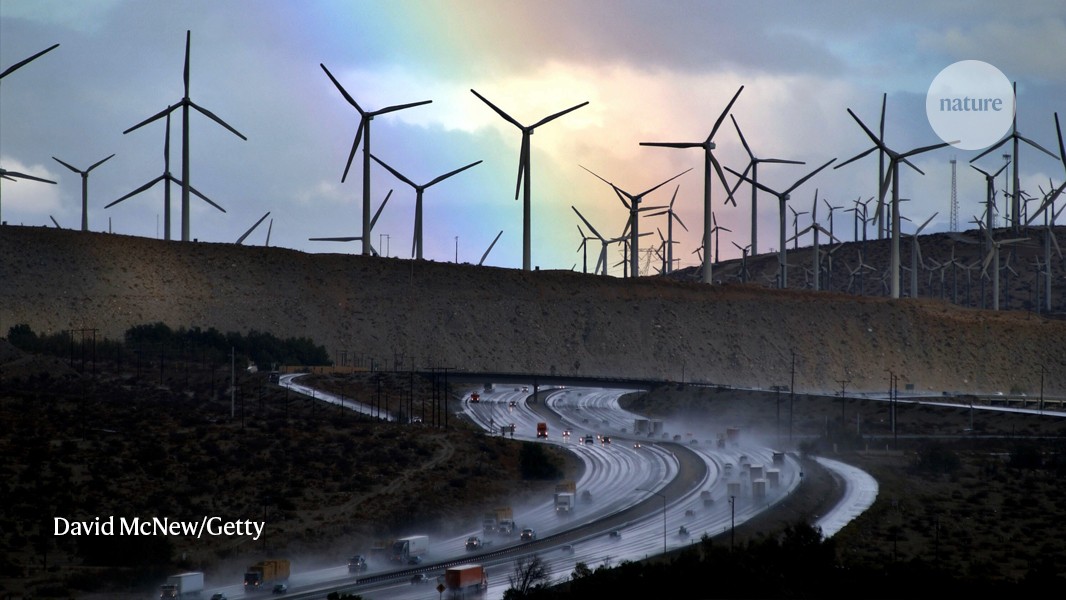
 www.nature.com
FACT: Once again, Frankfooter hasn't read -- and/or didn't understand -- the post he cited.
The article is very explicit in its description of "infrastructure" projects.
To answer Franky's question: No, I don't think you can produce new energy to replace fossil fuels by investing in resilient roads and transport links, coastal zone projects, hurricane-proof houses, efficient irrigation, resilient micro-grids and supply chains and logistics.
Apparently, Frankfooter thinks hurricane-proof houses and resilient roads, etc., are a source of new energy.
Or is this another example where he's now going to try to claim he never referred to the "infrastructure" projects in the blog post as "renewable energy."
all of which will require huge amounts of energy/ materials to createinvesting in resilient roads and transport links, coastal zone projects, hurricane-proof houses, efficient irrigation, resilient micro-grids and supply chains and logistics.
FACT: Once again, Frankfooter hasn't read -- and/or didn't understand -- the post he cited.
More weather porn.
It cites all kinds of dubious numbers about the cost of hurricanes, etc., but no tangible numbers on how much those costs would be reduced. The conclusion that the net result would be a cumulative savings is completely baseless.


