
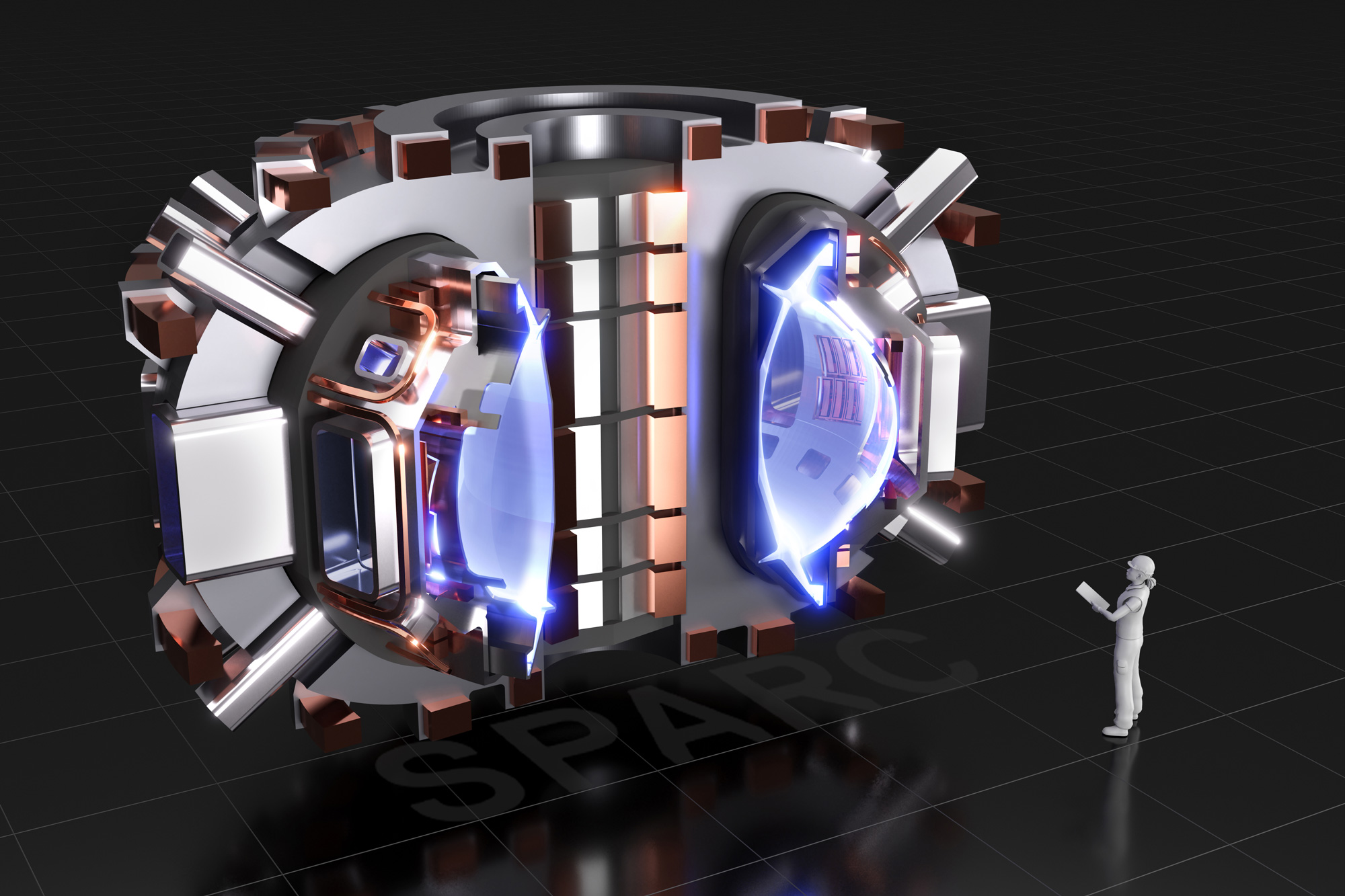
Validating the physics behind the new MIT-designed fusion experiment


Might be revolutionary in terms of the fight against climate change.

What is it going to cost to build one? What is ratio of overall power output to net power output. And best of all, what happens if there's a plasma leak...
 
What is it going to cost to build one? What is ratio of overall power output to net power output. And best of all, what happens if there's a plasma leak...

Cost for that is likely in the 1 billion dollar range, there are larger ones in the EU that are like 10 billion, this is the research stage so costs are not reflective of actual production costs if it goes into production.

According to the article, that reactor should output 2x energy of what is put into it, with the possibility of reaching 10x.

Fusion requires active control for the process to work, if there is some kind of leak or issue the fusion process will likely self terminate. Intrinsically it is much safer than nuclear fission, but also more challenging to keep the process going.
 
This discussion seems a few levels too high for terb.

Some in applied physics see the chase for practical fusion power as similar to alchemists trying to turn lead into gold. The outcome is extremely desirable but getting more energy out than put in and the cost makes local fusion plants a long way away. It is always nice to see things moving forward though.


(and yes, we can turn other elements into gold but it costs excessively more to make than the gold is worth)
 
  • Like
Reactions: shakenbake
MIT operated their first experimental fusion reactor in 1972 and yet we are still years away from powering an electric kettle to make a up of tea. The basic layout of the SPARC reactor is not much different than previous generations of fusion reactors. What is new are advances in the superconducting magnets used to confine the plasma. The claims of achieving a burning plasma and a Q of at least 2 and possibly as high as 10 are not new either. The ITER project currently under construction in the south of France (at a cost of about $20 billion and a few dozen countries participating) claims it will achieve the same thing. However the SPARC reactor will be a fraction of the size of ITER with better magnets resulting in a smaller tokamak.

The ITER website has a lot of cool information and videos if this kind of mega science project is your bag. See:
https://www.iter.org/proj/inafewlines

Canada was a part of the ITER project until 2004 but pulled out due to lack of federal funding. I see that in 2019 Canada signed an MOU to enter into discussions about possibly getting back in to the ITER project, mostly to try to create jobs around Canadian experience and expertise in the areas of tritium production and handling.

Personally, I am not sure of the future role of fusion energy. The appeal and benefit of this cleaner nuclear power is immense, but on a practical side the complexity of the reactors will make it a grid operators nightmare, particularly if these machines end up being much more than 1,000 MW net electrical output.
 
The basic layout of the SPARC reactor is not much different than previous generations of fusion reactors. What is new are advances in the superconducting magnets used to confine the plasma. The claims of achieving a burning plasma and a Q of at least 2 and possibly as high as 10 are not new either.

So much for trying to pick up girls in a bar with my dumb card tricks. :(

Interesting link.
 
Martin Fleischmann died in England in 2012 after moving back from the south of France where he and Stan Pons had continued their cold fusion research after leaving the US. Their work was being done at the IMRA laboratories in Sophia Antipolis, near Nice. IMRA fell under the control of Technova which was owned by Toyota. Stan Pons still lives in the south of France with his wife Sheila. They spend their summers just across the border in northern Italy.

Regarding cold fusion, it seems NASA has made an announcement regarding a type of cold fusion called lattice called lattice confinement fusion. note that most cold fusion researchers these days try to avoid using the 'cold fusion" term. See this article from Scientific American.
NASA Found Another Way Into Nuclear Fusion

For a review of some other current work on cold fusion, see these 2019 articles from National Geographic and Nature, respectively:
Cold Fusion remains Elusive - but these scientists may revive quest
Google revives controversial cold-fusion experiments

An older but more scientific summary of cold fusion can be found in this 2014 article by Edmund Storms, a retired scientist from the Los Alamos Nuclear Laboratory and avid cold fusion researcher.
The Present Status of Cold Fusion and its Expected Influence on Science and Technology

For video entertainment, watch the one hour documentary Cold Fusion: Fire from Water from 1998, narrated by James Doohan. It presents a pretty decent history of the early days of cold fusion with lots of clips of Fleischmann, Pons, and their contemporaries.
Cold Fusion: Fire From Water

Enjoy.
 
Humanity has been wanting to harness the power of the Sun, since before the Manhattan Project. The ITER project in Provence will run to $65 billion, but if it's practical the cost of future fusion reactors will drop considerably. Canada could become exceptionally rich if it works, we have large reserves of deuterium, which is in use as chemotherapy.

 
Humanity has been wanting to harness the power of the Sun, since before the Manhattan Project. The ITER project in Provence will run to $65 billion, but if it's practical the cost of future fusion reactors will drop considerably. Canada could become exceptionally rich if it works, we have large reserves of deuterium, which is in use as chemotherapy.

I am unaware of deuterium being used in chemotherapy. I would be interested to know what that is if you have any info. Anything in the recently published seems to do with the use of deuterium depleted water in cancer treatment. All naturally occuring water in the world has some deuterium in it, and there are some researchers who believe that the deuterium interferes with DNA replication. So removing deuterium from drinking water would eventually deplete deuterium in the body and, supposedly, promote healthier DNA replication. I dunno.

The deuterium inventory in Canada is largely tied up in nuclear power reactors, and is radioactive. There is no large inventory of "available" deuterium in Canada that would give us any sort of meaningful strategic or commercial advantage int he fusion energy field, especially since all large scale Canadain production of deuterium oxide shutdown two decades ago with the shutdown of the Bruce Heavy Water Plant.

Perhaps you were thinking of the Canadian inventory of tritium which is the largest inventory outside of a nuclear weapons state in the world. Canada (actually, Ontario Power Generation to be precise) has provided tritium to fusion reactor experiments around the world for over 20 years.