


US: 63% support for third party run.
- Thread starter Butler1000
- Start date

Third party support has been high 50s to low 60s for the last 15 years or so. (With occasional drops right before elections, if I recall.)
It definitely hasn't been below 50% since 2012.
Will the consistently high level result in people really working for electoral reform? It would be nice, but that isn't what the people who pushing in the media want to talk about.
It definitely hasn't been below 50% since 2012.
Will the consistently high level result in people really working for electoral reform? It would be nice, but that isn't what the people who pushing in the media want to talk about.

The more interesting question would be whether that support is for a more liberal or conservative option than is available now.Third party support has been high 50s to low 60s for the last 15 years or so. (With occasional drops right before elections, if I recall.)
It definitely hasn't been below 50% since 2012.
Will the consistently high level result in people really working for electoral reform? It would be nice, but that isn't what the people who pushing in the media want to talk about.
Because most people figure out it is a wasted vote in the current system.They support it, but never vote for it.
It's mixed, as it always has been.The more interesting question would be whether that support is for a more liberal or conservative option than is available now.
Unfortunately, Gallup doesn't ask that question.
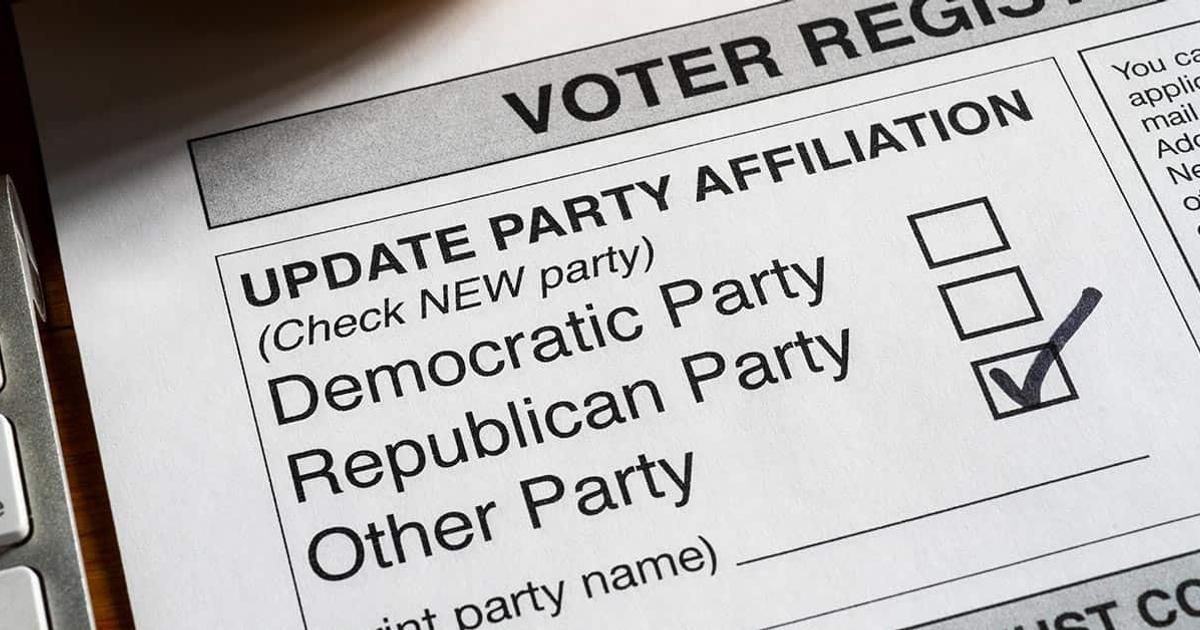
Support for Third U.S. Political Party Up to 63%
Sixty-three percent of Americans say a third U.S. political party is needed, up from 56% a year ago and by one percentage point the highest in Gallup's 20-year trend.
 news.gallup.com
There are some interesting bits in there, though. The idea is more popular among Republicans right now.


Sure, everybody supports in principle that a third - or fourth or fifth - party can run candidates. But no one's ever going to vote for any but the first two party's candidates.
Unless you have proportionate rep, you going to get the same 2 parties winning every election. The only departure from that would be if 1 party - i.e. the GOP - fissures into moderate conservative and extremist Christo-fascist parties and there is a fundamental re alignment.
Unless you have proportionate rep, you going to get the same 2 parties winning every election. The only departure from that would be if 1 party - i.e. the GOP - fissures into moderate conservative and extremist Christo-fascist parties and there is a fundamental re alignment.
I'd say more that the Dems have been unified than usual because of the distinct threat to democracy Trumpism is posing to the nation.The Republicans have been more fractured than the Democrats ever since Trump got to power.
There aren't really any moderate Republicans anymore.There is a clear moderate Republican vs populist alt-right Republican split right now in that party, so probably why they support a 3rd party.
There is an "establishment" vs "populist" split, but they disagree on very little concerning policy.
There is also a "democratic" vs "authoritarian" split, which somewhat overlaps the above one.
But on policy and governing philosophy, the Dems are far more diverse and split than the GOP is right now. (That's been true for a while.)
There are no libertarian Dems right now. (Not in the sense of Libertarian used in the United States political context).The Dems have more incentive staying united imo because at best the right leaning Dems are probably just moderate or libertarian who can easily get behind the likes of Biden.
But the most right-wing dems are people like Joe Manchin, who is far to the left of any Republican.
The Republican desire for a third party right now is probably due to all the people who used to be GOP, can't stand the authoritarian/extremist turn, but really hate that it means they would have to vote for a Democrat. The Mitt Romneys of the world, basically. They really want another option, either that they can move to or (probably preferably) that the Trumpists can move to and leave the GOP.
There is a third option, which is a regional power bloc. (Like we have in Canada with the BQ.)Sure, everybody supports in principle that a third - or fourth or fifth - party can run candidates. But no one's ever going to vote for any but the first two party's candidates.
Unless you have proportionate rep, you going to get the same 2 parties winning every election. The only departure from that would be if 1 party - i.e. the GOP - fissures into moderate conservative and extremist Christo-fascist parties and there is a fundamental re alignment.
That can never get a presidency, but it can get significant representation in congress and it can possibly throw the presidential election into chaos by denying an electoral college majority to anyone.
But that would also be a case where there would be only one or two party dominance in that region, since only one of the "big two" parties would be realistic opposition.
That could have happened in the 1970's if the Dixiecrats formed a regionally based 3rd party, instead of eventually aligning with the GOP's.There is a third option, which is a regional power bloc. (Like we have in Canada with the BQ.)
That can never get a presidency, but it can get significant representation in congress and it can possibly throw the presidential election into chaos by denying an electoral college majority to anyone.
But that would also be a case where there would be only one or two party dominance in that region, since only one of the "big two" parties would be realistic opposition.
Too focused on the presidency to try (and the lure of national power by joining with the Republicans was obviously strong).That could have happened in the 1970's if the Dixiecrats formed a regionally based 3rd party, instead of eventually aligning with the GOP's.

Unfortunately, not always true, ask anyone who voted for Ralph Nader. I'd like to see Steve Bannon pick a third party candidate, he dislikes the K Street movement more than most Democrats...They support it, but never vote for it.
There has always been a potential "third party" vote. It fluctuates based on other elements, but the system itself makes third party votes bad for getting what you want, so the vote disappears again.Unfortunately, not always true, ask anyone who voted for Ralph Nader. I'd like to see Steve Bannon pick a third party candidate, he dislikes the K Street movement more than most Democrats...
That said, as the parties sorted into the 6th party system and became more ideologically polarized and consistent, the ability of the third party vote to fuck with the electoral college system enough to cause havoc has gone up.
Since WWII, you can see how the vote to someone other than the main two parties has fluctuated quite a bit.

There are arguments that the high third party voting numbers in some of the earlier elections changed the winner, but the evidence isn't actually very strong. (Carter probably couldn't have caught Reagan, and Bush probably couldn't have caught Clinton. In 1948, people thought that the Thurmond run was going to cost Truman, but it ended up falling short.)
Attachments
-
 37.1 KB Views: 0
Ross Perot. Change just a couple things and who knows..interestingly one of his campaign elements wasThere has always been a potential "third party" vote. It fluctuates based on other elements, but the system itself makes third party votes bad for getting what you want, so the vote disappears again.
That said, as the parties sorted into the 6th party system and became more ideologically polarized and consistent, the ability of the third party vote to fuck with the electoral college system enough to cause havoc has gone up.
Since WWII, you can see how the vote to someone other than the main two parties has fluctuated quite a bit.
View attachment 265357
There are arguments that the high third party voting numbers in some of the earlier elections changed the winner, but the evidence isn't actually very strong. (Carter probably couldn't have caught Reagan, and Bush probably couldn't have caught Clinton. In 1948, people thought that the Thurmond run was going to cost Truman, but it ended up falling short.)
Electronic town halls. Kinda like we have today.

Ross Perot 1992 presidential campaign - Wikipedia
 en.m.wikipedia.org
Ross Perot. Change just a couple things and who knows..interestingly one of his campaign elements was
Electronic town halls. Kinda like we have today.
Ross Perot 1992 presidential campaign - Wikipedia
Last edited:
Perot is an interesting case study in the limits of third party in the US structure.Ross Perot. Change just a couple things and who knows..interestingly one of his campaign elements was
Electronic town halls. Kinda like we have today.
Ross Perot 1992 presidential campaign - Wikipedia
He got 19% of the vote in 1992 - and 0 states or electoral college votes.
He does appear to be a case of mostly having brought in new people to vote, and drawing people off from the two main candidates roughly equally.
However, his strong bid massively changed the media narrative and it is hard to know what the election would have looked like without him and whether or not that would have favored Clinton or Bush more.
He did much worse the next run, and the Reform party basically collapsed after that. His couple of big issues got absorbed into the two major parties and he no longer had any reason people should vote for him. (Didn't help that he was kind of a kook.)
There is a strain of thought that argues he only did as well as he did the first time because there had been three Republican administrations in a row and he had the NAFTA deal to pin his campaign on - that's a pretty unique set of circumstances. Could he have done a bit better than 19%? Maybe.
But his trajectory lends support to the view that any group running primarily at the Presidential level and not down ticket as well in a serious way isn't serious and won't do better than a flash in the pan. They can act as a spoiler, but without giving people an actual alternative view to build towards, they will have no staying power. (And even with all that, the system of FPTP makes third parties extremely hard to sustain outside of a regional bloc.)
Pretty much I think.Perot is an interesting case study in the limits of third party in the US structure.
He got 19% of the vote in 1992 - and 0 states or electoral college votes.
He does appear to be a case of mostly having brought in new people to vote, and drawing people off from the two main candidates roughly equally.
However, his strong bid massively changed the media narrative and it is hard to know what the election would have looked like without him and whether or not that would have favored Clinton or Bush more.
He did much worse the next run, and the Reform party basically collapsed after that. His couple of big issues got absorbed into the two major parties and he no longer had any reason people should vote for him. (Didn't help that he was kind of a kook.)
There is a strain of thought that argues he only did as well as he did the first time because there had been three Republican administrations in a row and he had the NAFTA deal to pin his campaign on - that's a pretty unique set of circumstances. Could he have done a bit better than 19%? Maybe.
But his trajectory lends support to the view that any group running primarily at the Presidential level and not down ticket as well in a serious way isn't serious and won't do better than a flash in the pan. They can act as a spoiler, but without giving people an actual alternative view to build towards, they will have no staying power. (And even with all that, the system of FPTP makes third parties extremely hard to sustain outside of a regional bloc.)
Sometimes, in some ways I also see him as a bit of a harbinger for Trump
I don't think you're alone in that.Sometimes, in some ways I also see him as a bit of a harbinger for Trump

