Is The Two State Solution A Cruel Western Hoax?

niniveh

Well-known member
Jun 8, 2009
2,339
1,393
113
..with apologies to Prof. J. Sachs


The West is in panic as Israel’s plan for ‘full control’ of Gaza heralds a new Nakba
Netanyahu's mass ethnic cleansing strategy pulls the rug out from under the West's cherished pretext for supporting Israeli criminality: the fabled two-state solution
by Jonathan Cook | Aug 14, 2025 | 20 Comments
First published by Middle East Eye
If you thought Western capitals were finally losing patience with Israel’s engineering of a famine in Gaza nearly two years into the genocide, you may be disappointed.
As ever, events have moved on – even if the extreme hunger and malnourishment of the two million people of Gaza have not abated.
Western leaders are now expressing “outrage”, as the media call it, at Israeli Prime Minister Benjamin Netanyahu’s plan to “take full control” of Gaza and “occupy” it. At some point in the future, Israel is apparently ready to hand the enclave over to outside forces unconnected to the Palestinian people.
The Israeli cabinet agreed last Friday on the first step: a takeover of Gaza City, where hundreds of thousands of Palestinians are huddled in the ruins, being starved to death. The city will be encircled, systematically depopulated and destroyed, with survivors presumably herded southwards to a “humanitarian city” – Israel’s new term for a concentration camp – where they will be penned up, awaiting death or expulsion.
At the weekend, foreign ministers from the UK, Germany, Italy, Australia and other Western nations issued a joint statement decrying the move, warning it would “aggravate the catastrophic humanitarian situation, endanger the lives of the hostages, and further risk the mass displacement of civilians”.
Germany, Israel’s most fervent backer in Europe and its second-biggest arms supplier, is apparently so dismayed that it has vowed to “suspend” – that is, delay – weapons shipments that have helped Israel to murder and maim hundreds of thousands of Palestinians over the past 22 months.
Netanyahu is not likely to be too perturbed. Doubtless, Washington will step in and pick up any slack for its main client state in the oil-rich Middle East.
Meanwhile, Netanyahu has once again shifted the West’s all-too-belated focus on the indisputable proof of Israel’s ongoing genocidal actions – evidenced by Gaza’s skeletal children – to an entirely different story.
Now, the front pages are all about the Israeli prime minister’s strategy in launching another “ground operation”, how much pushback he is getting from his military commanders, what the implications will be for the Israelis still held captive in the enclave, whether the Israeli army is now overstretched, and whether Hamas can ever be “defeated” and the enclave “demilitarised”.
We are returning once again to logistical analyses of the genocide – analyses whose premises ignore the genocide itself. Might that not be integral to Netanyahu’s strategy?
Life and death
It ought to be shocking that Germany has been provoked into stopping its arming of Israel – assuming it follows through – not because of months of images of Gaza’s skin-and-bones children that echo those from Auschwitz, but only because Israel has declared that it wants to “take control” of Gaza.
It should be noted, of course, that Israel never stopped controlling Gaza and the rest of the Palestinian territories – in contravention of the fundamentals of international law, as the International Court of Justice ruled last year. Israel has had absolute control over the lives and deaths of Gaza’s people every day – bar one – since its occupation of the tiny coastal enclave many decades ago.
On 7 October 2023, thousands of Palestinian fighters briefly broke out of the besieged prison camp they and their families had endured after Israel momentarily dropped its guard.
Gaza has long been a prison that the Israeli military illegally controlled by land, sea and air, determining who could enter and leave. It kept Gaza’s economy throttled, and put the enclave’s population “on a diet” that saw rocketing malnourishment among its children long before the current starvation campaign.
Trapped behind a highly militarised fence since the early 1990s, unable to access their own coastal waters, and with Israeli drones constantly surveilling them and raining down death from the air, the people of Gaza viewed it more as a modernised concentration camp.
But Germany and the rest of the West were fine supporting all that. They have continued selling Israel arms, providing it with special trading status, and offering diplomatic cover.
Only as Israel carries through to a logical conclusion its settler-colonial agenda of replacing the native Palestinian people with Jews, is it apparently time for the West to vent its rhetorical “outrage”.
Two-state trickery
Why the pushback now? In part, it is because Netanyahu is pulling the rug out from under their cherished, decades-long pretext for supporting Israel’s ever-greater criminality: the fabled two-state solution. Israel conspired in that trickery with the signing of the Oslo Accords in the mid-1990s.
The goal was never the realisation of a two-state solution. Rather, Oslo created a “diplomatic horizon” for “final status issues” – which, like the physical horizon, always remained equally distant, however much ostensible movement there was on the ground.
Lisa Nandy, Britain’s culture secretary, peddled precisely this same deceit last week as she extolled the virtues of the two-state solution. She told Sky News: “Our message to the Palestinian people is very, very clear: There is hope on the horizon.”
Every Palestinian understood her real message, which could be paraphrased as: “We’ve lied to you about a Palestinian state for decades, and we’ve allowed a genocide to unfold before the world’s eyes for the past two years. But hey, trust us this time. We’re on your side.”
In truth, the promise of Palestinian statehood was always treated by the West as little more than a threat – and one directed at Palestinian leaders. Palestinian officials must be more obedient, quieter. They had to first prove their willingness to police Israel’s occupation on Israel’s behalf by repressing their own people.
Hamas, of course, failed that test in Gaza. But Mahmoud Abbas, head of the Palestinian Authority (PA) in the occupied West Bank, bent over backwards to reassure his examiners, casting as “sacred” his lightly armed security forces’ so-called “cooperation” with Israel. In reality, they are there to do its dirty work.
Nonetheless, despite the PA’s endless good behaviour, Israel has continued to expel ordinary Palestinians from their land, then steal that land – which was supposed to form the basis of a Palestinian state – and hand it over to extremist Jewish settlers backed by the Israeli army.
Former US President Barack Obama briefly and feebly tried to halt what the West misleadingly calls Jewish “settlement expansion” – in reality, the ethnic cleansing of Palestinians – but rolled over at the first sign of intransigence from Netanyahu.
Israel has stepped up the process of ethnic cleansing in the occupied West Bank even more aggressively over the past two years, while global attention has been on Gaza – with the Israeli newspaper Haaretz warning this week that settlers have been given “free rein”.
A small window into the impunity granted to settlers as they wage their campaign of violence to depopulate Palestinian communities was highlighted at the weekend, when B’Tselem released footage of a Palestinian activist, Awdah Hathaleen, inadvertently filming his own killing.
Extremist settler Yinon Levi was released on grounds of self-defence, even though the video shows him singling out Hathaleen from afar, taking aim and shooting.
Alibi gone
It is noticeable that, having stopped making reference to Palestinian statehood for many years, Western leaders have revived their interest only now – as Israel is making a two-state solution unrealisable.
That was graphically illustrated by footage broadcast this month by ITV. Shot from an aid plane, it showed the wholesale destruction of Gaza – its homes, schools, hospitals, universities, bakeries, shops, mosques and churches gone.

Gaza is in ruins. Its reconstruction will take decades. Occupied East Jerusalem and its holy sites were long ago seized and Judaised by Israel, with western assent.
Suddenly, western capitals are noticing that the last remnants of the proposed Palestinian state are about to be swallowed whole by Israel, too. Germany recently warned Israel that it must not take “any further steps toward annexing the West Bank”.
US President Donald Trump is on his own path. But this is the moment when other major Western powers – led by France, Britain and Canada – have started threatening to recognise a Palestinian state, even as the possibility of such a state has been obliterated by Israel.
Australia announced it would join them this week after its foreign minister, a few days earlier, said the quiet part out loud, warning: “There is a risk there will be no Palestine left to recognise if the international community don’t move to create that pathway to a two-state solution.”
That is something they dare not countenance, because with it goes their alibi for supporting all these years the apartheid state of Israel, now deep into the final stages of a genocide in Gaza.
That was why British Prime Minister Keir Starmer desperately switched tack recently. Instead of dangling recognition of Palestinian statehood as a carrot encouraging Palestinians to be more obedient – British policy for decades – he wielded it as a threat, and a largely hollow one, against Israel.
He would recognise a Palestinian state if Israel refused to agree to a ceasefire in Gaza and proceeded with the West Bank’s annexation. In other words, Starmer backed recognising a state of Palestine – after Israel has gone ahead with its complete erasure.
Extracting concessions
Still, France and Britain’s recognition threat is not simply too late. It serves two other purposes.
Firstly, it provides a new alibi for inaction. There are plenty of far more effective ways for the West to halt Israel’s genocide. Western capitals could embargo arms sales, stop intelligence sharing, impose economic sanctions, sever ties with Israeli institutions, expel Israeli ambassadors, and downgrade diplomatic relations. They are choosing to do none of those things.
And secondly, recognition is designed to extract from the Palestinians “concessions” that will make them even more vulnerable to Israeli violence.
According to France’s foreign affairs minister, Jean-Noel Barrot: “Recognising a State of Palestine today means standing with the Palestinians who have chosen non-violence, who have renounced terrorism, and are prepared to recognise Israel.”
In other words, in the West’s view, the “good Palestinians” are those who recognise and lay down before the state committing genocide against them.
Western leaders have long envisioned a Palestinian state only on condition that it is demilitarised. Recognition this time is premised on Hamas agreeing to disarm and its departure from Gaza, leaving Abbas to take on the enclave and presumably continue the “sacred” mission of “cooperating” with a genocidal Israeli army.
As part of the price for recognition, all 22 members of the Arab League publicly condemned Hamas and demanded its removal from Gaza.
Boot on Gaza’s neck
How does all of this fit with Netanyahu’s “ground offensive”? Israel isn’t “taking over” Gaza, as he claims. Its boot has been on the enclave’s neck for decades.
While western capitals contemplate a two-state solution, Israel is preparing a final mass ethnic cleansing campaign in Gaza.
Starmer’s government, for one, knew this was coming. Flight data shows that the UK has been constantly operating surveillance missions over Gaza on Israel’s behalf from the Royal Air Force base Akrotiri on Cyprus. Downing Street has been following the enclave’s erasure step by step.
Netanyahu’s plan is to encircle, besiege and bomb the last remaining populated areas in northern and central Gaza, and drive Palestinians towards a giant holding pen – misnamed a “humanitarian city” – alongside the enclave’s short border with Egypt. Israel will then probably employ the same contractors it has been using elsewhere in Gaza to go street to street to bulldoze or blow up any surviving buildings.
The next stage, given the trajectory of the last two years, is not difficult to predict. Locked up in their dystopian “humanitarian city”, the people of Gaza will continue to be starved and bombed whenever Israel claims it has identified a Hamas fighter in their midst, until Egypt or other Arab states can be persuaded to take them in, as a further “humanitarian” gesture.
Then, the only matter to be settled will be what happens to the real estate: build some version of Trump’s gleaming “Riviera” scheme, or construct another tawdry patchwork of Jewish settlements of the kind envisioned by Netanyahu’s openly fascist allies, Bezalel Smotrich and Itamar Ben Gvir.
There is a well-established template to be drawn on, one that was used in 1948 during Israel’s violent creation. Palestinians were driven from their cities and villages, in what was then called Palestine, across the borders into neighbouring states. The new state of Israel, backed by western powers, then set about methodically destroying every home in those hundreds of villages.
Over subsequent years, they were landscaped either with forests or exclusive Jewish communities, often engaged in farming, to make Palestinian return impossible and stifle any memory of Israel’s crimes. Generations of western politicians, intellectuals and cultural figures have celebrated all of this.
Former British Prime Minister Boris Johnson and former Austrian President Heinz Fischer are among those who went to Israel in their youth to work on these farming communities. Most came back as emissaries for a Jewish state built on the ruins of a Palestinian homeland.
An emptied Gaza can be similarly re-landscaped. But it is much harder to imagine that this time the world will forget or forgive the crimes committed by Israel – or those who enabled them.
FacebookTwitterWhatsAppRedditLinkedInTumblrEmailPrint

Share
Jonathan Cook is the author of three books on the Israeli-Palestinian conflict, and a winner of the Martha Gellhorn Special Prize for Journalism. His website and blog can be found at www.jonathan-cook.net. This originally appeared in the Middle East Eye.
 
Netanyahu admitted it was to stall while they installed 'facts on the ground'.

When it comes to establishing "facts on the ground" Netanyahu is no different from Ben Gurion, or the myriad other governments in between. Hence, the 800,000 settler gorilla in the room, which no western government wants to address in this hypothetical "two state solution".
 
  • Like
Reactions: Frankfooter
Is The Two State Solution A Cruel Western Hoax?

In a word, yes.
 
  • Like
Reactions: Frankfooter
When it comes to establishing "facts on the ground" Netanyahu is no different from Ben Gurion, or the myriad other governments in between. Hence, the 800,000 settler gorilla in the room, which no western government wants to address in this hypothetical "two state solution".


Hasbara has been working overtime, dredging up a 1922 "partition plan". The Hashemite Kingdom of Trans-Jordan is an Imperial concoction, as fake as Elaine's orgasms with Jerry. But that is a discussion for another time.
When the Europeans started bandying about a two state solution some months ago, without any delineation of parameters or process, or any reference to the 800,000 settler thugs in Occupied Palestine, it amounted to little more than the continuation of the status quo and the ongoing genocide. For decades now, this has been an enabling m.o. for the Zionists to keep advancing their Eretz Ysrael project, often claiming lebensraum.
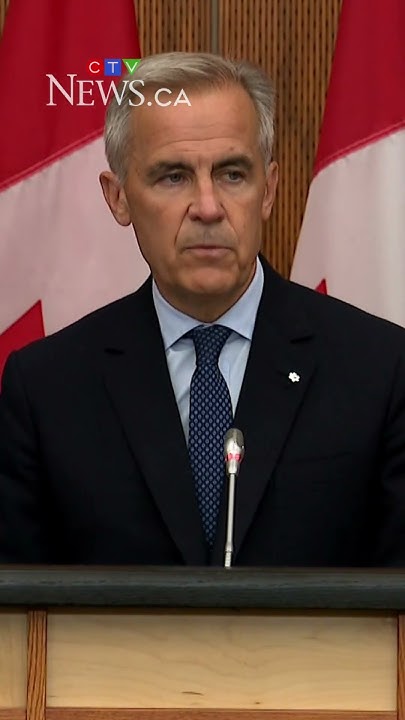
Mark Carney was quick to jump on the European bandwagon and declared his support for a two state solution. However, the lobby inside the PMO managed to make Carney look like an idiot when he declared that he was ok with a Palestinian state as long as it was "a Zionist Palestine".
In Netanyahu's genocidal cabinet however, even the mere mention of a "state" was anathema and the hasbara went into overdrive. And now we have a revised apology from Carney according to CTV.
Blame Hamas, Hamas Hamas and forget the two state solution.
Judge for yourselves.


N.B. AI forgeries have been getting better and better; I can't vouchsafe its authenticity.
 
  • Like
Reactions: Frankfooter
If there is no state of Palestine then the fight is just for equal rights for all Palestinians.
Including those living in Gaza and the West bank.

Which makes Palestinians the majority in any democratic vote.
 
  • Haha
Reactions: MaverickPunter
Is The Two State Solution A Cruel Western Hoax?

In a word, yes.


Michelle Goldberg
These Peace Negotiators Say It’s Time to Give Up on the Two-State Solution
Sept. 8, 2025
Against a yellow sky, a flare during an Israeli bombardment falls toward a group of buildings in the Gaza Strip.

Credit...Jack Guez/Agence France-Presse — Getty Images


Michelle Goldberg
By Michelle Goldberg
Opinion Columnist
Rob Malley, who has worked on Middle East policy in every Democratic administration since Bill Clinton’s, can’t say exactly when he became convinced that the quest for a two-state solution for Israel and Palestine was doomed.
His doubts were cumulative; there was no epiphany. “As I look back, I wonder how much we really believed in the goal that we said we were pursuing,” he said of decades of American-led efforts to bring about a resolution to the Israeli-Palestinian conflict. However sincere all that diplomacy was, it’s ended in ashes.
When we spoke last week, he juxtaposed our current bleak and bloody moment with 1993, the year of the historic Oslo Accords between Israel and the Palestine Liberation Organization, which seemed at the time to be the beginning of the road toward Palestinian statehood. “Is there any one metric where you would say, thanks to the U.S., things are better today than they were?” he asked.
Malley has coauthored a new book with the Palestinian peace negotiator Hussein Agha, “Tomorrow Is Yesterday: Life, Death, and the Pursuit of Peace in Israel/Palestine.” It is the story of more than three decades of failure. Malley and Agha — who’d been an adviser and confidant to Yasir Arafat and Mahmoud Abbas, now president of the Palestinian National Authority — met at a Washington dinner in 1999, they write, “at the height of America’s excitement at the possibility of peace.” Their book is a bitter epitaph for that time. “The era of the peace process, of the two-state solution, has vanished,” they write.


The goal of a Palestinian state, they suggest, may have always been futile. It certainly had no chance of succeeding while the United States refused to exert real pressure on Israel.
Sign up for the Opinion Today newsletter Get expert analysis of the news and a guide to the big ideas shaping the world every weekday morning. Get it sent to your inbox.
But even as facts on the ground — the mushrooming of the settlements, the cataclysm of Oct. 7, the decimation of Gaza — have made a two-state solution seem ever more fanciful, it’s a hard concept to abandon. “Deep down, believers in two states, confronted with all reasons to surrender their faith, fall back on a single argument: There is no alternative,” write Agha and Malley. “Partition is considered inevitable even as it becomes harder to imagine because they are not capable of imagining anything else.”
Malley’s indictment of the peace process is striking given his own lifelong role in the foreign policy establishment. He was part of the team that organized the Camp David summit in 2000, a somewhat frantic attempt by a lame duck Clinton, working closely with Prime Minister Ehud Barak of Israel, to engineer a settlement with the Palestinians. Later, he served as Barack Obama’s point person on the Middle East, where he led negotiations for the Iran nuclear deal. He was Joe Biden’s special envoy for Iran, working with his former high school classmate Antony Blinken, Biden’s secretary of state.

Yet partly thanks to his unlikely family history, Malley didn’t have the same innate bias toward Israel as many of his colleagues. His father was an Egyptian Jew but a committed anti-Zionist Arab nationalist; he introduced a young Malley to Arafat during a family trip to Algiers. Malley didn’t share his father’s radical leftist politics, writing that while his father viewed Israel purely as an illegitimate colonial power, he saw “two competing national movements in need of some kind of coexistence.” But Malley was an outsider to the liberal Zionist culture that shaped many of the Americans he worked with.
He’s long been hated by the pro-Israel right, which was gleeful when, in 2023, he was put on leave from his position in the Biden administration because of an investigation into his handling of classified documents. Malley said his lawyers were told earlier this year that the case had been closed, and he never learned precisely what it was about, describing the experience as “Kafkaesque.” He regrets the fact that, due to his suspension, he couldn’t resign from the Biden administration over its role in Israel’s brutalization of Gaza.


Given his record, nothing Malley says about the Middle East is likely to be taken seriously by conservatives. But even those who cling to the dream of two states should reckon with his and Agha’s analysis. I’m the sort of person they refer to in their book, someone who has lost faith that there will ever be a Palestinian state but can’t envision a workable, tolerable alternative.
Israel is not going to dismantle itself. A binational state with equal rights for all sounds appealing in theory; in practice, the last thing Israelis and Palestinians want is closer relations. In a May poll by the Palestinian Center for Policy and Survey Research, only 14 percent of Palestinian respondents favored the creation of a single state for all. Forty-seven percent said they wanted a Palestinian state within the borders that existed before 1967.
In “Tomorrow Is Yesterday,” Malley and Agha float a few ideas besides the creation of a single, binational state, including a Palestinian confederation with Jordan. “Israelis, almost viscerally unwilling to entrust their future to the Palestinians, hold a more sympathetic view of Jordan for reasons historical, political and psychological,” they write. They’re aware of all the obstacles to such a confederation, including Palestinian nationalism and Jordanian reluctance to accept millions of new Palestinian citizens. No resolution is without grave difficulties; their point is that options exist.
Malley says he’s reluctant to be too prescriptive, given his own association “with the failures of the past.” What’s urgent is letting go of old assumptions. “We need to give at least some space, some oxygen, to these alternative ideas, rather than say they’re all unrealistic, and therefore we’re going to stick to the one that, not only I would argue is unrealistic, but we just tried and failed and failed again,” he said.
There’s something academic about this entire debate, since there’s not going to be a remotely humane resolution to this conflict anytime soon. In the near term, we’re staring down Israel’s annexation of the West Bank — de facto if not official — and the ethnic cleansing of Gaza carried out with the full support of Donald Trump. For the foreseeable future, the only state between the river and the sea is likely to be Benjamin Netanyahu’s Israel.


But as “Tomorrow Is Yesterday” makes clear, the terrible status quo is exactly what makes easy slogans about a two-state solution dangerous. By acting as if a Palestinian state is on the horizon, we perpetuate the illusion that Israel’s occupation of Palestinian land is temporary. Invoking two states helps European countries — and the Democratic Party — justify their support for Israel even as they condemn starvation in Gaza. If we believe in two states, we can believe in a future where Israel is both Jewish and democratic, and thus worthy of liberal support. If that future is never coming, then talk of two states is an alibi, not an aspiration.
 
Michelle Goldberg
These Peace Negotiators Say It’s Time to Give Up on the Two-State Solution
Sept. 8, 2025
Against a yellow sky, a flare during an Israeli bombardment falls toward a group of buildings in the Gaza Strip.

Credit...Jack Guez/Agence France-Presse — Getty Images


Michelle Goldberg
By Michelle Goldberg
Opinion Columnist
Rob Malley, who has worked on Middle East policy in every Democratic administration since Bill Clinton’s, can’t say exactly when he became convinced that the quest for a two-state solution for Israel and Palestine was doomed.
His doubts were cumulative; there was no epiphany. “As I look back, I wonder how much we really believed in the goal that we said we were pursuing,” he said of decades of American-led efforts to bring about a resolution to the Israeli-Palestinian conflict. However sincere all that diplomacy was, it’s ended in ashes.
When we spoke last week, he juxtaposed our current bleak and bloody moment with 1993, the year of the historic Oslo Accords between Israel and the Palestine Liberation Organization, which seemed at the time to be the beginning of the road toward Palestinian statehood. “Is there any one metric where you would say, thanks to the U.S., things are better today than they were?” he asked.
Malley has coauthored a new book with the Palestinian peace negotiator Hussein Agha, “Tomorrow Is Yesterday: Life, Death, and the Pursuit of Peace in Israel/Palestine.” It is the story of more than three decades of failure. Malley and Agha — who’d been an adviser and confidant to Yasir Arafat and Mahmoud Abbas, now president of the Palestinian National Authority — met at a Washington dinner in 1999, they write, “at the height of America’s excitement at the possibility of peace.” Their book is a bitter epitaph for that time. “The era of the peace process, of the two-state solution, has vanished,” they write.


The goal of a Palestinian state, they suggest, may have always been futile. It certainly had no chance of succeeding while the United States refused to exert real pressure on Israel.
Sign up for the Opinion Today newsletter Get expert analysis of the news and a guide to the big ideas shaping the world every weekday morning. Get it sent to your inbox.
But even as facts on the ground — the mushrooming of the settlements, the cataclysm of Oct. 7, the decimation of Gaza — have made a two-state solution seem ever more fanciful, it’s a hard concept to abandon. “Deep down, believers in two states, confronted with all reasons to surrender their faith, fall back on a single argument: There is no alternative,” write Agha and Malley. “Partition is considered inevitable even as it becomes harder to imagine because they are not capable of imagining anything else.”
Malley’s indictment of the peace process is striking given his own lifelong role in the foreign policy establishment. He was part of the team that organized the Camp David summit in 2000, a somewhat frantic attempt by a lame duck Clinton, working closely with Prime Minister Ehud Barak of Israel, to engineer a settlement with the Palestinians. Later, he served as Barack Obama’s point person on the Middle East, where he led negotiations for the Iran nuclear deal. He was Joe Biden’s special envoy for Iran, working with his former high school classmate Antony Blinken, Biden’s secretary of state.

Yet partly thanks to his unlikely family history, Malley didn’t have the same innate bias toward Israel as many of his colleagues. His father was an Egyptian Jew but a committed anti-Zionist Arab nationalist; he introduced a young Malley to Arafat during a family trip to Algiers. Malley didn’t share his father’s radical leftist politics, writing that while his father viewed Israel purely as an illegitimate colonial power, he saw “two competing national movements in need of some kind of coexistence.” But Malley was an outsider to the liberal Zionist culture that shaped many of the Americans he worked with.
He’s long been hated by the pro-Israel right, which was gleeful when, in 2023, he was put on leave from his position in the Biden administration because of an investigation into his handling of classified documents. Malley said his lawyers were told earlier this year that the case had been closed, and he never learned precisely what it was about, describing the experience as “Kafkaesque.” He regrets the fact that, due to his suspension, he couldn’t resign from the Biden administration over its role in Israel’s brutalization of Gaza.


Given his record, nothing Malley says about the Middle East is likely to be taken seriously by conservatives. But even those who cling to the dream of two states should reckon with his and Agha’s analysis. I’m the sort of person they refer to in their book, someone who has lost faith that there will ever be a Palestinian state but can’t envision a workable, tolerable alternative.
Israel is not going to dismantle itself. A binational state with equal rights for all sounds appealing in theory; in practice, the last thing Israelis and Palestinians want is closer relations. In a May poll by the Palestinian Center for Policy and Survey Research, only 14 percent of Palestinian respondents favored the creation of a single state for all. Forty-seven percent said they wanted a Palestinian state within the borders that existed before 1967.
In “Tomorrow Is Yesterday,” Malley and Agha float a few ideas besides the creation of a single, binational state, including a Palestinian confederation with Jordan. “Israelis, almost viscerally unwilling to entrust their future to the Palestinians, hold a more sympathetic view of Jordan for reasons historical, political and psychological,” they write. They’re aware of all the obstacles to such a confederation, including Palestinian nationalism and Jordanian reluctance to accept millions of new Palestinian citizens. No resolution is without grave difficulties; their point is that options exist.
Malley says he’s reluctant to be too prescriptive, given his own association “with the failures of the past.” What’s urgent is letting go of old assumptions. “We need to give at least some space, some oxygen, to these alternative ideas, rather than say they’re all unrealistic, and therefore we’re going to stick to the one that, not only I would argue is unrealistic, but we just tried and failed and failed again,” he said.
There’s something academic about this entire debate, since there’s not going to be a remotely humane resolution to this conflict anytime soon. In the near term, we’re staring down Israel’s annexation of the West Bank — de facto if not official — and the ethnic cleansing of Gaza carried out with the full support of Donald Trump. For the foreseeable future, the only state between the river and the sea is likely to be Benjamin Netanyahu’s Israel.


But as “Tomorrow Is Yesterday” makes clear, the terrible status quo is exactly what makes easy slogans about a two-state solution dangerous. By acting as if a Palestinian state is on the horizon, we perpetuate the illusion that Israel’s occupation of Palestinian land is temporary. Invoking two states helps European countries — and the Democratic Party — justify their support for Israel even as they condemn starvation in Gaza. If we believe in two states, we can believe in a future where Israel is both Jewish and democratic, and thus worthy of liberal support. If that future is never coming, then talk of two states is an alibi, not an aspiration.

Its time for a global movement to dismantle the Israeli state entirely.
Enough of their attacking everyone and their genocide.