flu shot and C-19

If you were actually interested, I'm sure you can find an actual study on it. But you would rather speculate than learn.
Food for thought. There is some research on this; but, there are plenty studies saying the opposite. Could it be that the flu vaccine causes some people to develop stronger resistance while other people it causes them to have weaker resistance? Anecdotal testimonies on this board support both angles.
 
  • Like
Reactions: Ubersense
Hmmm. You're on to something. So it seems that the more often or regularly people get the flu shot, the more likely they are to get the new strains of the flu. Could it be that the flu shot actually weakens the immune system making people more dependent on pharmaceutical treatment? That could never happen!!

The ingenious of ABCD continues. You’re just a beacon of unknown information.:ROFLMAO:
 
  • Haha
Reactions: squeezer
Food for thought. There is some research on this; but, there are plenty studies saying the opposite. Could it be that the flu vaccine causes some people to develop stronger resistance while other people it causes them to have weaker resistance? Anecdotal testimonies on this board support both angles.
So one study contradicted by many others has you convinced that the flu shot somehow gives you the flu?

Sadly you haven't convinced me. I've got an appointment at shoppers for my flu shot tomorrow.


p.s. If you actually want to discuss that study, I suspect that the study participants being children with their still developing immune system could add some inconsistency to the results. And even though my ex often accused me of being childish, I'm not one so I'd want to see similar studies on adults before changing my mind. My dad is in a very high risk group so I'm pretty cautious when it comes to respiratory infection.
 
  • Like
Reactions: doggystyle99
The other day at a pharmacy I had 2 shots within 5 minutes in the same arm. The flu & shingles. Was feeling a little bit sick for less than a day, most of which i slept through (14 hours) & lost a few pounds as i wasn't hungry. Which was good, since i wanted to strip off some unhealthy weight, anyway.
 
Last edited:
" “The flu shot is going to help reduce your risk of severe disease and can also prevent hospitalization. That is also going to help the reduction of COVID because we are keeping people out of the hospital where transmission could occur.”

Even with increased health risks this season, many will still fight the advice to get the flu shot. However, the success numbers from past flu seasons may help turn some heads this year.

During the 2018-2019 flu season the vaccine coverage in Canada was rated at 70 per cent for seniors. We know right now this is a very vulnerable population.

During that same season in the U.S., the Centres for Disease Control stated that the vaccine prevented millions of cases, and thousands of hospitalizations, as well as more than 3,500 deaths.

“The flu shot is basically a vaccine that has part of the flu in it, not the actual flu virus itself, which your immune system then recognizes and forms a response to, without you getting sick from the flu,” explains Chakrabarti. “So what this does, if you are actually exposed to the flu, you either don't get very sick from it or you do not get sick at all. And it's very, very important because if you don't get sick from the flu, not only does this help you, it also helps others around you because you are not spreading it to them.”

... “I think that we will still see a spike in COVID cases during this flu season however if we look to the southern hemisphere we can see that the flu season has been mild. And the social distancing, hand washing and mask wearing all play a part in this,” says Chakrabarti.

 
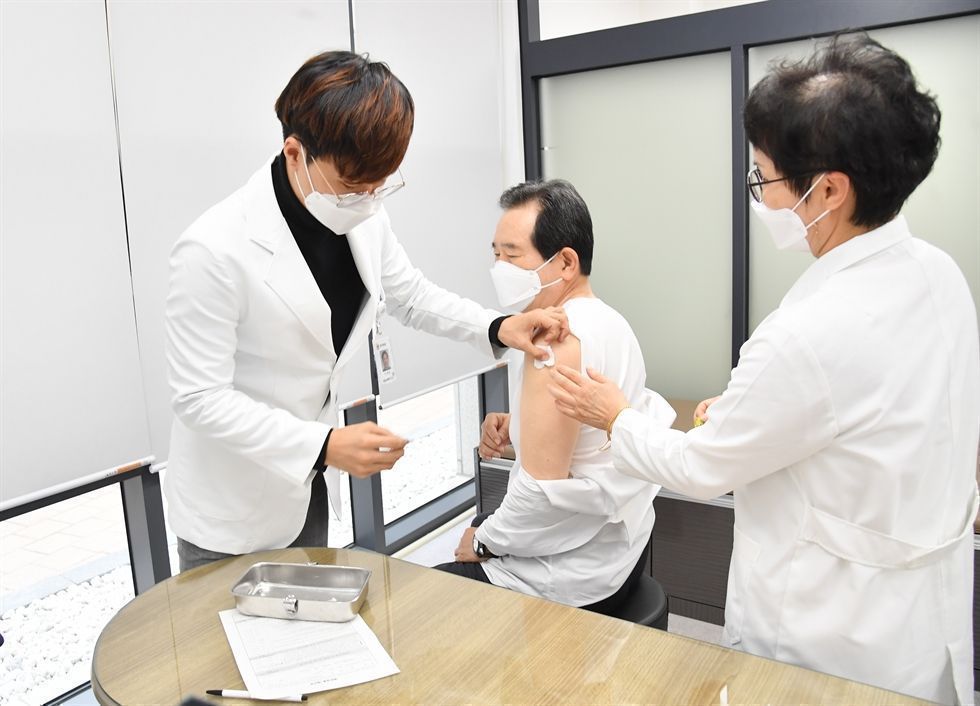
deaths in South Korea is now 48.
 
The other day at a pharmacy I had 2 shots within 5 minutes in the same arm. The flu & shingles. Was feeling a little bit sick for less than a day, most of which i slept through (14 hours) & lost a few pounds as i wasn't hungry. Which was good, since i wanted to strip off some unhealthy weight, anyway.

I had my first ever flu shot earlier this week. I've never felt I needed one before as I rarely get sick but with Covid in the air I thought it would be a good idea. Right after the shot I walked to my car and when I flipped the door handle, I ripped the door off. I thought that was odd. I looked up at the top of the building and thought, hmmmm, I wonder. I grabbed onto my shirt and ripped it open to find a big ass S on my chest. I then leaped into the air and landed on top of the building. This Trump moment was brought to you by a flu shot which either made me into SuperSqueezer or Delusional as Canadaman.
 
Co-infection of influenza A virus enhances SARS-CoV-2 infectivity

Abstract
The upcoming flu season in the northern hemisphere merging with the current COVID-19 pandemic raises a potentially severe threat to public health. Through experimental co-infection of IAV with either pseudotyped or SARS-CoV-2 live virus, we found that IAV pre-infection significantly promoted the infectivity of SARS-CoV-2 in a broad range of cell types. Remarkably, increased SARS-CoV-2 viral load and more severe lung damage were observed in mice co-infected with IAV in vivo. Moreover, such enhancement of SARS-CoV-2 infectivity was not seen with several other viruses probably due to a unique IAV segment as an inducer to elevate ACE2 expression. This study illustrates that IAV has a special nature to aggravate SARS-CoV-2 infection, and prevention of IAV is of great significance during the COVID-19 pandemic.


15 Reasons Why the Flu Vaccine is Bad Medicine:
The following list is based on data collected during the 2015-2016 flu season
  1. A January 2017 study determined that previous studies alleging patient benefits from influenza vaccination of workers were “found to violate basic mathematical principles,” that the four studies “underpinning policies of enforced HCW influenza vaccination attribute implausibly large reductions in patient risk to HCW vaccination, casting serious doubts on their validity,” and that “current scientific data are inadequate to support . . . enforced HCW influenza vaccination.” The authors did say that the prior studies “do not refute approaches to support voluntary vaccination or . . . staying home or masking when acutely ill.”[1]
  2. The December 11, 2015 Morbidity and Mortality Weekly Report (MMWR) reports that only 1.2% of 102,675 respiratory specimens from Oct 4 to Nov 28 tested positive for influenza viruses.[2] Cumulative data to date (April 2, 2016) shows a range around the country from 15.1% – 22%.[3]
  3. Of the $282 million that The National Vaccine Injury Compensation Program (NVICP) paid out in FY 2017 for vaccine injuries and death, roughly $188 million was for influenza vaccine injuries and deaths. Influenza vaccines make up about 42% of administered vaccines, but 57% of compensated vaccine petitions (2006 – 2016).[4]
  4. A 2015 study found that influenza vaccines in Canada had a MINUS 8% effectiveness rate (that’s negative eight percent) and recommended “adjunct protective measures . . . to minimize morbidity and mortality.”[5]
  5. A Cochrane Summary published March 13, 2014 found that influenza vaccination shows no appreciable effect on working days lost or hospitalization.”[6]
  6. Another recent study showed that the rate of non-influenza respiratory illness in influenza-vaccinated children was 4.4 times that of non-vaccinated children.[7]

    This study further supports the claim that Influenza vaccination increases the risk of non-influenza infections.
In 115 participants, those who received trivalent influenza vaccines had a 440% higher risk of acute respiratory infection associated with confirmed non-influenza respiratory virus infection (RR, 4.40; 95% CI, 1.31–14.8) compared to placebo recipients.

  • We know that there are over 200 pathogens that cause ILI.
  • The pathogens were mainly rhinoviruses, coronaviruses, and coxsackie/echoviruses; ILI episodes occurred shortly after a peak of influenza activity.
  • Influenza accounts for a very small fraction of all cases.
In this study, the vaccinated cohort experienced 4.4 times more respiratory infections than the control group that did not receive vaccinations. Let that sink in for a moment.

  1. A 2014 study found that the trivalent influenza vaccine “was not observed to ameliorate symptoms or viral shedding among vaccine failures (infections occurring among vaccinated persons) compared with infected placebo recipients.”[8]
  2. Another 2014 influenza vaccine study, “Systematic Review of Mandatory Influenza Vaccination in Healthcare Personnel” in the American Journal of Preventive Medicine, concluded that “evidence on clinical outcomes is lacking.”[9]
  3. In 2013, the Center for Infectious Disease Research and Policy (CIDRAP) at the University of Minnesota reported on studies showing that the influenza vaccine provided “little or no protection” in 2010-11, and that getting a flu shot 2 years in a row may actually lower protection.[10]
  4. A 2013 BMJ article documented that public health authorities’ aggressive promotion of the influenza vaccine is not supported by the medical literature and fails to acknowledge serious vaccine risks, e.g., contrary to wildly mistaken claims, only 16% of tested respiratory specimens are positive for influenza, and serious vaccine adverse events are well documented internationally.[11]
  5. In November of 2012, a critical review in The International Journal of Family Medicine concluded: “The arguments for uniform healthcare worker influenza vaccination are not supported by existing literature. The decision whether to get vaccinated should, except possibly in extreme situations, be that of the individual healthcare worker, without legal, institutional, or peer coercion.”[12]
  6. In a September 2011 Position Statement, the Occupational Safety and Health Administration (OSHA) stated that it “believes there is insufficient scientific evidence for the federal government to promote mandatory influenza vaccination programs that do not have an option for the HCP [healthcare professionals] to decline for medical, religious and/or personal philosophical reasons.”[13]
  7. A recent Lancet study revealed that flu vaccines are 60% effective. However, the 60% figure was the “relative” risk reduction (rounded up); the “actual” risk reduction was a trivial 1.5%.[14] Accordingly, flu vaccines are of questionable benefit.
  8. The AMA and the CDC endorsed non-mandatory flu vaccine policies during the 2009-2010 swine flu pandemic.[15] Clearly, these agencies contemplated at least some non-vaccinated employees, even during a declared pandemic.
  9. A 2010 review of the flu vaccine literature by the Cochrane Collaboration, an independent, international consortium of medical researchers, issued a WARNING stating that “reliable evidence on influenza vaccines is thin but there is evidence of widespread manipulation of conclusions…” The review also found that “vaccine use did not affect . . . working days lost” and “had no effect on hospital admissions or complication rates.”[16]
 
An Oct. 1 study found a link between deaths from coronavirus infection and influenza vaccinations in older adults. The research published in PeerJ by Universidad Juarez del Estado de Durango professor Christian Wehenkel observed a “positive association between COVID-19 deaths and IVR (influenza vaccination rate) of people” above 65 years old.

Wehenkel analyzed data sets from 39 countries with more than 500,000 people to determine the link. The results of Wehenkel’s analysis did not appear to support earlier studies that showed getting the influenza jab could reduce the risk of dying from COVID-19. One such study by researcher Guenther Fink and his colleagues pointed out that “the innate immune response induced by recent vaccination could result in more rapid and efficient SARS-CoV-2 clearance,” preventing the virus from reaching deeper into the lower areas of the lung.

Another research Wehenkel cited in his paper talked about how flu vaccines fail to protect against other pathogens. A 2012 study by University of Hong Kong professor Benjamin Cowling and his colleagues suggested that being vaccinated against the flu may increase immunity against the influenza virus – at the expense of “reduced immunity to non-influenza respiratory viruses” such as SARS-CoV-2 by some unknown biological mechanism. Thus, people who have been vaccinated against the flu would be protected against it, but not against other pathogens due to reduced non-specific immunity in the weeks following vaccination.

A later study published in the journal Vaccine said getting vaccinated against the flu may actually increase the risk of coronavirus by as much as 36 percent due to what the study called “virus interference.” The paper by Greg G. Wolff studied influenza vaccination programs among Department of Defense personnel.

“Further exploration is needed to explain these findings, and additional work on this line of research may lead to prevention of deaths associated with COVID-19,” Wehenkel wrote. Two weeks after the study was published, PeerJ added a note on top of the paper emphasizing “correlation does not equal causation” and warning that the study “should not be taken to suggest that receiving the influenza vaccination results in an increased risk of death for an individual with COVID-19 as there may be confounding factors at play.”

The toxic adjuvants play a role in deaths following vaccination programs
Wehenkel’s paper also touched on adjuvants found in different vaccines such as the flu shot. He mentioned that “specific adjuvants in influenza vaccines should also be tested for adverse reactions” despite existing ones having a high level of safety. A 2015 study by Flinders University’s Nikolai Petrovsky published in Drug Safety tackled the potential dangers of some vaccine adjuvants – including aluminum salts – to “induce chronic immune activation and inflammation” that remain long after the vaccine is injected.

South Korea recently saw the dangers of flu vaccines after a number of people in the country died following seasonal flu vaccinations. A report by Yonhap News Agency said there were 48 flu vaccination deaths as of Oct. 24, including a 17-year-old boy and an elderly male from the southeastern city of Daegu. As a precautionary measure, the Singapore Ministry of Health ordered local health professionals to halt the use of two South Korean flu vaccines in the city-state. The victims received different brands of flu vaccines, two of which were available in Singapore.

Meanwhile, the African nation of South Sudan confirmed an outbreak of vaccine-derived polio in the country’s northwest. The outbreak came days after the World Health Organization declared that South Sudan already eradicated the wild poliovirus through vaccination efforts. However, the weakened virus in the oral polio vaccine administered to South Sudanese mutated and caused sickness instead of providing immunity against the wild pathogen. (Related: Instead of preventing the disease, polio vaccinations CAUSE polio.)

The incidents in South Korea and South Sudan are just two of many incidents outlining the danger of vaccines. Chemicals such as mercury, formalin and aluminum are commonly used to improve the immune response triggered by vaccines, but actually cause more harm than good. Some vaccines even contain proteins and cells obtained from aborted human fetuses so the body is more receptive of them.

Learn more about the dangers of vaccines against influenza and polio at VaccineDeaths.com.

Sources include:

Collective-Evolution.com

PeerJ.com

MedRXiv.com

Academic.OUP.com

Link.Springer.com

En.YNA.co.kr

ChannelNewsAsia.com

StrangeSounds.org

 
I wonder if it was a vaccine that made CM is so prone to conspiracies.

actually i have my childhood vaccines. over 50 people in korea died after getting the flu shot


.


LONDON -- The World Health Organization says a new polio outbreak in Sudan is linked to an ongoing vaccine-sparked epidemic in Chad — a week after the U.N. health agency declared the African continent free of the wild polio virus.

In a statement this week, WHO said two children in Sudan — one from South Darfur state and the other from Gedarif state, close to the border with Ethiopia and Eritrea — were paralyzed in March and April. Both had been recently vaccinated against polio. WHO said initial outbreak investigations show the cases are linked to an ongoing vaccine-derived outbreak in Chad that was first detected last year and is now spreading in Chad and Cameroon.


“There is local circulation in Sudan and continued sharing of transmission with Chad,” the U.N. agency said, adding that genetic sequencing confirmed numerous introductions of the virus into Sudan from Chad.

WHO said it had found 11 additional vaccine-derived polio cases in Sudan and that the virus had also been identified in environmental samples. There are typically many more unreported cases for every confirmed polio patient. The highly infectious disease can spread quickly in contaminated water and most often strikes children under 5.


is ABC news conspiracy theorists?
 
New Brunswick Public Health officials have reported “three adverse events” following influenza immunization.

Public Health sent a memo to health-care providers stating that the events are neurological in nature, and were reported in adults who received the vaccine between Oct. 2 and Oct. 20. The reactions occurred within seven days of receiving the vaccine.

“Public Health is aware of three adverse events following influenza immunization in New Brunswick reported with one batch of influenza vaccine, all occurring within 7 days of administration,” said Bruce Macfarlane, a Public Health spokesperson.

“The severity of these adverse events are unusual for New Brunswick.”

The memo asks vaccine providers not to use FluLaval Tetra lot #KX9F7, a Glaxo SmithKline product, and that it should be kept refrigerated and separated from other products.

According to the memo, the product should be labelled “do not use” until further notice.

Macfarlane said Public Health has advised the Public Health Agency of Canada and Health Canada and posted an alert on the Canadian Network for Public Health Intelligence system “to bring attention to our situation to other jurisdictions.”

Health Canada is conducting a full review of the situation.

https://www.cbc.ca/news/canada/new-brunswick/new-brunswick-influenza-shot-1.5802614?cmp=rss

South Korea's health agency said Tuesday that a total of 101 people, most of whom were elderly, died after receiving seasonal flu vaccines.

The deaths had stoked public anxiety over the safety of such vaccines, but the Korea Disease Control and Prevention Agency (KDCA) said 97 of those deaths have very limited relation with the flu shots. Another four cases are under investigation.

Of the total, 84 people were aged over 70, followed by eight under 60 and nine in their 60s, the KDCA said.

 
WINNIPEG -- Manitoba health-care providers are being advised to stop using a certain influenza vaccine after three people from New Brunswick reported neurologic symptoms including numbness or weakness of the face or limbs.

The Flulaval Tetra (KX9F7) shot, manufactured by GlaxoSmithKline Inc. (GSK), learned of the effects on Nov. 13.

“Patient safety is a top priority for GSK,” the company said in a statement. “On Friday, November 13, we learned of the 3 reported serious adverse events in New Brunswick, Canada. We have launched our own internal investigations and are currently working with the Canadian health authorities to obtain more information as part of those investigations."


The company said the outcome of the investigations will be communicated to the Canadian health authorities and the provinces once it is known.

GSK said they are aware of provinces suspending distribution and vaccination doses, and said people should contact their public health authority for immunization status.

Pharmacist Carey Lai explains when adverse effects are reported, an investigation is normal.

“That’s why as a precaution, they’ve asked everyone who still has this Flulaval Tetra vaccine specifically with this lot number to stop using it,” Lai said.

The province released a statement saying they did receive the vaccine, noting the lot was received and shipped between Oct. 22 and November 11. Approximately 64,000 doses were distributed from that order.

“Although no neurological or serious adverse events associated with this lot have been reported in Manitoba, out of an abundance of caution, providers are being asked to set aside doses from that lot and not use it until more information is available,” the province said. “Manitoba is working with federal and provincial partners through the national procurement process to determine how these doses may be replaced, if necessary.”

Manitoba pauses use of certain influenza vaccine due to side effects in New Brunswick | CTV News
Again, a guy who thinks 11,000 Canadian deaths from covid aren't a big deal but 3 adverse events are a national emergency.