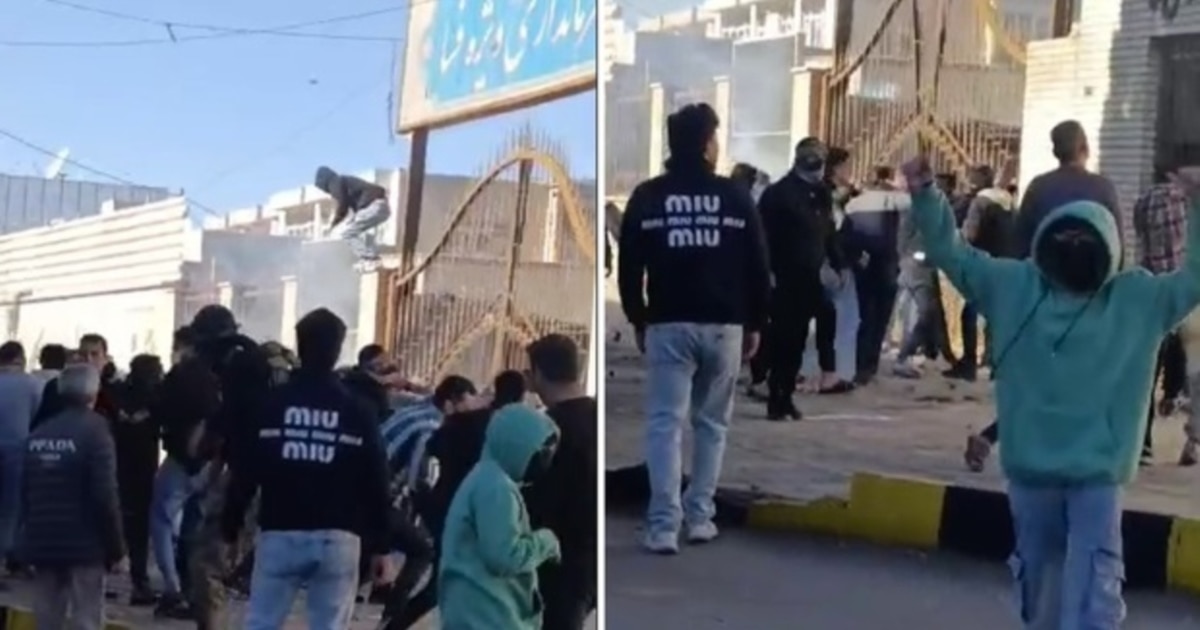
A series of mass demonstrations erupted in Iran across multiple cities in response to the escalating economic crisis in the country. Beginning in Tehran, the protests were sparked by frustration over skyrocketing inflation, rising food prices, and the severe depreciation of the Iranian rial. Initially driven by shopkeepers and bazaar merchants, the demonstrations soon spread to universities, drawing in large numbers of students. Demonstrators voiced anti-government slogans such as "Death to the Dictator" in reference to supreme leader Ali Khamenei, and the movement quickly became the largest outbreak of unrest in Iran since the 2022 protests following the death of Mahsa Amini.[3][4][5]
The protests were driven by a rapidly worsening economic situation. Inflation in Iran had surged to 48.6% in October 2025 and 42.2% in December 2025, severely impacting household budgets.[6] The Iranian rial had fallen to a record low of 1.45 million to the US dollar.[6][7] Food and essential goods saw massive price hikes, while many Iranians struggled to make ends meet.[7] The currency crisis, which had been developing over several years, worsened in 2025 amid ongoing economic pressures, including the 12-day war with Israel and renewed UN nuclear-related sanctions imposed through the snapback mechanism.[6]
What began as localized protests in Tehran's commercial districts quickly spread to other major cities, including Isfahan, Shiraz, and Mashhad.[6] In Tehran, protests centered around the Grand Bazaar, where merchants staged strikes to demand government action. Footage shared on social media showed security forces deploying tear gas to break up the crowds.[6] As the protests grew, so did their intensity, with demonstrators in various cities chanting anti-government slogans and calling for an end to the economic hardships that had left many struggling to afford even basic necessities.[6] The goals of the protests have also expanded to include calls for "freedom" as well as explicit calls to overthrow the government.[8]
2025 Iranian protests - Wikipedia
BREAKING: Islamic Republic Forces COLLAPSE In Iranian Cities