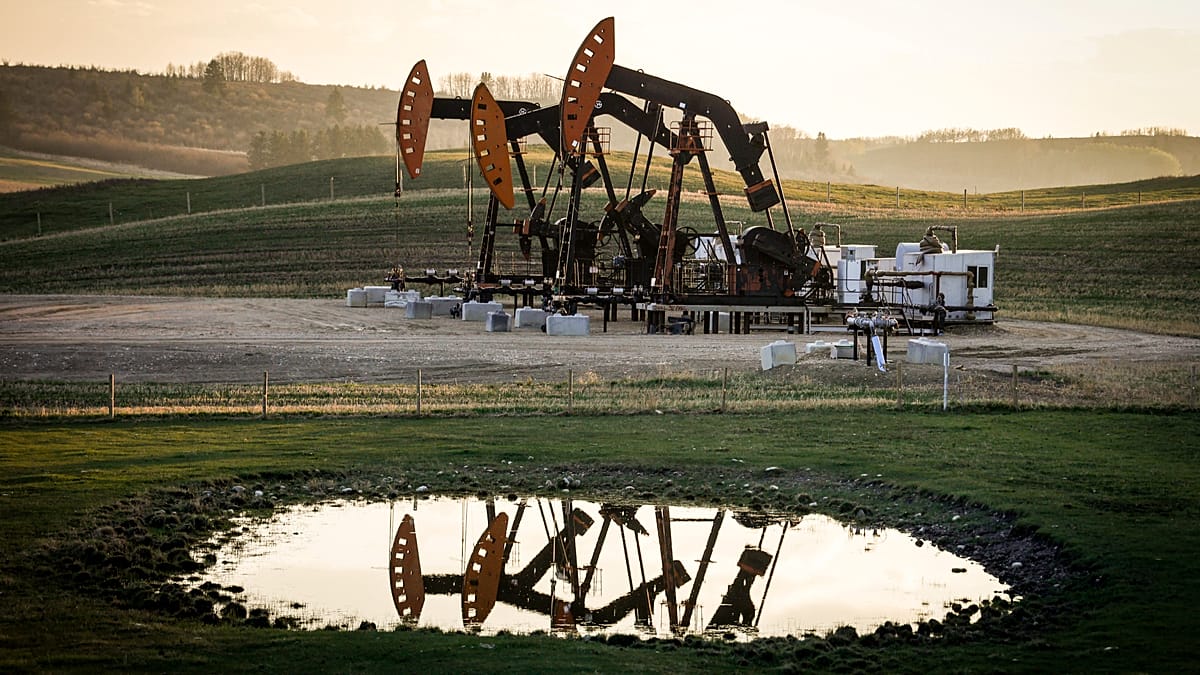
Carney fast-tracks new pipeline as climate change worsens

oil&gas

Well-known member
Apr 16, 2002
17,182
3,459
113
Ghawar
Analyzing the environmental and economic costs of the Pacific Link pipeline, the first project to be designated in national interest under Bill C-5.

Eric Klempan
October 27, 2026

Prime Minister Mark Carney has announced the fast-tracking of Pacific Link, growing Canada’s fossil fuel production as the Canadian Climate Institute warns the country is straying from climate targets.

The pipeline’s designation as a “project of national interest” will allow it to circumvent legal approval processes, including environmental assessments.

Alberta Premier Danielle Smith calls it “the largest pipeline build-out we’ve seen in decades.”

Pacific Link will run from Bruderheim, Alta. to Roberts Bank Terminal in B.C., south of Vancouver. It is set to export an additional one million barrels of oil a day to Asia, thus lowering Canada’s dependence on the U.S., according to the prime minister’s office. In June, the Canadian Climate Institute estimated that the MOU signed between Alberta and the federal government would add roughly 20 megatonnes of emissions to the atmosphere each year.

To put that 20 megatonnes into perspective, the Canadian Climate Institute has reported that Canada’s emissions increased from 440 megatonnes in 2024 to 691 megatonnes in 2025. The country’s current goal is to lower emissions to below 440 megatonnes by 2030, making this pipeline project a step backwards in decarbonization as the government doubles down on growing oil and gas, the country’s largest polluting industry.

“It makes no economic sense and it’s a climate bomb, so we need to resist,” Mike Morrice, presumptive leader of the Green Party of Canada, told The Concordian in an exclusive interview. “The U.N. has made clear that the climate crisis is a code red for humanity, and Pacific Link is 45 billion more dollars of our money to worsen the very crisis that we’re in.”

Local consequences of the pipeline include threats to wildlife and the risk of oil spills, according to a federal government-ordered review panel on the construction of Roberts Bank Terminal 2, the proposed B.C. container terminal to accommodate increased tanker traffic from the pipeline.

“The Panel’s assessment concludes that there would be effects on the quality of life of local populations, including health and quality of experience during commercial and recreational activities,” reads the report, published in 2020.

Among others, it pointed to significant adverse effects on local Indigenous populations and significant harm to biodiversity and certain local wildlife, such as the orca population.

To reduce climate risks, the federal government has proposed the Pathways Project: a carbon capture system that would reduce emissions by storing 16 megatonnes of CO2 each year starting in 2045. Carney has also pledged $1.2 billion for marine protection, including an oil spill response plan.

But some climate experts don’t believe the plan is enough.

“There is no effective way to really clean up an oil spill. You know, you can usually get like 10–20 per cent of it,” said Keith Stewart, senior energy strategist at Greenpeace Canada. “We’re saying to the salmon and the orcas, ‘you got to take a hit for the team.’ And that team is oil and gas profits. It’s not you and I.”

According to the Scotia Growth Institute, Pacific Link is projected to cost upwards of $43.7 billion, 90 per cent of which is currently publicly owned — 45 per cent by Alberta and 45 per cent by the federally owned Trans Mountain Corporation. Carney also announced that “Indigenous communities will be offered a minimum of 10 per cent ownership interest” in the project.

“We estimate that the Pacific Link will create 140,000 jobs across the country,” said Carney when he announced the pipeline’s status as a project of national interest on Oct. 1. “It will generate over $20 billion in GDP per year and over $100 billion in government revenue by 2060.”

However, considering how many countries are now moving toward renewable energy, demand for oil could lower significantly by the time the project is completed in the mid-2030s.

“Betting on a new pipeline now is like buying a blockbuster video franchise just as Netflix is coming on stream. It’s a really bad bet for our economy,” said Stewart.

In a statement provided to The Concordian, Natural Resources Canada noted that, based on its projections, demand for Alberta’s crude oil is sufficient to justify Pacific Link.

“While the Governor in Council has considered the fact that there are a range of projections for long-term crude oil demand, from both public and private sources, sufficient demand is expected to exist for the new pipeline,” wrote Christian Tessier, manager of media relations at Natural Resources Canada. “For example, demand in the Asia-Pacific region is expected to remain comparatively resilient, creating a strong market for Canadian oil exports and supporting investment in pipeline infrastructure through toll revenues.”

Morrice believes there are better uses for the money being spent on the pipeline.

“For less than the cost of this new pipeline, we could be building out the provincial interties for an east-west electricity to power a clean energy future in this country,” he told The Concordian.

Stewart believes Canada and Alberta should focus on a “just transition,” helping oil and gas workers move out of the fossil fuels industry as the world shifts toward renewables.

“One way or another, those jobs are going away and the cost of that shouldn’t be borne by those communities,” he said.

The pipeline is facing legal pushback from an Indigenous group. Cold Lake First Nations is situated in the Alberta oilsands region and filed an application for judicial review of the fast-tracking on the grounds that they were not consulted about the project.

Legal challenges like this could slow or halt construction, raising questions about Bill C-5’s real power to circumvent legal barriers.

 
Prime Minister Mark Carney has announced the fast-tracking of Pacific Link, growing Canada’s fossil fuel production as the Canadian Climate Institute warns the country is straying from climate targets.


Carney the shameless climate hypocrite is doing the right thing
to continue growing the nation's fossil fuel production. I hope our
climate leader will divert more attention from oil and gas production
to the need to stimulating coal production. The world needs more
dirty coal from Canada to save the climate.


Thought we were phasing out the world’s deadliest source of electricity? THINK AGAIN.

For ten years, Canada has promised to phase out thermal coal. In reality, we have been quietly enabling its expansion by exporting huge volumes of coal through our west coast ports.

And most of it isn’t even ours. It’s American. (#ElbowsUp? )
It’s time to end the free ride for American coal, and hold Canadian decision-makers to their long-overdue promise to scrap this dirty, outdated fuel once and for all.

Tell the federal government to follow through, and finish the job they started.
Join us and Stand.earth in demanding that Prime Minister Carney phase-out thermal coal exports and work with Canada’s ports to promote more sustainable, economy-boosting exports.

Send a letter to your MP, Prime Minister Carney, and key cabinet ministers demanding that Canada phase out coal exports for good.
.......................
 
The oily and gassy men's posts demonstrate the classic Russian techniques of sowing discord and causing citizens to distrust our western democracy and way of life.
 
  • Like
Reactions: WyattEarp
Ya, sorry, we are a resource based economy with a vast wealth of things people need. We should export, get more involved in the chemical production side, and diversify trade partners.
 
Ya, sorry, we are a resource based economy with a vast wealth of things people need. We should export, get more involved in the chemical production side, and diversify trade partners.

But some of our leaders want us to believe we would be doomed unless
they are elected and remain in power so we can attain net zero.
 
But some of our leaders want us to believe we would be doomed unless
they are elected and remain in power so we can attain net zero.

Some of our FORMER LEADERS.
 
Carney’s decision to fast-track a new pipeline is an important step toward strengthening Canada’s economy and securing its future. Any new pipeline would help boost economic growth, create jobs, and generate significant revenue by providing Canada with greater access to markets for its oil and natural gas, products that remain in high demand around the world. It would also reduce Canada’s dependence on other countries for its energy needs, strengthening our energy independence and national security. The United States has also come to recognize just how vital Canada’s oil and natural gas supply is to its own economy and energy security. In times of crisis or national emergency, Canada is an essential and reliable energy supplier to the Americans. By investing in new pipeline infrastructure, Canada can strengthen its economy, increase its influence in global energy markets, and ensure that our valuable natural resources benefit Canadians.
 
Carney’s decision to fast-track a new pipeline is an important step toward strengthening Canada’s economy and securing its future........

How would strengthening Canada's economy secure our future if rising carbon
emission our fossil fuel industry exports to the world as well as that of our nation's
SUV drivers are going to expedite our joy ride to global climate catastrophe?
 
What is Canada’s climate track record as it seeks 'ever closer' ties with Europe?

29 October 2026

Critics say there is a stark contrast between PM Mark Carney's international reputation as a climate champion and his domestic drive to expand oil and gas production.

Last month, European Commission President Ursula von der Leyen made an unexpected offer to Canada: to become the EU's first ever “associate member”.

After pushback on the term from member states, most of all Germany, the EU is now pushing for "ever closer association" with Canada, in the latest draft of a joint declaration due to be adopted at the end of the EU-Canada summit which starts today in Montreal.

There is broad consensus amongst member states on closer cooperation with Canada on areas such as defence, critical raw materials, energy, trade and border security.

Just this week the EU's climate chief has told member states they must prepare for increasingly extreme weather, signalling that the Commission is taking climate preparedness seriously. But what about Canada?
.........................................
 
Carney Almost as Bad as Trump on Climate, Emissions Watchdog Warns

Oct 27, 2026

Canada’s already battered reputation on curbing climate emissions has become drastically worse under the leadership of Prime Minister Mark Carney according to a recent report card from Climate Action Tracker, approaching levels of inaction comparable to the “drill baby drill” Trump Administration.

“Prime Minister Mark Carney has so far been unwilling to recommit to either the 2030 or 2035 targets and has conceded that, under his energy plan, Canada’s emissions will be higher in the near term than previously projected,” warned the report. “If Canada were to officially abandon its 2030 and 2035 targets, it would be the first country after the United States to do so.”

The emissions watchdog didn’t mince words about the pace and scale of Canada’s climate rollbacks.

“What is shocking to us is the true extent to which Prime Minister Carney has rolled back climate policies, largely in favour of the fossil fuel industry,” Bill Hare, CEO of Climate Analytics, a CAT partner, said in a release.

“This Carney climate carnage, while not quite as bad as Trump’s, is rapidly heading in the same direction, despite the country being hit by record wildfires and other devastating climate impacts,” he added.

While Canada’s planned policies were expected to cut emissions by 30 percent below 2005 levels by 2030 two years ago, since Carney has come into office Climate Action Tracker estimates this planned reduction has been cut in half. Current policies are on track to only deliver a 14 percent decrease in emissions.

Carney’s oil-friendly government has swept aside a suite of climate regulations aimed at reducing the massive and growing emissions from the oil sands, which have ballooned by 178 percent since 2005 and now almost equal the entire passenger transport sector.

Perhaps the single fig leaf remaining to cover this naked climate failure is the long-touted and still not-built Pathways carbon capture and storage (CCS) project.

But this project is nothing more than a boondoggle in waiting, with rapidly diminishing expectations of what Pathways would accomplish and growing estimates of what it would cost.


“These technologies are nowhere near the scale and commercial viability needed to deliver on the needed emission reductions,” Climate Action Tracker concluded.

Pathways was originally hyped by bitumen producers as the largest CCS project in the world that would eliminate 68 million tonnes (MT) of emissions a year, or three-quarters of the oil sands’ entire output. That dubious goal has since been quietly rolled back to 16 MT by 2050, a decline of 76 percent.

The first phase of the Pathways project was supposed to be completed by 2030 to store 22 MT per year, now revised down to 6 MT sometime after 2032. Dilling bravely characterized these massive decreases in sequestered emissions as “slightly smaller”.

Six years into this alleged climate saving megaproject, no design proposals have been made public and not a single shovel has been stuck in the ground. The only things that have tangibly changed are the steadily diminishing projections about what Pathways could achieve if it ever gets built, and the mounting costs of doing so.


Originally budgeted at $16.5 billion, the current costs of building a potentially dangerous 650 km CO2 pipeline to Cold Lake and injecting CO2 into an underground reservoir three times larger than Prince Edward Island have ballooned to as high as $30 billion. Guess what? The same companies that are on track to pocket $100 billion in war-related profits this year expect the Canadian taxpayer to foot most of the bill.

It is increasingly clear that the Pathways project is less about carbon sequestration and more about political leverage. The so-called grand bargain between Ottawa and Alberta explicitly links Pathways with a new pipeline approval to the west coast to further boost bitumen production that has already increased almost 40 percent since 2015, undoing any climate benefits.

“The Pathways project… will not come close to compensating for the new west coast oil pipeline, which could add up to 28 MTA of greenhouse gas emissions every year,” Aly Hyder Ali, Environmental Defence Canada’s senior program manager for oil and gas told DeSmog. “It will require tens of billions of dollars in public support, while capturing only a small portion of the emissions from oil sands production.”


Carbon capture and storage has long been held up as a way to slow down climate consequences while still burning fossil fuels. Despite much industry-funded hype and $40 billion so far spent around the world, CCS only sequesters a puny proportion of global greenhouse gases.

A recent peer-reviewed study of the technology warned, “continued reliance on CCS is a high-cost gamble that risks delaying the deployment of truly effective climate solutions… Despite decades of promotion and investment, [CCS] remains technologically constrained, economically inefficient, and strategically misapplied.”

Even if Pathways worked perfectly it would do nothing to mitigate the tailpipe emissions once bitumen is refined into transportation fuel, which are four times higher than production emissions.

The Pathways project is a diminishing technological fix for a problem that industry has refused to deal with. Alberta oil sands operators have repeatedly stalled taking action, demanded more taxpayer largess, and allowed their emissions to grow north of 92 MT per year – an increase of more than three percent over the previous year due to ballooning production.


The oil patch is Canada’s biggest climate laggard while banking massive profits. Alberta’s bitumen producers raked in $13.3 billion in the first three months of 2026. Yet such wealthy companies still expect the beleaguered Canadian taxpayer to foot most of the bill for another pipeline to the Pacific and the expensive CCS project that makes the pipeline politically possible. Perhaps oil patch lobbyists deserve a raise. To gaslight a country into shelling out billions in subsidies to a wildly profitable sector that is also fuelling an accelerating climate crisis is no small feat. Pathways’ diminishing targets and mounting costs make this outlandish accomplishment even more outrageous.

 
In the Carney era — what Big Oil wants, Big Oil gets

Linda McQuaig
October 1, 2026

Mark Carney is willing to risk climate disaster to support Big Oil. His recently announced “mega-deduction” corporate tax break is tailor made for fossil fuel companies.

For quite a while, we’ve known that Mark Carney is not the climate warrior he was cracked up to be.

But only now is he starting to reveal just how far he’ll go in jeopardizing the slim remaining hope of averting climate disaster.

Even as the country recovers from scorching wildfires, our prime minister has just introduced a massive new subsidy for the fossil fuel industry.

If you haven’t heard about it, that’s because it’s largely invisible.

Ostensibly, the new measure has nothing to do with fossil fuels.

At his investment summit in Toronto last month, Carney announced a new “mega-deduction” corporate tax break. He didn’t mention fossil fuels.

But the exceptionally generous new measure is tailor-made for the fossil fuel industry; indeed, it bears an uncanny resemblance to what was requested by the Big Oil lobby group, the Canadian Association of Petroleum Producers, in its prebudget submission in May 2026.

The mega-deduction, expected to cost Ottawa $36 billion in tax revenue over five years, allows companies to immediately write off a range of capital investments.

While it’s generated excitement throughout the corporate world, the new measure will be particularly beneficial to the fossil fuel industry, which makes huge investments in long-term assets like pipelines and Liquefied Natural Gas (LNG) facilities, notes Marc Lee, a senior economist with the Canadian Centre for Policy Alternatives.

The benefits for the fossil fuel industry are clearly deliberate: similar fast-write-off deductions were introduced in 2018 and expanded in later federal budgets, but those measures were specifically targeted towards clean energy and low-carbon projects.

Clean energy is no longer a requirement. Now pipelines and high-carbon facilities can qualify for the exceptionally generous new writeoffs, which are also permanent, whereas the earlier ones were time-limited.

Lee points out that Ottawa is stepping in to reduce the uncertainty the fossil fuel industry faces, as the world tries to wean itself off fossil fuels. With Ottawa sweetening the deal considerably through the mega-deduction’s tax benefits, oil and gas companies will be more likely to make major investments they might otherwise consider too risky.

The mega-deduction certainly reduces the risk in the just-announced deal for expanding the LNG project in Kitimat, B.C.

“This project can move ahead only because Canadians are footing part of the bill,” insists Alex Walker of the group Environmental Defence, which maintains that LNG facilities have a climate impact “worse than almost any other fossil fuel.”

For years, environmentalists have argued that Ottawa should, at the very least, remove the enormous subsidies it provides the oil and gas industry — subsidies far larger than those for renewable energy.

Ottawa has only complied half-heartedly.

And now there’s this massive new subsidy for fossil fuels.

Rather than focusing on transitioning us to renewable energy, Carney is heavily subsidizing future infrastructure that keeps us using oil and gas — and let the damn trees burn!

The corporate world’s excitement is reflected in a banner front-page story in the Globe and Mail heralding the mega-deduction as opening the door to tax reform — the kind long dreamed of by the corporate elite.

Since the mega-deduction will mean the loss of billions of dollars of tax revenue, a key question emerges: how will the country make up all that lost revenue?

The solution highlighted in the two-page spread in the Globe is to shift more of the tax burden to sales taxes — with a suggested hike that would raise the HST in Ontario to 18 per cent.

Make no mistake who would end up paying for this.

The poor would be spared somewhat (with an enriched GST tax credit), leaving the middle class bearing the main load.

Carney is proving adept at dazzling international audiences, even as he jeopardizes fading hopes for a climate solution and delivers gigantic tax breaks to Canada’s corporate elite, which can’t wait to transfer even more of the country’s tax burden to the middle class.

 
Big Oil rules. Carney's climate leadership is going to help
generate mega oil profits for the good of our economy. I'm
glad our PM turns out to be the climate leader most happy
to sleep in bed with Big Oil.
 
Big Oil rules. Carney's climate leadership is going to help
generate mega oil profits for the good of our economy. I'm
glad our PM turns out to be the climate leader most happy
to sleep in bed with Big Oil.

Big oil made $47 billion from the Iran war.
america spent $47 billion of tax payer money to lose the war.

But that's nothing to how much climate change will cost the world.

 
How would strengthening Canada's economy secure our future if rising carbon
emission our fossil fuel industry exports to the world as well as that of our nation's
SUV drivers are going to expedite our joy ride to global climate catastrophe?


there in lies the inherent conflict of the woke and destructive politics that you have embraced
now think about how differently Canada's position would be had real scientific rigor been applied to the false AGW narrative before it drifted into the realm of hysterical, intentionally misleading propaganda
CO2 is the gas of life and it does not control our extremely complex , dynamic and chaotic climate system

learn some physics
 
  • Haha
Reactions: Valcazar
there in lies the inherent conflict of the woke and destructive politics that you have embraced
now think about how differently Canada's position would be had real scientific rigor been applied to the false AGW narrative before it drifted into the realm of hysterical, intentionally misleading propaganda
CO2 is the gas of life and it does not control our extremely complex , dynamic and chaotic climate system

learn some physics

larue, you've never been right about the climate once in your life.
What is it, 80 years of being consistently wrong and claiming there is no warming?

 
How would strengthening Canada's economy secure our future if rising carbon
emission our fossil fuel industry exports to the world as well as that of our nation's
SUV drivers are going to expedite our joy ride to global climate catastrophe?

I believe the demise of this planet is inevitable. Planets are formed, it evolves. Sometimes life forms and eventually die out. This may have happened on this planet hundreds, maybe thousands of times. It is a natural process. This planet will deteriorate sooner or later, I do not plan to be around even to see it deteriorate into a dystopian Mad Max world. I am not a vampire that will live forever. I would not want to be one. Those guys would make me use Tetley's tampons at tea time, I prefer earl grey tea with some evaporated milk.

eWmpgar.png
​