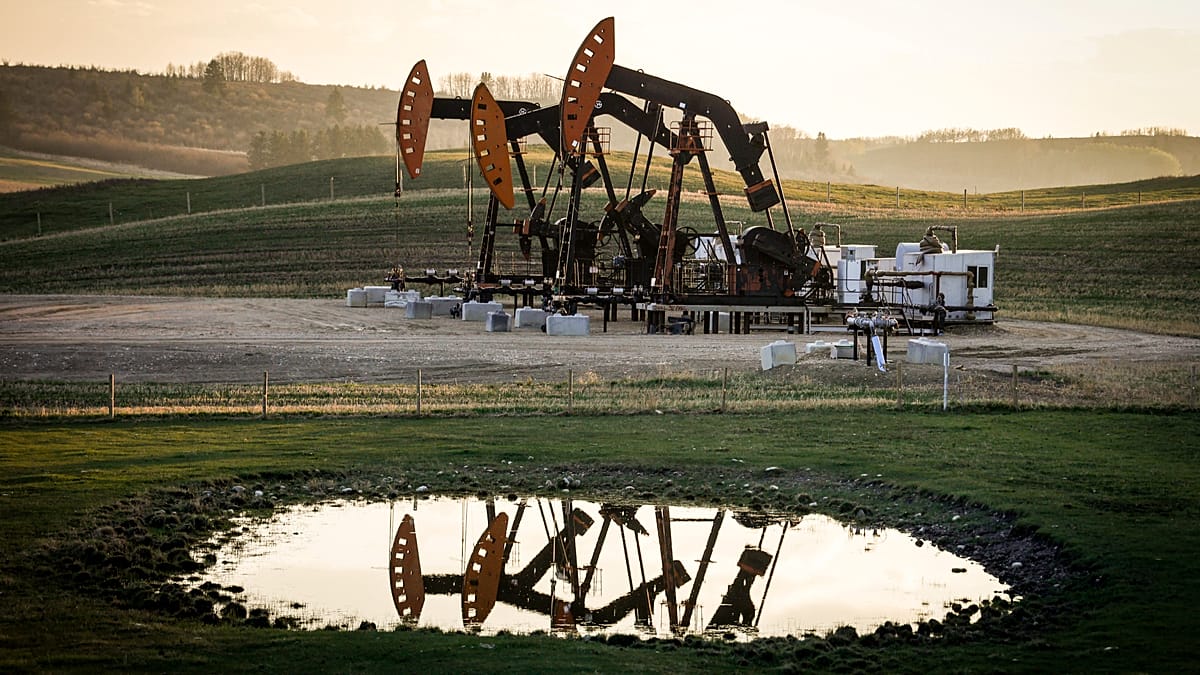
Analyzing the environmental and economic costs of the Pacific Link pipeline, the first project to be designated in national interest under Bill C-5.
Eric Klempan
October 27, 2026
Prime Minister Mark Carney has announced the fast-tracking of Pacific Link, growing Canada’s fossil fuel production as the Canadian Climate Institute warns the country is straying from climate targets.
The pipeline’s designation as a “project of national interest” will allow it to circumvent legal approval processes, including environmental assessments.
Alberta Premier Danielle Smith calls it “the largest pipeline build-out we’ve seen in decades.”
Pacific Link will run from Bruderheim, Alta. to Roberts Bank Terminal in B.C., south of Vancouver. It is set to export an additional one million barrels of oil a day to Asia, thus lowering Canada’s dependence on the U.S., according to the prime minister’s office. In June, the Canadian Climate Institute estimated that the MOU signed between Alberta and the federal government would add roughly 20 megatonnes of emissions to the atmosphere each year.
To put that 20 megatonnes into perspective, the Canadian Climate Institute has reported that Canada’s emissions increased from 440 megatonnes in 2024 to 691 megatonnes in 2025. The country’s current goal is to lower emissions to below 440 megatonnes by 2030, making this pipeline project a step backwards in decarbonization as the government doubles down on growing oil and gas, the country’s largest polluting industry.
“It makes no economic sense and it’s a climate bomb, so we need to resist,” Mike Morrice, presumptive leader of the Green Party of Canada, told The Concordian in an exclusive interview. “The U.N. has made clear that the climate crisis is a code red for humanity, and Pacific Link is 45 billion more dollars of our money to worsen the very crisis that we’re in.”
Local consequences of the pipeline include threats to wildlife and the risk of oil spills, according to a federal government-ordered review panel on the construction of Roberts Bank Terminal 2, the proposed B.C. container terminal to accommodate increased tanker traffic from the pipeline.
“The Panel’s assessment concludes that there would be effects on the quality of life of local populations, including health and quality of experience during commercial and recreational activities,” reads the report, published in 2020.
Among others, it pointed to significant adverse effects on local Indigenous populations and significant harm to biodiversity and certain local wildlife, such as the orca population.
To reduce climate risks, the federal government has proposed the Pathways Project: a carbon capture system that would reduce emissions by storing 16 megatonnes of CO2 each year starting in 2045. Carney has also pledged $1.2 billion for marine protection, including an oil spill response plan.
But some climate experts don’t believe the plan is enough.
“There is no effective way to really clean up an oil spill. You know, you can usually get like 10–20 per cent of it,” said Keith Stewart, senior energy strategist at Greenpeace Canada. “We’re saying to the salmon and the orcas, ‘you got to take a hit for the team.’ And that team is oil and gas profits. It’s not you and I.”
According to the Scotia Growth Institute, Pacific Link is projected to cost upwards of $43.7 billion, 90 per cent of which is currently publicly owned — 45 per cent by Alberta and 45 per cent by the federally owned Trans Mountain Corporation. Carney also announced that “Indigenous communities will be offered a minimum of 10 per cent ownership interest” in the project.
“We estimate that the Pacific Link will create 140,000 jobs across the country,” said Carney when he announced the pipeline’s status as a project of national interest on Oct. 1. “It will generate over $20 billion in GDP per year and over $100 billion in government revenue by 2060.”
However, considering how many countries are now moving toward renewable energy, demand for oil could lower significantly by the time the project is completed in the mid-2030s.
“Betting on a new pipeline now is like buying a blockbuster video franchise just as Netflix is coming on stream. It’s a really bad bet for our economy,” said Stewart.
In a statement provided to The Concordian, Natural Resources Canada noted that, based on its projections, demand for Alberta’s crude oil is sufficient to justify Pacific Link.
“While the Governor in Council has considered the fact that there are a range of projections for long-term crude oil demand, from both public and private sources, sufficient demand is expected to exist for the new pipeline,” wrote Christian Tessier, manager of media relations at Natural Resources Canada. “For example, demand in the Asia-Pacific region is expected to remain comparatively resilient, creating a strong market for Canadian oil exports and supporting investment in pipeline infrastructure through toll revenues.”
Morrice believes there are better uses for the money being spent on the pipeline.
“For less than the cost of this new pipeline, we could be building out the provincial interties for an east-west electricity to power a clean energy future in this country,” he told The Concordian.
Stewart believes Canada and Alberta should focus on a “just transition,” helping oil and gas workers move out of the fossil fuels industry as the world shifts toward renewables.
“One way or another, those jobs are going away and the cost of that shouldn’t be borne by those communities,” he said.
The pipeline is facing legal pushback from an Indigenous group. Cold Lake First Nations is situated in the Alberta oilsands region and filed an application for judicial review of the fast-tracking on the grounds that they were not consulted about the project.
Legal challenges like this could slow or halt construction, raising questions about Bill C-5’s real power to circumvent legal barriers.