

We have a lot of Conservative premiers, yet you blame ALL of Canadas ailments on the Feds. How can this be?
You are using an out of date browser. It may not display this or other websites correctly.
You should upgrade or use an alternative browser.
You should upgrade or use an alternative browser.



Carney kills carbon tax ...and new cabinet
- Thread starter nottyboi
- Start date


Then you dont care about classical liberalism. Stop lying.I wish the Conservatives would be more conservative. A la PPC.
He will have input sure, but you have the Minister of Finance who heads that department.
Team effort.
Wishful thinking.


I wish the Conservatives would be more conservative. A la PPC.
OK, so a Conservative party that is more populist and based on grievance and cultural issues, with a Liberal party that is "classically Liberal".
Fair enough.
Then you dont care about classical liberalism. Stop lying.
What do you mean by lying, exactly?
I believe the libs moved too much left, and they and the NDP are almost indistinguishable. The libs have implemented most of the policies the NDP stand for, and NDP is struggling to be original.
And the conservatives have been flirting with some leftist bs ideas to get more votes, and are no longer truly conservative.
PPC is more like proper conservatism.
I have been pretty liberal myself, but as a result of the prevalence of the radical leftist ideology, I appear more on the conservative side, in the today’s terms. And given the disastrous outcome of the liberal policy over the past few years, a proper conservative response now necessary to counter the damage and restore classical western values.
Last edited:

What do you mean by lying, exactly?
I believe the libs moved too much left, and they and the NDP are almost indistinguishable.
The conservatives have been flirting with some leftist bs ideas to get more votes, and are no longer truly conservative.
PPC is more like proper conservatism.
I have been pretty liberal myself, but as a result of the prevalence of the radical leftist ideology, I am more on the conservative side, in the today’s terms. And given the disastrous outcome of the liberal policy over the past few years, a proper conservative response now necessary to counter the damage and restore classical western values.
So you want a "Populist" Culture War Right Wing party as the Conservatives (or the Cons just vanish and are replaced by the PPC, it doesn't really matter what it is called), a Classical Liberal party as the Liberals, and the NDP should take over all Welfare Liberalism positions?
Three party system with the Bloc still an issue in Quebec and the Greens floating around as they always do?

There is NO formal difference between Carney's position and Trudeau's.
Carney has every ability to perform any act of prime ministership he wishes at this time, since he is now the prime minister.
The voters in Canada do not choose the Prime Minister.
They choose their members of Parliament and the Members of Parliament choose the prime minister.
But this has absolutely nothing to do with whether or not Carney can make changes or not because he wasn't elected to a seat.
This has everything to do with the Liberal Party being unable to exercise power without a new election since they are a minority party and no longer have confidence of the House.
Right.
He is coming into a situation where the government will be brought down immediately and an election called.
(I expect he will call an election before Parliament comes back into session, personally.)
But you have utterly failed to prove your contention.
All you have proved is that a Prime Minister in a minority government where the other parties have promised a vote of no confidence cannot govern.
Which is exactly the same situation whether or not that prime minister is an elected MP or not.
"An un-elected Prime Minister, who has not won a seat in Parliament, cannot participate in votes or debates on the floor of the House of Commons." - I would consider this to be a "formal difference", as would many others.
Technically, Carney is not yet Prime Minister, because the Governor General has not yet authorized the transfer of power.
"Carney has been chosen as Prime Minister by Liberal party delegates. He does not have a mandate from Canadian eligible voters."
This quote of my post is relevant with reference to the claims in shack's post, (#90), which I quoted.
I didn't say that Canadians chose the Prime Minister; that is an inference on your part. Justin Trudeau received mandates from Canadian voters in 2015, 2019 and 2021, because he was the incumbent leader of the party which won the most seats in those years' Federal elections. Carney has only been elected by Liberal Party delegates. That is not ''a mandate from Canadian eligible voters".
My contention was that shack's statements in post #90 were factually incorrect, in whole or in part. The onus is on shack is to prove that his statements are correct. No such burden of proof is required for mine. My reply in red below your quote in this post shows that there are, indeed, differences between the privileges of an elected and an appointed Prime Minister. As of Sunday March 16 at 1:52 PM Eastern Daylight Time, authority to implement policy changes has not yet vested to Carney.
Last edited:
So you want a "Populist" Culture War Right Wing party as the Conservatives (or the Cons just vanish and are replaced by the PPC, it doesn't really matter what it is called), a Classical Liberal party as the Liberals, and the NDP should take over all Welfare Liberalism
Correct, except I don’t view PPC as a culture war party, more like a party that stands for traditional values.

The Oracle
Pronouns: Who/Cares
I believe the libs moved too much left, and they and the NDP are almost indistinguishable. The libs have implemented most of the policies the NDP stand for, and NDP is struggling to be original.
And the conservatives have been flirting with some leftist bs ideas to get more votes, and are no longer truly conservative.
PPC is more like proper conservatism.
I have been pretty liberal myself, but as a result of the prevalence of the radical leftist ideology, I appear more on the conservative side, in the today’s terms. And given the disastrous outcome of the liberal policy over the past few years, a proper conservative response now necessary to counter the damage and restore classical western values.
This mimics my point of view as well...The leftists are post nationalists and don't value western values.
The Carney/Singh show looms...
"An un-elected Prime Minister, who has not won a seat in Parliament, cannot participate in votes or debates on the floor of the House of Commons." - I would consider this to be a "formal difference", as would many others.
That's not a difference in powers as Prime Minister.
That is just the right to participate in debate and to vote in parliament.
The powers of the Prime Minister are separate from the powers of an MP.
Technically, Carney is not yet Prime Minister, because the Governor General has not yet authorized the transfer of power.
Please provide proof of that statement?
No prime minister is prime minister until the Governor General says so. That swearing in ceremony already happened.
There is no difference there. In fact, that is just a reminder that the Prime Minister is not elected, it is an appointed position.
"Carney has been chosen as Prime Minister by Liberal party delegates. He does not have a mandate from Canadian eligible voters."
That is an expression of what you think of his moral position.
This has absolutely zero to do with his formal powers.
I completely agree that he has no direct mandate from voters right now, which is why (along with the formal weakness of his position as head of a minority government) he will seek a general election soon.
But again, that has nothing to do with his actual formal powers as PM.
This quote of my post is relevant with reference to the claims in shack's post, (#90), which I quoted.
Yes, this quote: " He is the Prime Minister. Do you actually think that there are there 2 different sets of powers for an elected Prime Minister vs. an appointed Prime Minister? Seriously? "
He is entirely correct.
Your quote failed completely to counter him in any way.
There are NOT two different sets of powers.
Everything you have pointed to is a weakness of his position as prime minister given the current make up of parliament.
It has nothing to do with the face he was appointed.
I didn't say that Canadians chose the Prime Minister; that is an inference on your part. Justin Trudeau received mandates from Canadian voters in 2015, 2019 and 2021, because he was the incumbent leader of the party which won the most seats in those years' Federal elections. Carney has only been elected by Liberal Party delegates. That is not ''a mandate from Canadian eligible voters".
His powers do not, in fact depend on a mandate from the voters.
Only insomuch as the Liberal party being in charge of government does.
That mandate - exercised indirectly through a vote of no-confidence - is expected to be withdrawn.
It has nothing to do with Carney being appointed.
If Singh stepped up and said the NDP would support the Liberals now that Trudeau was gone, Carney would have all the powers of Prime Minister until the mandated election in October.
My contention was that shack's statements in post #90 were factually incorrect, in whole or in part.
A contention you entirely failed to support or even attempted to provide support for.
Mostly because shack is entirely correct.
The onus on shack is to prove that his statements are correct. No such burden of proof is required for mine.
We disagree about this, since you are the one who asserted there were different sets of powers.
My reply in red below your quote in this post shows that there are, indeed, differences between the privileges of an elected and an appointed Prime Minister. As of Sunday March 16 at 1:52 PM Eastern Daylight Time, authority to implement policy changes has not yet vested to Carney.
Please provide proof of this statement.
What powers did he not gain when the Governor General swore him in?
This mimics my point of view as well...The leftists are post nationalists and don't value western values.
The Carney/Singh show looms...
It is a belief, rather than a fact, that change and progress are synonyms.
Correct, except I don’t view PPC as a culture war party, more like a party that stands for traditional values.
Right.
A culture war party.
That's not a difference... (yada, yada)... Governor General swore him in?
Why are YOU eavesdropping on my conversation with shack?

What has happened is that the right has moved so far to the right that even someone moderate is "far left" for them.What do you mean by lying, exactly?
I believe the libs moved too much left, and they and the NDP are almost indistinguishable. The libs have implemented most of the policies the NDP stand for, and NDP is struggling to be original.
And the conservatives have been flirting with some leftist bs ideas to get more votes, and are no longer truly conservative.
PPC is more like proper conservatism.
I have been pretty liberal myself, but as a result of the prevalence of the radical leftist ideology, I appear more on the conservative side, in the today’s terms. And given the disastrous outcome of the liberal policy over the past few years, a proper conservative response now necessary to counter the damage and restore classical western values.
But I won't get into it beyond that.
What I wanted to address was:
You say want classical liberalism while at the same time mischaracterizing far right populism as conservatism.
If you wanted a far right populist party you already have the PPC.
Why should the conservatives be more like the PPC?
Even more ridiculous is your requirement for the liberals to be classical liberals, when what you want is far right populism.
You wouldn't vote for the liberals anyway.
So it doesn't matter what ideology they support.
Define western values.The leftists are post nationalists and don't value western values.
Reading a thread, you made a statement that was false, shack corrected you, and you insisted he was wrong.
I supported the person with the correct facts.
I'm sorry that you find people posting correct information in a thread upsetting, but it is a public forum.
Again, I am happy to be corrected on this if you can provide any support for your position.
Canada is the 4th best nation on the planet. USA is #21. Still waiting to hear one of you guys give me an example of a RICH nation with no Socialist policies. ANYBODY ANYBODY. You cannot name a SINGLE rich nation with no socialist policies. Yet you condemn socialism in its ENTIRETY. You are the suicidal one.
Canada is a democracy, the US is a flawed democracy.
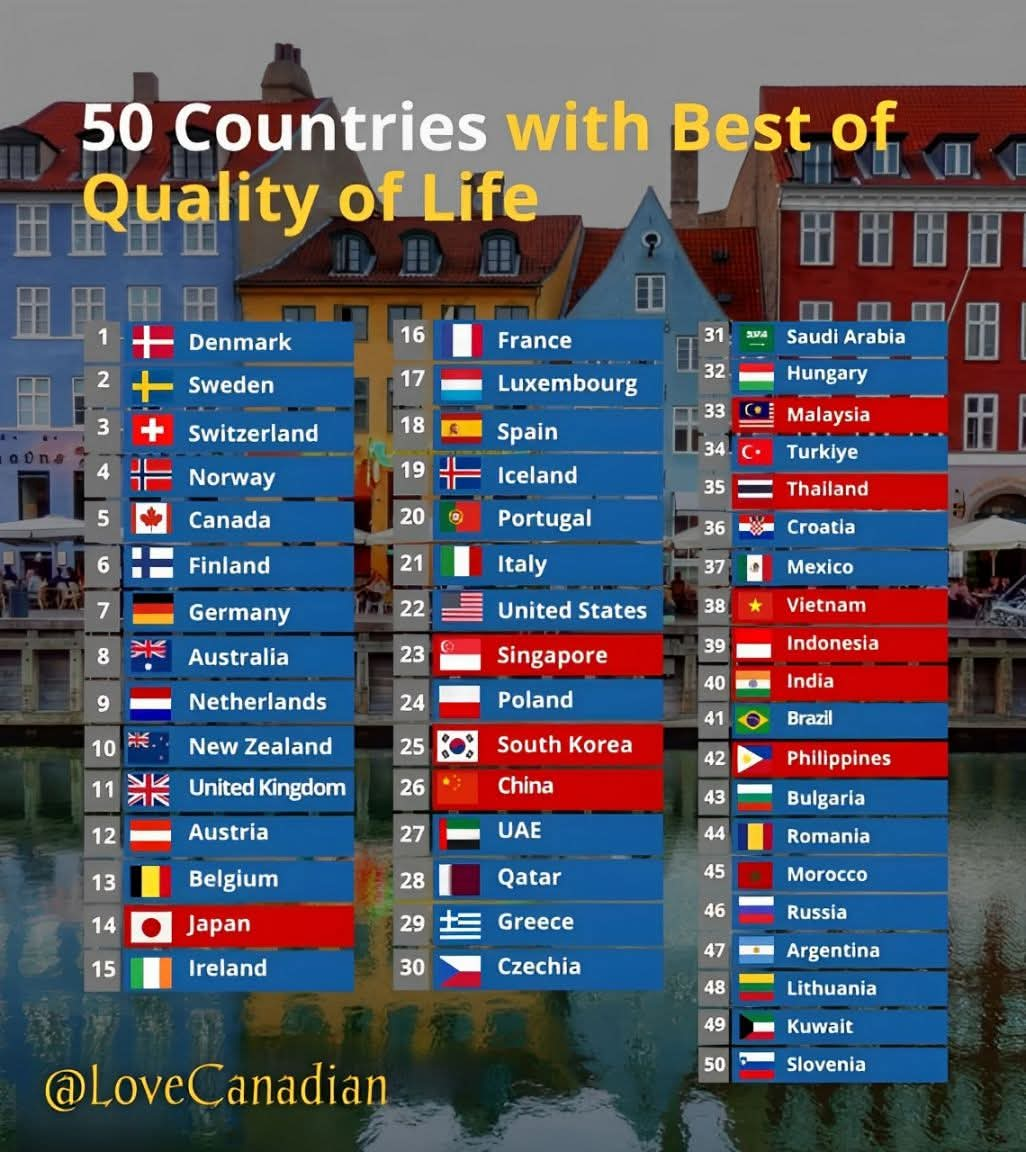

You should have added "Mastery in whining about Trudeau" to Pierre's list of qualifications. lmao.
Don't need to. Canadians are very observant and when election time comes, they make the right decision.
But you're right thou. I don't want to hear whining anymore. Tell me what you're going to do for Canada to get us out of this mess and how you're goingto deal with GovernorTrump. Don't feed me petty shit, cause Trudeau is No longer the prime minister and We all know he Fu@ked up.

So, anybody with ties to China is corrupt? And not just ties, what are these deep ties of which you speculate?
And your second line is so full of biased opinion with no factual backup that it is a throwaway. You are entitled to your opinion but don't try to imply that your opinion is fact.
BTW, how should the Liberal party be reformed to meet your standards and be a viable option? Just curious.
He gets his info from conspiracy sites.
Similar threads
- Replies
- 0
- Views
- 85
- Replies
- 4
- Views
- 244
- Replies
- 3
- Views
- 247
- Replies
- 95
- Views
- 2K
