
Many people say that extreme turubulence is nothing to worry about, but this proves otherwise.
You are using an out of date browser. It may not display this or other websites correctly.
You should upgrade or use an alternative browser.
You should upgrade or use an alternative browser.


extreme turbulence kills passenger, others injured
- Thread starter stinkynuts
- Start date
Hence why people are encouraged to keep their seatbelts fastened when seated.
Many people say that extreme turubulence is nothing to worry about, but this proves otherwise.


Some people keep their belt on all the time

Again, here is an example of how even simple news reports continue to report things that don't exist... like "falling into an air pocket". No such thing as an air pocket.
"The jet fell into an air pocket over Thai airspace and requested to land at Suvarnabhumi Airport in Bangkok, Kittipong Kittikachorn, general manager of Bangkok Suvarnabhumi airport, told a news conference, according to Reuters.
But it does note later that the plane flew into an area of severe thunderstorms:
"There were severe thunderstorms in the area at the time and the “flight encountered a rapid change in vertical rate, consistent with a sudden turbulence event,” according to flight-tracking platform Flightradar24."
Now I'm going to go off on a bit of a rant here about airline operations and thunderstorms.
I continue to be astonished at the fact that pilots continue to fly into or close to severe thunderstorms. The convection updrafts and downdrafts can extend for tens of miles around the cell. I guess they think that they can ride it out and their big jets can take it but too often they are wrong. I think it comes from risk homeostasis. That means they got through an area of t-storms before and each time they get away with it, reinforces the thought that they can get away with it. Until they don't. General aviation and small commercial operators give t-storms a wide berth, because this is drilled into their heads during training.
Now, there are areas in which there are such widespread areas that it could you 500 miles off course to avoid them (like the Intertropical Convergence Zone, or ITCZ,). T-storms can top over 50,000'!
I think the most concentrated mass of energy is a thunderstorm. More than a hurricane, more than a tornado.
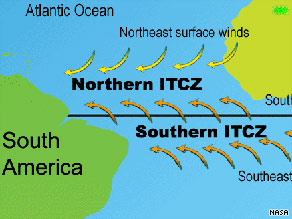
The Air France Flight 442 Airbus A330 went down in that area.
"The jet fell into an air pocket over Thai airspace and requested to land at Suvarnabhumi Airport in Bangkok, Kittipong Kittikachorn, general manager of Bangkok Suvarnabhumi airport, told a news conference, according to Reuters.
But it does note later that the plane flew into an area of severe thunderstorms:
"There were severe thunderstorms in the area at the time and the “flight encountered a rapid change in vertical rate, consistent with a sudden turbulence event,” according to flight-tracking platform Flightradar24."
Now I'm going to go off on a bit of a rant here about airline operations and thunderstorms.
I continue to be astonished at the fact that pilots continue to fly into or close to severe thunderstorms. The convection updrafts and downdrafts can extend for tens of miles around the cell. I guess they think that they can ride it out and their big jets can take it but too often they are wrong. I think it comes from risk homeostasis. That means they got through an area of t-storms before and each time they get away with it, reinforces the thought that they can get away with it. Until they don't. General aviation and small commercial operators give t-storms a wide berth, because this is drilled into their heads during training.
Now, there are areas in which there are such widespread areas that it could you 500 miles off course to avoid them (like the Intertropical Convergence Zone, or ITCZ,). T-storms can top over 50,000'!
I think the most concentrated mass of energy is a thunderstorm. More than a hurricane, more than a tornado.
The Air France Flight 442 Airbus A330 went down in that area.
More good news for Boeing stockholders.
The plane held together just fine.
Usually they have warning systems to warn of upcoming turbulence. Surprisingly the Boeing held together.
Just weather radar that will display precipitation and levels of intensity. Thunderstorms paint a very distinctive picture and turbulence is always associated with tstorms. And in the case of widespread t-storms, a t-storm with heavy precip will attenuate the signal and hide what could be a monster on the other side.
Over the continents we have a network of ground radars that get analyzed and a composite image is generated that takes most of that away. But over the ocean, there is no radar coverage. However, there are satellite images that you can discern t-storms both visibly and by the temperatures of the clouds.
Clear air turbulence is an issue in the jetstream, completely aside from convective turbulence. You're just cruising along enjoying a tailwind (or fighting a strong headwind) and then all of a sudden all hell breaks loose. It has to do with where different winds aloft mix and the differential in the wind speeds and direction. Like where two smooth rivers meet and form eddy currents etc. There is presently no onboard device to detect CAT. But usually the meteorologists are pretty good at predicting where and when CAT might be possible.
It take s a lot to bend or break an airplane, especially a transport category airliner with the high wing loadings they have. More often than not, not being securely belted is what causes injuries and deaths.
Some people keep their belt on all the time
You mean the smart ones.
This one is absolutely terrifying. Even the flight attendant was on the verge of tears when making the PA.
Yup, they said on the news the dead man wasnt wearing his seatbeltHence why people are encouraged to keep their seatbelts fastened when seated

