Tesla Model 3 Event and Pre Orders

|2 /-\ | /|/, don't forget that's 325,000 in reservations. That doesn't guarantee 325,000 cars sold.

Since the first car won't ship for ~18 months; that gives the competition 18 months to offer better alternatives, 18 months for technology to improve (that Tesla doesn't adapt maybe due to a patent), Tesla could screw-up and lose customer faith, electrical prices jump and gas stays down, etc. One thing the Japanese and Koreans excel at is rapidly taking everyone else's good ideas and building it better, less expensively and more reliably. Sorry for the stereotyping.

Can you imagine if, for example Toyota develops a new battery technology with 2X the power density, or super fast charge capability, or a cheap safe fuel cell and gets solid patents on it? If Lexus/Toyota then releases a line of inexpensive to luxury electric cars with Toyota quality, supported by the massive Toyota service network and put public charging stations into every Toyota dealer (400 in Canada alone) - Tesla would be HAMMERED! Significantly better batteries are already in development and are well past the theory stage.

Of course Apple will then STEAL the technology, tie everybody else up in patent court, have cars cheaply built in China and wipe every car manufacturer out. ;-)
 
Speaking of competition, look at this piece of work by Porsche. Fucking sexy as hell.


This is exactly what Elon wanted, to drive the competition to move to electric. Good on him.
I can only imagine what his 5 boys will be like when they grow up and more likely than not take over the companies. :)
 
|2 /-\ | /|/ Let's wait and compare the pre-order numbers as of April 7th. 2017. Just sayin'.

Can you imagine if, for example Toyota develops a new battery technology with 2X the power density, or super fast charge capability, or a cheap safe fuel cell and gets solid patents on it?

Toyota is banking on hydrogen fuel cell technology and says it's making 5,680 fuel cell patents freely available and collaborating with other automakers to support the development of hydrogen infrastructure. This could really be the future, not battery powered cars that require precious rare earth metals.

http://fortune.com/2015/10/14/toyota-hydrogen-goals/
 
|2 /-\ | /|/, don't forget that's 325,000 in reservations. That doesn't guarantee 325,000 cars sold.

Since the first car won't ship for ~18 months; that gives the competition 18 months to offer better alternatives, 18 months for technology to improve (that Tesla doesn't adapt maybe due to a patent), Tesla could screw-up and lose customer faith, electrical prices jump and gas stays down, etc. One thing the Japanese and Koreans excel at is rapidly taking everyone else's good ideas and building it better, less expensively and more reliably. Sorry for the stereotyping.

Can you imagine if, for example Toyota develops a new battery technology with 2X the power density, or super fast charge capability, or a cheap safe fuel cell and gets solid patents on it? If Lexus/Toyota then releases a line of inexpensive to luxury electric cars with Toyota quality, supported by the massive Toyota service network and put public charging stations into every Toyota dealer (400 in Canada alone) - Tesla would be HAMMERED! Significantly better batteries are already in development and are well past the theory stage.

Of course Apple will then STEAL the technology, tie everybody else up in patent court, have cars cheaply built in China and wipe every car manufacturer out. ;-)

Toyota took a page right out of Elon Musk's playbook by releasing patents for its fuel cell tech.
http://www.iflscience.com/technology/toyota-follow-tesla-s-footsteps-releasing-its-fuel-cell-patents


Anyone remember when Tesla released their patents and went open source? People flipped, jaws dropped, etc.
https://www.techdirt.com/articles/2...are-free-investor-absolutely-freaks-out.shtml

I'm with Elon on this one.
 
More cool shit about the possiblities of the T3.
http://gas2.org/2016/04/08/musk-makes-secret-visit-mobileye/

The new Mobileye technology is said to permit machine learning while a car is in motion. Advanced sensors allow it to follow a road even if there are no shoulders, curbs, or sidewalks that mark its boundaries.
It can detect different road surfaces, navigate when there are no road markings, and recognize more that 1,000 road signs and pavement markings in common usage throughout the world.

The Model 3 has no dashboard. All it has is a 15″ touchscreen mounted horizontally in the middle of the interior.
When someone complained to Musk on Twitter about the shape of the steering wheel, that’s when Musk tweeted back about the wonders that will be revealed in Phase 2.

What’s going on? A good guess is that the Model 3 will contain the hardware needed to make it the first mass produced car with full self-driving capability.
The sources who spoke with Globes said the hardware will be dormant at first. It can be switched on later, when safety regulators catch up with Tesla and its advanced technology.
 
Infrastructure is not there to make a Tesla or other plugin EVs practical for a large percentage of the population.

When the free market see’s a need to fill, they will find a way to fill it. The infrastructure will come.

And honestly, most charging can be done at home.
 
  • Like
Reactions: |2 /-\ | /|/
When the free market see’s a need to fill, they will find a way to fill it. The infrastructure will come.

And honestly, most charging can be done at home.

Justin's plan is to ban the sale of ICE vehicles by 2035. Obviously ICE vehicles will still be around for decades but there's a huge amount of infrastructure required to make it possible to charge millions of vehicles on a daily basis.

You can charge your vehicle at home if you have a house with a driveway. Now think about how many people have street parking. How do you plug in your vehicle when you never know where you're going to park overnight. Or those who live in condos and apartment buildings. That's a major retrofit to accommodate a charger in every spot. Is the building's wiring capable of handling the increase in demand? And who's going to pay for all this? Lots of things to sort out...

A home 120V (Level 1) charger is estimated to deliver 5.6 to 10.4 kms of range per hour.
 
Last edited:
  • Like
Reactions: poker
Justin's plan is to ban the sale of ICE vehicles by 2035. Obviously ICE vehicles will still be around for decades but there's a huge amount of infrastructure required to make it possible to charge millions of vehicles on a daily basis.

You can charge your vehicle at home if you have a house with a driveway. Now think about how many people have street parking. How do you plug in your vehicle when you never know where you're going to park overnight. Or those who live in condos and apartment buildings. That's a major retrofit to accommodate a charger in every spot. Is the building's wiring capable of handling the increase in demand? And who's going to pay for all this? Lots of things to sort out...

A home 120V (Level 1) charger is estimated to deliver 5.6 to 10.4 kms of range per hour.

This is why we are on terb spewing our drivel and they are making the big bucks and solving our energy and environmental problems.

Solution is trivial if there is a need for it. They have the worlds most talented people figuring this out. Tesla is also now getting into energy distribution like in Texas.

We are still early. Tesla will become ubiquitous, we just don’t understand it yet. They are not just an automobile company.

You know what they say when we keep repeating the same drivel expecting different results.

Just think about all the ridiculous things said about Tesla in this thread and many others plus MSM and none of that was true. They will find a solution because they have the connections, business model, AI, investors, everything working together. They are much smarter then all of us put together plus the ignorant politicians trying to stop them and the MSM witch hunt against them.

They will become one of the worlds most powerful and ubiquitous companies we have like Apple and the haters will forget all their drivel over the years that never materialized and be activated and programmed to the next witch hunt their MSM overlords instruct them to pursue.

Funny, nothing I mentioned had to do with Tesla specifically but rather ways to overcome charging EVs when you don't have a driveway or a regular parking spot. You do however like to go on about Tesla and their world domination. Most people can't afford a Tesla so unless they have plans to make a super affordable line of vehicles like other manufacturers currently have, they'll continue to be a niche market. Despite all the bells and whistles.

What I'm saying is, ICE vehicles have a huge advantage over EVs. And that is, it only take 5 minutes to fuel one and you're good for 500-600 kms. Look at the number of people who are in and out of gas stations on our major highways daily. Now imagine if each car takes 5 to 10 times as long to fill. You'll have one hell of a lineup or you'll need parking lots the size of football fields in order to accommodate all the cars charging. Until EVs become more convenient in that respect, many are going to be reluctant to switch.
 
Last edited:
This is why we are on terb spewing our drivel and they are making the big bucks and solving our energy and environmental problems.

Solution is trivial if there is a need for it. They have the worlds most talented people figuring this out. Tesla is also now getting into energy distribution like in Texas.

We are still early. Tesla will become ubiquitous, we just don’t understand it yet. They are not just an automobile company.

You know what they say when we keep repeating the same drivel expecting different results.

Just think about all the ridiculous things said about Tesla in this thread and many others plus MSM and none of that was true. They will find a solution because they have the connections, business model, AI, investors, everything working together. They are much smarter then all of us put together plus the ignorant politicians trying to stop them and the MSM witch hunt against them.

They will become one of the worlds most powerful and ubiquitous companies we have like Apple and the haters will forget all their drivel over the years that never materialized and be activated and programmed to the next witch hunt their MSM overlords instruct them to pursue.
My only problem with Tesla is that I only have 15 friggin shares. I used to have a hundred. Went up 83 buck today. should I buy more or is this just FOMO?
 
  • Like
Reactions: |2 /-\ | /|/
Funny, nothing I mentioned had to do with Tesla specifically but rather ways to overcome charging EVs when you don't have a driveway or a regular parking spot. You do however like to go on about Tesla and their world domination. Most people can't afford a Tesla so unless they have plans to make a super affordable line of vehicles like other manufacturers currently have, they'll continue to be a niche market. Despite all the bells and whistles.

What I'm saying is, ICE vehicles have a huge advantage over EVs. And that is, it only take 5 minutes to fuel one and you're good for 500-600 kms. Look at the number of people who are in and out of gas stations on our major highways daily. Now imagine if each car takes 5 to 10 times as long to fill. You'll have one hell of a lineup or you'll need parking lots the size of football fields in order to accommodate all the cars charging. Until EVs become more convenient in that respect, many are going to be reluctant to switch.

What I am saying Tesla will develop infrastructure to be able to charge and support the grid with solar panels, batteries and infrastructure. Also good luck getting a cheep electric knock off that it at least 10 years behind Tesla and being happy what that purchase. These things will be everywhere like super chargers like how parking meters are.

Affordable Tesla is coming however they are having a hard time making as many cars as it is demand, then Cybertruck, then semi, then roadster, then the affordable version.

More Giga factories are coming. However they always prioritize quality over quantity.
 
Tesla's Cheap 94-Mile Model 3 Has Cost Canadian Taxpayers $115 Million

Rob Stumpf
July 17, 2021

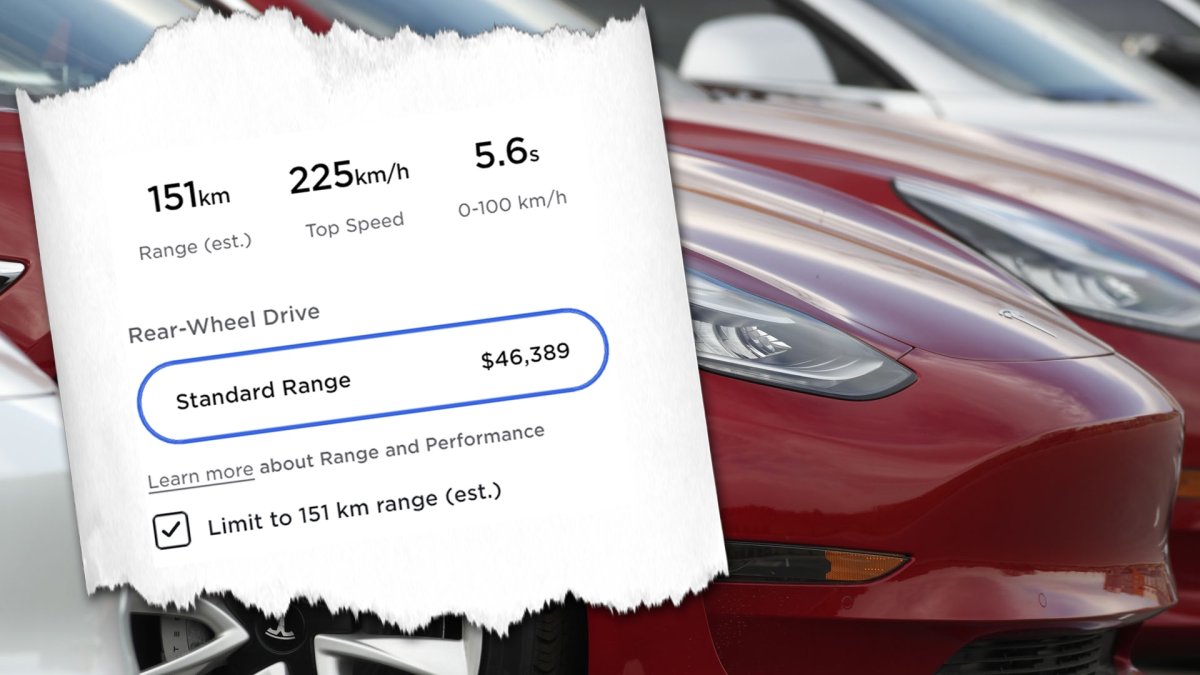
Earlier this year, we told you about Tesla's ultra-low range Model 3 sold exclusively in Canada. The no-frills EV has only 94 miles (151 kilometers) of range and no Autopilot to boot. Thanks to these limitations, Tesla was able to price this particular example low enough to qualify for Canada's Incentives for Zero-Emission Vehicles (iZEV) program—and as an added bonus, qualify the higher-up Standard Range Plus model as well due to the program's unusual price cap system.

Unsurprisingly, it appears that the 94-mile range Model 3 isn't a big seller. New data obtained from Transport Canada by The Drive shows that just over one-half of a percent of drivers who purchased a Model 3 and received Canada's $5,000 iZEV credit actually sprung for the low-range variant. The workaround has cost the government of Canada—and its taxpayers—millions of dollars to subsidize the purchase price of the more expensive trim that would have otherwise not qualified for the incentive. About $115 million CAD, to be exact.

Canada's system is quite different than the United States' approach to a $7,500 post-sale federal tax credit. Essentially, the arrangement is a $5,000 credit used towards the purchase of a qualifying electric vehicle which is applied at the time of purchase—or a lesser amount if the vehicle is a plug-in hybrid or leased instead of purchased. Automakers submit an application to Canada's department of motor vehicles, called Transport Canada, for specific models to be considered for the iZEV program. Once the model is approved, buyers can begin utilizing the incentive at the time of purchase to reduce their out-of-pocket expenses.

The meat and potatoes: The car's base trim must be priced under $45,000 ($37,211 USD), but subsequent trims of the same vehicle must not exceed $55,000 ($45,481). This threshold means any trim of the same vehicle model can be considered for the credit as long as it's under that price cap.

Tesla charges $52,990 for the Model 3 Standard Range Plus, however, buyers can opt to limit the vehicles to 94 miles (151 km) of range which drops the price down to $46,389. If you remove the $1,280 destination fee, the $100 air conditioning fee, and a $10 fee to the Ontario Motor Vehicle Industry Council, it brings the purchase price of the Model 3 SR+ to just $44,999—one dollar below the cut-off to qualify for the iZEV credit.

In this configuration, Tesla drops the "Plus" designation and just calls the vehicle Model 3 Standard Range—the same name as the previously-killed trim sold in the United States. However, the $35,000 (in U.S. dollars) Model 3 SR sold stateside was equipped with 220 miles of range. The Model 3 SR sold in Canada is priced at $44,999 CAD ($37,299 USD) and has just 94 miles of range.

This workaround means that buyers of the 263-mile Standard Range Plus variant can make use of the iZEV credit. Even more coincidental is that buyers can equip both Teslas with the 19-inch sport wheels and premium white interior to pay just $54,900 (before destination and other fees)—$100 less than the $55,000 cut-off.

Keep in mind that Tesla had previously canceled the Model Y Standard Range in the U.S. over concerns that its 250-mile range would be "unacceptably low."

Last year, the Canadian Taxpayers Federation obtained data showing that the Model 3 Standard Range sold a very limited number of cars—126 between from the time that the iZEV program launched in May 2019 until March 2020. The Drive reached out to Transport Canada to check in on these figures and learned that in more than a year's time, only 25 additional units were sold.

From May 2019 until April 2021, Tesla sold just 151 units of the Standard Range Model 3, meaning that buyers received $755,000 in subsidies to use towards the lower-range EV. Meanwhile, it amassed a sale of 22,938 units of the Standard Range Plus. This makes a total of 23,089 sales eligible for the iZEV credit, or up to $115.5 Million paid out for a model that would have otherwise not qualified for the incentive.

In total, the iZEV program has paid out 87,919 total incentives, 26 percent of which have gone towards Tesla Model 3s—more than Audi, BMW, Chrysler, Ford, Honda, Mini, Mitsubishi, Nissan, Smart, Subaru, and Volkswagen combined. The automaker which had the vehicles with the second-highest number of incentives is Hyundai at 14,413, however, that number is split between six different models, three of which are plug-in hybrid which only receive half of the $5,000 BEV incentive.

Not everyone is thrilled with Tesla's gaming of the iZEV incentive. When we reported on the 94-mile Model 3 earlier this year, some called it "a great tactic" while others said that Tesla's workaround was "a stupid dodge to get around a stupid policy."


“It certainly looks like Tesla gamed the system by listing a no-frills model just under the maximum price in order to get access to millions in taxpayer subsidies for higher-priced models,” said Aaron Wudrick, federal director of the Canadian Taxpayers Federation during the outlet's previous exposé on the Tesla Model 3 Standard Range. “Everyday taxpayers are subsidizing fancy cars for wealthier people.”

As for the DMV's viewpoint, Transport Canada had previously refuted that it does not evaluate how an automaker markets its vehicles to consumers, only that it ensures eligibility criteria is met for the iZEV program. Its goal is simply to increase the affordability of battery-electric cars and the overall take-rate compared to gasoline-powered equivalents. And judging by the numbers, it did exactly that. The introduction of the Model 3 SR qualified the otherwise ineligible SR+ for the iZEV credit, something which certainly helped foster the adoption of EVs in Canada.

Whether or not Tesla's move will be remembered as bold or below the belt is something yet to be seen. But one thing is certain: it worked.

 
More MSM FUD. Canada should be proud for contribution to sustainable technology and encouraging incentives. These should continue these, make gas super expensive and encourage all EV companies including Tesla to proliferate. Canada is the one who benefited not Tesla.

imagine telling your gran kids and feeing proud your taxes paid to save the environment and make a difference in the world.

This is something to feel proud about.

Tesla's Cheap 94-Mile Model 3 Has Cost Canadian Taxpayers $115 Million

Rob Stumpf
July 17, 2021

Earlier this year, we told you about Tesla's ultra-low range Model 3 sold exclusively in Canada. The no-frills EV has only 94 miles (151 kilometers) of range and no Autopilot to boot. Thanks to these limitations, Tesla was able to price this particular example low enough to qualify for Canada's Incentives for Zero-Emission Vehicles (iZEV) program—and as an added bonus, qualify the higher-up Standard Range Plus model as well due to the program's unusual price cap system.

Unsurprisingly, it appears that the 94-mile range Model 3 isn't a big seller. New data obtained from Transport Canada by The Drive shows that just over one-half of a percent of drivers who purchased a Model 3 and received Canada's $5,000 iZEV credit actually sprung for the low-range variant. The workaround has cost the government of Canada—and its taxpayers—millions of dollars to subsidize the purchase price of the more expensive trim that would have otherwise not qualified for the incentive. About $115 million CAD, to be exact.

Canada's system is quite different than the United States' approach to a $7,500 post-sale federal tax credit. Essentially, the arrangement is a $5,000 credit used towards the purchase of a qualifying electric vehicle which is applied at the time of purchase—or a lesser amount if the vehicle is a plug-in hybrid or leased instead of purchased. Automakers submit an application to Canada's department of motor vehicles, called Transport Canada, for specific models to be considered for the iZEV program. Once the model is approved, buyers can begin utilizing the incentive at the time of purchase to reduce their out-of-pocket expenses.

The meat and potatoes: The car's base trim must be priced under $45,000 ($37,211 USD), but subsequent trims of the same vehicle must not exceed $55,000 ($45,481). This threshold means any trim of the same vehicle model can be considered for the credit as long as it's under that price cap.

Tesla charges $52,990 for the Model 3 Standard Range Plus, however, buyers can opt to limit the vehicles to 94 miles (151 km) of range which drops the price down to $46,389. If you remove the $1,280 destination fee, the $100 air conditioning fee, and a $10 fee to the Ontario Motor Vehicle Industry Council, it brings the purchase price of the Model 3 SR+ to just $44,999—one dollar below the cut-off to qualify for the iZEV credit.

In this configuration, Tesla drops the "Plus" designation and just calls the vehicle Model 3 Standard Range—the same name as the previously-killed trim sold in the United States. However, the $35,000 (in U.S. dollars) Model 3 SR sold stateside was equipped with 220 miles of range. The Model 3 SR sold in Canada is priced at $44,999 CAD ($37,299 USD) and has just 94 miles of range.

This workaround means that buyers of the 263-mile Standard Range Plus variant can make use of the iZEV credit. Even more coincidental is that buyers can equip both Teslas with the 19-inch sport wheels and premium white interior to pay just $54,900 (before destination and other fees)—$100 less than the $55,000 cut-off.

Keep in mind that Tesla had previously canceled the Model Y Standard Range in the U.S. over concerns that its 250-mile range would be "unacceptably low."

Last year, the Canadian Taxpayers Federation obtained data showing that the Model 3 Standard Range sold a very limited number of cars—126 between from the time that the iZEV program launched in May 2019 until March 2020. The Drive reached out to Transport Canada to check in on these figures and learned that in more than a year's time, only 25 additional units were sold.

From May 2019 until April 2021, Tesla sold just 151 units of the Standard Range Model 3, meaning that buyers received $755,000 in subsidies to use towards the lower-range EV. Meanwhile, it amassed a sale of 22,938 units of the Standard Range Plus. This makes a total of 23,089 sales eligible for the iZEV credit, or up to $115.5 Million paid out for a model that would have otherwise not qualified for the incentive.

In total, the iZEV program has paid out 87,919 total incentives, 26 percent of which have gone towards Tesla Model 3s—more than Audi, BMW, Chrysler, Ford, Honda, Mini, Mitsubishi, Nissan, Smart, Subaru, and Volkswagen combined. The automaker which had the vehicles with the second-highest number of incentives is Hyundai at 14,413, however, that number is split between six different models, three of which are plug-in hybrid which only receive half of the $5,000 BEV incentive.

Not everyone is thrilled with Tesla's gaming of the iZEV incentive. When we reported on the 94-mile Model 3 earlier this year, some called it "a great tactic" while others said that Tesla's workaround was "a stupid dodge to get around a stupid policy."


“It certainly looks like Tesla gamed the system by listing a no-frills model just under the maximum price in order to get access to millions in taxpayer subsidies for higher-priced models,” said Aaron Wudrick, federal director of the Canadian Taxpayers Federation during the outlet's previous exposé on the Tesla Model 3 Standard Range. “Everyday taxpayers are subsidizing fancy cars for wealthier people.”

As for the DMV's viewpoint, Transport Canada had previously refuted that it does not evaluate how an automaker markets its vehicles to consumers, only that it ensures eligibility criteria is met for the iZEV program. Its goal is simply to increase the affordability of battery-electric cars and the overall take-rate compared to gasoline-powered equivalents. And judging by the numbers, it did exactly that. The introduction of the Model 3 SR qualified the otherwise ineligible SR+ for the iZEV credit, something which certainly helped foster the adoption of EVs in Canada.

Whether or not Tesla's move will be remembered as bold or below the belt is something yet to be seen. But one thing is certain: it worked.

 
They said on here Wall Street is laughing at Tesla a few years ago then one of the biggest short squeeze happened. They say Tesla would go bankrupt and now is one of the most powerful companies in the world.

This ladies and gentlemen is what we call paradigm lock. When ideas are more powerful then actual measurable reality.

Many of these people still think this true because it’s all they see on the news and all they read from their handlers and programmers.

Eventually reality will hit them once the delusion drug wears off.

Good thing I didn’t listen to a word they said back when this thread was posted in 2016. More direct proof of their drivel, delusion and horrible financial opinions disconnected from reality.

Keep it up. I will not wast anymore energy here...let the numbers and reality speak on their own.

1635259000768.png

Can you fucking dig?
 
What I am saying Tesla will develop infrastructure to be able to charge and support the grid with solar panels, batteries and infrastructure.

What I'm saying is, who's going to pay for all this infrastructure? Tesla? Not a chance. Electric cars may be inexpensive to operate at the moment, but just wait. Electricity is highly subsidized at the moment. People would be shocked (pun intended) if they had to pay the true cost of electricity. Once Governments are no longer collecting massive amounts of taxes from fuel, they're going to have to make it up somewhere. And that somewhere will come from EV owners. All those rebates will also disappear.
 
I have about 400 tesla shares; I think it will be the first trillion dollar company so I'm pretty much holding on until the story changes. I'll definitely buy the second iteration of the model S though which I think will have better autonomous capabilities.


All things considered, this post aged nicely.
 
  • Like
Reactions: |2 /-\ | /|/