Exxon Confirmed Global Warming Consensus in 1982 with In-House Climate Models
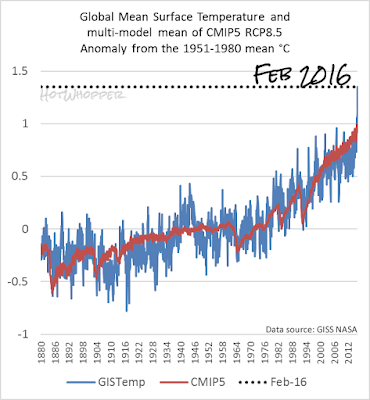
The company chairman would later mock climate models as unreliable while he campaigned to stop global action to reduce fossil fuel emissions.
Steve Knisely was an intern at Exxon Research and Engineering in the summer of 1979 when a vice president asked him to analyze how global warming might affect fuel use.
"I think this guy was looking for validation that the greenhouse effect should spur some investment in alternative energy that's not bad for the environment," Knisely, now 58 and a partner in a management consulting company, recalled in a recent interview.
Knisely projected that unless fossil fuel use was constrained, there would be "noticeable temperature changes" and 400 parts per million of carbon dioxide (CO2) in the air by 2010, up from about 280 ppm before the Industrial Revolution. The summer intern's predictions turned out to be very close to the mark.
Knisely even concluded that the fossil fuel industry might need to leave 80 percent of its recoverable reserves in the ground to avoid doubling CO2 concentrations, a notion now known as the carbon budget. In 2013, the United Nations' Intergovernmental Panel on Climate Change formally endorsed the idea.
"The potential problem is great and urgent," Knisely wrote. "Too little is known at this time to recommend a major U.S. or worldwide change in energy type usage but it is very clear that immediate research is necessary."