


Nov. 29, 2025
Prime Minister Mark Carney is on a mission to change the Liberal Party of Canada.
Giddy Liberal delegates overwhelmingly chose him as their new leader in March because he was seen as best able to provide not change, but continuity of what Liberals value most: remaining in power. He did just that.
But he’s done so by eliminating one Liberal policy after another, beginning with the unpopular consumer carbon tax. He has gone a giant step further, ridding his party and the country of the Pan-Canadian Framework on Climate Change, the signature climate and federalism achievement of Justin Trudeau’s first term.
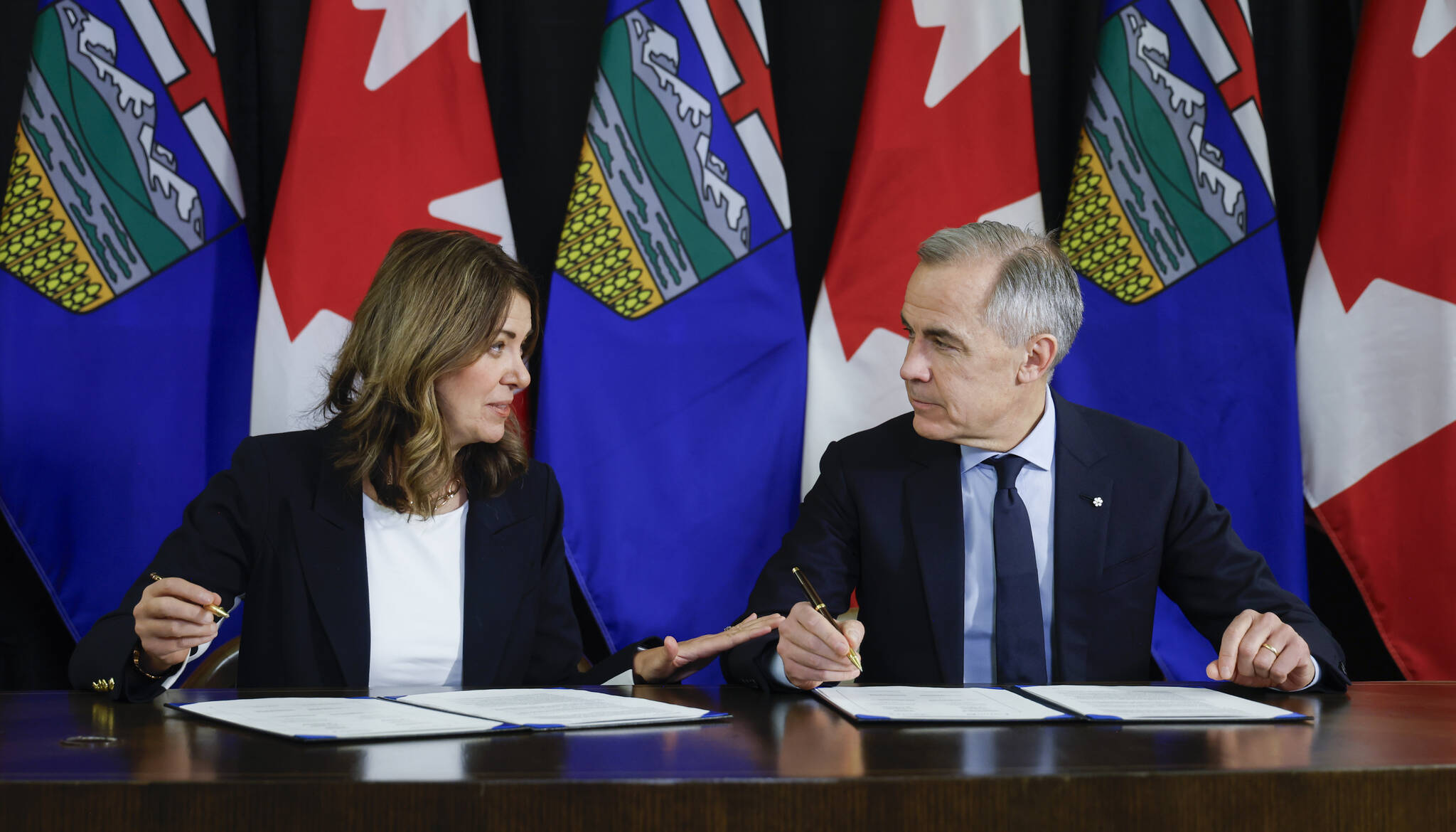
The Canada/Alberta Memorandum of Understanding on energy, carbon pricing, and infrastructure signed by the prime minister and Alberta Premier Danielle Smith marks a U-turn by the Carney government from past Liberal climate action and federalism. One-size-fits-all, top-down national policies are out; “asymmetric federalism” is in. Where provinces had to align carbon and energy policies with federal directives, this MOU allows for different arrangements for different provinces due to differing circumstances.
This is big and about time.
Federal climate policy was more divisive than decisive in reducing carbon emissions. Greenhouse gas levels have flatlined over the past two years. A recent study by the Canadian Climate Institute showed that Canada will miss its 2030 GHG reduction target by as much as 50 per cent. Even as the Trudeau Liberals insisted on maintaining their national approach, they were not beneath gerrymandering its provisions to accommodate political pushback when and where it suited them. They did exactly that with the
home heating fuel carbon tax exemption aimed at Atlantic Canada and a swathe of Liberal seats.
The Pallister government in Manitoba was the only Conservative government at the time to attempt to legislate a carbon tax in response to the Trudeau government’s Pan-Canadian Framework that fit with Manitoba’s GHG realities. “Not good enough,” was the response. No matter that Manitoba had the cleanest electricity grid in the country. No matter that higher and more stringent carbon prices in this province did not produce the same carbon reductions as elsewhere. Fidelity to federal carbon policy mattered more than fidelity to provincial carbon facts.
By contrast, Carney has flipped the script, agreeing to a uniquely bilateral carbon pricing policy with Alberta. And he agreed to up-front Alberta-specific exemptions from two flagship federal policies: the oil and gas emissions cap and the Clean Electricity Regulations. In return he got an improved industrial carbon pricing regime and a more carbon-friendly pipeline project via a formal agreement in the MOU that any new bitumen pipeline must have carbon capture and storage strapped onto it to sequester new emissions.
This fits with the formal direction of “climate competitiveness” Carney’s first budget set out. It means a more deliberate and realistic linkage of the environment with the natural resource economy of today, than the clean economy transformation of tomorrow advocated by his predecessor. Insisting that a new pipeline must ship carbon-sequestered bitumen to fuel carbon-sensitive markets is proof. If it comes to fruition, then that will make Canadian oil more carbon competitive for the long run.
Carney’s “Liberal-lite” policy direction is not going unnoticed. His Liberal caucus is restive. Climate activist elements of his government and party are bristling at his systematic walk-back of high-profile climate change policies. It’s revealing that his environment minister is nowhere to be seen on this file, or any other for that matter. The MOU with Alberta was negotiated by his hand-picked privy council clerk, Michael Sabia, and fronted by Tim Hodgson, his hand-recruited private-sector colleague energy and natural resources minister.
The Labour Prime Minister of Great Britain, Keir Starmer, wrote this in his party’s platform after 14 years out of power: “The defining purpose of my Labour leadership has been to drag my party away from the dead end of gesture politics … I have changed my party. Now I want the chance to bring that change to the country.”
This same sentiment could well sum up Carney’s own approach as Liberal leader. Only he is changing the party while in government. With one Trudeau minister out of cabinet or rumoured to be leaving cabinet and politics, he has clearly not yet finished changing his party, to change the country.
In one of his first acts as prime minister, Carney symbolically attached his signature to a cabinet order-in-council eliminating the consumer carbon tax. Last week, he symbolically attached his signature to the MOU with Alberta turning the page on ten years of Liberal climate policy. With each signature, he dismantles his predecessor’s signature policies.
For now, Carney is brushing internal party concerns aside. Deep down Liberals are relentlessly pragmatic about one thing: winning. So far, Carney is a winner.
On that basis, Carney can breathe easy — at least for now.
 www.winnipegfreepress.com
Prime Minister Mark Carney is on a mission to change the Liberal Party of Canada.
Giddy Liberal delegates overwhelmingly chose him as their new leader in March because he was seen as best able to provide not change, but continuity of what Liberals value most: remaining in power. He did just that.
But he’s done so by eliminating one Liberal policy after another, beginning with the unpopular consumer carbon tax. He has gone a giant step further, ridding his party and the country of the Pan-Canadian Framework on Climate Change, the signature climate and federalism achievement of Justin Trudeau’s first term.
The Canada/Alberta Memorandum of Understanding on energy, carbon pricing, and infrastructure signed by the prime minister and Alberta Premier Danielle Smith marks a U-turn by the Carney government from past Liberal climate action and federalism. One-size-fits-all, top-down national policies are out; “asymmetric federalism” is in. Where provinces had to align carbon and energy policies with federal directives, this MOU allows for different arrangements for different provinces due to differing circumstances.
This is big and about time.
Federal climate policy was more divisive than decisive in reducing carbon emissions. Greenhouse gas levels have flatlined over the past two years. A recent study by the Canadian Climate Institute showed that Canada will miss its 2030 GHG reduction target by as much as 50 per cent. Even as the Trudeau Liberals insisted on maintaining their national approach, they were not beneath gerrymandering its provisions to accommodate political pushback when and where it suited them. They did exactly that with the
home heating fuel carbon tax exemption aimed at Atlantic Canada and a swathe of Liberal seats.
The Pallister government in Manitoba was the only Conservative government at the time to attempt to legislate a carbon tax in response to the Trudeau government’s Pan-Canadian Framework that fit with Manitoba’s GHG realities. “Not good enough,” was the response. No matter that Manitoba had the cleanest electricity grid in the country. No matter that higher and more stringent carbon prices in this province did not produce the same carbon reductions as elsewhere. Fidelity to federal carbon policy mattered more than fidelity to provincial carbon facts.
By contrast, Carney has flipped the script, agreeing to a uniquely bilateral carbon pricing policy with Alberta. And he agreed to up-front Alberta-specific exemptions from two flagship federal policies: the oil and gas emissions cap and the Clean Electricity Regulations. In return he got an improved industrial carbon pricing regime and a more carbon-friendly pipeline project via a formal agreement in the MOU that any new bitumen pipeline must have carbon capture and storage strapped onto it to sequester new emissions.
This fits with the formal direction of “climate competitiveness” Carney’s first budget set out. It means a more deliberate and realistic linkage of the environment with the natural resource economy of today, than the clean economy transformation of tomorrow advocated by his predecessor. Insisting that a new pipeline must ship carbon-sequestered bitumen to fuel carbon-sensitive markets is proof. If it comes to fruition, then that will make Canadian oil more carbon competitive for the long run.
Carney’s “Liberal-lite” policy direction is not going unnoticed. His Liberal caucus is restive. Climate activist elements of his government and party are bristling at his systematic walk-back of high-profile climate change policies. It’s revealing that his environment minister is nowhere to be seen on this file, or any other for that matter. The MOU with Alberta was negotiated by his hand-picked privy council clerk, Michael Sabia, and fronted by Tim Hodgson, his hand-recruited private-sector colleague energy and natural resources minister.
The Labour Prime Minister of Great Britain, Keir Starmer, wrote this in his party’s platform after 14 years out of power: “The defining purpose of my Labour leadership has been to drag my party away from the dead end of gesture politics … I have changed my party. Now I want the chance to bring that change to the country.”
This same sentiment could well sum up Carney’s own approach as Liberal leader. Only he is changing the party while in government. With one Trudeau minister out of cabinet or rumoured to be leaving cabinet and politics, he has clearly not yet finished changing his party, to change the country.
In one of his first acts as prime minister, Carney symbolically attached his signature to a cabinet order-in-council eliminating the consumer carbon tax. Last week, he symbolically attached his signature to the MOU with Alberta turning the page on ten years of Liberal climate policy. With each signature, he dismantles his predecessor’s signature policies.
For now, Carney is brushing internal party concerns aside. Deep down Liberals are relentlessly pragmatic about one thing: winning. So far, Carney is a winner.
On that basis, Carney can breathe easy — at least for now.
Opinion: Mark Carney: undoing Trudeau’s legacy
Breaking News, Sports, Manitoba, Canada
www.winnipegfreepress.com
 ...
...