Would Europeans fight, if it came to that?

oil&gas

Well-known member
Apr 16, 2002
17,030
3,424
113
Ghawar
Putting boots on the ground would not help Ukraine, but it might help Europe find the stomach for war, writes Nathalie Tocci

Jul 16th 2026

EUROPEAN LEADERS understand that conflict is closer than ever—hence the sharp rise in defence budgets, as showcased at NATO’s recent summit in Ankara. Spending is not increasing because European armies are planning to fight Russia in Ukraine: Europeans are now the main military backers of Kyiv, but such support is a small fraction of their total military spending. Nor are Europeans spending simply because Donald Trump has demanded it. They are doing so because they consider a kinetic war in Europe beyond Ukraine to be increasingly plausible. This explains why spending is proportionally higher in eastern and northern Europe, including Germany, than in southern and western European countries farther from the front line.

Since Russia’s full-scale invasion in 2022, European leaders have often expressed awe at Ukrainian resilience. But there is something else behind Europeans’ amazement: fear that they may not show the same resolve. This is not because of some inherent courage in Ukrainians which Europeans lack. It boils down to the fundamentally different predicaments, physically and psychologically, of nations in war and peace. Can the spirit needed to deter war be summoned in Europe without fully entering one?

Spending on defence is one thing, fighting is another. A Gallup poll in 2024 revealed that around a third of Europeans would be unwilling to fight if their own country were attacked. My own country, Italy, was at the bottom of the pack, with a whopping 78% saying they would refuse.

These figures reveal several things at once. Worryingly, they show the growing strength of far-right and far-left forces openly sympathetic to Russia and susceptible to its propaganda demonising Europe’s rearmament. The figures may, though, also indicate that surveyed Europeans simply don’t believe war is coming their way. Indeed, the number of Europeans ready to defend their country is much higher in northern and eastern European states closer to Ukraine, especially those that are in neither the European Union nor NATO, and thus presumably feel more vulnerable.

Geography, then, plays a crucial role. But so do politics, institutions and the media. It is hardly surprising that Estonians are more willing to fight than Italians, if tens of thousands of Estonian volunteers regularly train for a potential attack from its vastly larger next-door neighbour, while Italians are drugged with TV talk shows—heavily infiltrated by pro-Russia propagandists—which deride European attempts to bolster societal resilience. When Sauli Niinisto, a former Finnish president, penned an EU report on preparedness, the public response in countries like mine ranged from indifference to scorn. If institutions, politics and the media don’t take the possibility of war seriously, little wonder that citizens don’t either, rejecting calls for conscription or cuts to social spending for the sake of defence. If war is not seen as plausible, military spending is easily portrayed as a mere ploy to enrich the defence-industrial complex at citizens’ expense.

But the plausibility of war is exactly the point. During a recent meeting, a former high-ranking Ukrainian official put it bluntly: “We’re not superhuman, we’re just at war.” In war, cognition and emotion become geared towards survival. Sacrifices are made, bravery wins out over exhaustion and creativity is unleashed. Without war, the bright minds behind Ukraine’s myriad recent military innovations would probably have trodden the same path as most of the continent’s promising young professionals, forging careers that were rewarding but unremarkable. Because of war, they were spurred to make technological advances that will go down in history. So yes, today Europeans express their reluctance to fight, but they are probably indicating more their abhorrence of war than their cowardly indifference to it.
Which leads to what may be the key point about deterrence: Europeans are less likely to have to fight if they are prepared to do so physically and psychologically. It is that preparedness that can make deterrence against Russia work. But it is precisely the absence of war that reduces preparedness and deterrence. So can societal resilience be substantially hardened in peacetime?

One way to toughen up populations is to put boots on the ground in Ukraine. For months, a European coalition of the willing has drawn up plans to deploy a “reassurance force” to Ukraine after a ceasefire. These discussions have not led anywhere because a truce is not in sight. Their aim was mainly political: to show European solidarity with Ukraine and encourage American engagement. But Ukraine is under no illusions about the fact that deploying a few thousand European soldiers far from the front line in a hypothetical post-ceasefire scenario would make no difference to its defence. As for Mr Trump, by now few if any Europeans believe he can be kept steadily on side, despite his unexpectedly warm words in Ankara.

A European reassurance force would, then, do little for Ukraine. But deploying it now, before a hypothetical ceasefire, could benefit Europe, encouraging citizens to develop a mindset that would better prepare them for war. Yes, it would put European soldiers in harm’s way—any such move would infuriate the Kremlin—but the continent is already in a hybrid conflict, even if many refuse to recognise it. Were European soldiers to be stationed in Ukraine, it would bring reality closer to home. And perhaps a fraction of Ukraine’s courage, humility and creativity could infect other European societies. European troops would not be put in harm’s way out of sheer generosity, but to help prepare for war—and prevent it from spilling into the rest of the continent.

 

seanzo

Well-known member
Nov 29, 2008
1,020
1,612
113
European armies are at best a farce and at worst functionally non existent. Even in the event the Europeans decide that deploying what paltry forces their are able to muster is a good idea, they will quickly come to the conclusion that was a bad idea when Russian drones and missiles start raining down on them
 

geezerbuter

Well-known member
Jul 24, 2025
980
1,163
93
Putting boots on the ground would not help Ukraine, but it might help Europe find the stomach for war, writes Nathalie Tocci

Jul 16th 2026

EUROPEAN LEADERS understand that conflict is closer than ever—hence the sharp rise in defence budgets, as showcased at NATO’s recent summit in Ankara. Spending is not increasing because European armies are planning to fight Russia in Ukraine: Europeans are now the main military backers of Kyiv, but such support is a small fraction of their total military spending. Nor are Europeans spending simply because Donald Trump has demanded it. They are doing so because they consider a kinetic war in Europe beyond Ukraine to be increasingly plausible. This explains why spending is proportionally higher in eastern and northern Europe, including Germany, than in southern and western European countries farther from the front line.

Since Russia’s full-scale invasion in 2022, European leaders have often expressed awe at Ukrainian resilience. But there is something else behind Europeans’ amazement: fear that they may not show the same resolve. This is not because of some inherent courage in Ukrainians which Europeans lack. It boils down to the fundamentally different predicaments, physically and psychologically, of nations in war and peace. Can the spirit needed to deter war be summoned in Europe without fully entering one?

Spending on defence is one thing, fighting is another. A Gallup poll in 2024 revealed that around a third of Europeans would be unwilling to fight if their own country were attacked. My own country, Italy, was at the bottom of the pack, with a whopping 78% saying they would refuse.

These figures reveal several things at once. Worryingly, they show the growing strength of far-right and far-left forces openly sympathetic to Russia and susceptible to its propaganda demonising Europe’s rearmament. The figures may, though, also indicate that surveyed Europeans simply don’t believe war is coming their way. Indeed, the number of Europeans ready to defend their country is much higher in northern and eastern European states closer to Ukraine, especially those that are in neither the European Union nor NATO, and thus presumably feel more vulnerable.

Geography, then, plays a crucial role. But so do politics, institutions and the media. It is hardly surprising that Estonians are more willing to fight than Italians, if tens of thousands of Estonian volunteers regularly train for a potential attack from its vastly larger next-door neighbour, while Italians are drugged with TV talk shows—heavily infiltrated by pro-Russia propagandists—which deride European attempts to bolster societal resilience. When Sauli Niinisto, a former Finnish president, penned an EU report on preparedness, the public response in countries like mine ranged from indifference to scorn. If institutions, politics and the media don’t take the possibility of war seriously, little wonder that citizens don’t either, rejecting calls for conscription or cuts to social spending for the sake of defence. If war is not seen as plausible, military spending is easily portrayed as a mere ploy to enrich the defence-industrial complex at citizens’ expense.

But the plausibility of war is exactly the point. During a recent meeting, a former high-ranking Ukrainian official put it bluntly: “We’re not superhuman, we’re just at war.” In war, cognition and emotion become geared towards survival. Sacrifices are made, bravery wins out over exhaustion and creativity is unleashed. Without war, the bright minds behind Ukraine’s myriad recent military innovations would probably have trodden the same path as most of the continent’s promising young professionals, forging careers that were rewarding but unremarkable. Because of war, they were spurred to make technological advances that will go down in history. So yes, today Europeans express their reluctance to fight, but they are probably indicating more their abhorrence of war than their cowardly indifference to it.
Which leads to what may be the key point about deterrence: Europeans are less likely to have to fight if they are prepared to do so physically and psychologically. It is that preparedness that can make deterrence against Russia work. But it is precisely the absence of war that reduces preparedness and deterrence. So can societal resilience be substantially hardened in peacetime?

One way to toughen up populations is to put boots on the ground in Ukraine. For months, a European coalition of the willing has drawn up plans to deploy a “reassurance force” to Ukraine after a ceasefire. These discussions have not led anywhere because a truce is not in sight. Their aim was mainly political: to show European solidarity with Ukraine and encourage American engagement. But Ukraine is under no illusions about the fact that deploying a few thousand European soldiers far from the front line in a hypothetical post-ceasefire scenario would make no difference to its defence. As for Mr Trump, by now few if any Europeans believe he can be kept steadily on side, despite his unexpectedly warm words in Ankara.

A European reassurance force would, then, do little for Ukraine. But deploying it now, before a hypothetical ceasefire, could benefit Europe, encouraging citizens to develop a mindset that would better prepare them for war. Yes, it would put European soldiers in harm’s way—any such move would infuriate the Kremlin—but the continent is already in a hybrid conflict, even if many refuse to recognise it. Were European soldiers to be stationed in Ukraine, it would bring reality closer to home. And perhaps a fraction of Ukraine’s courage, humility and creativity could infect other European societies. European troops would not be put in harm’s way out of sheer generosity, but to help prepare for war—and prevent it from spilling into the rest of the continent.

When talking about Italy isn't it woping not whooping ? Just ribbing you. You are one of the few on here who is somewhat cognitive
 
Last edited:

oil&gas

Well-known member
Apr 16, 2002
17,030
3,424
113
Ghawar
Whats with all these blood thirsty war bitches wanting to send men to their deaths?
She is no more blood thirsty than European leaders wanting Ukraine to
fight to the last man. She wants European leaders to send their own men
as well as Ukrainians to their deaths. She has my respect.
 
  • Like
Reactions: jarhead

nottyboi

Well-known member
May 14, 2008
27,633
5,336
113
She is no more blood thirsty than European leaders wanting Ukraine to
fight to the last man. She wants European leaders to send their own men
as well as Ukrainians to their deaths. She has my respect.
Yes, the women are def in the most blood thirsty. Ursula, Kaja and that crazy Danish wench.
 

Butler1000

Well-known member
Oct 31, 2011
35,366
9,139
113
Whats with all these blood thirsty war bitches wanting to send men to their deaths?
Especially the Russian ones already doing just that....
 

oil&gas

Well-known member
Apr 16, 2002
17,030
3,424
113
Ghawar
I know, it's only ok for Putin to do it. LMAO
It's more ok if NATO leaders can do what Putin is doing.
So far they are being humane by killing Russians through only
economic and military aid to Ukraine. It is time for NATO sissies
to do some real killing on the frontline.
 

southpaw

Well-known member
May 21, 2002
2,687
2,616
113
I suspect all those military aged men they took in as refugees will seek refuge elsewhere if Europe tries to conscript them. They may return to the very countries they sought refuge from.
 

oil&gas

Well-known member
Apr 16, 2002
17,030
3,424
113
Ghawar
I suspect all those military aged men they took in as refugees will seek refuge elsewhere if Europe tries to conscript them. They may return to the very countries they sought refuge from.
The humanitarian members of NATO-Europe won't conscript Ukrainians
seeking refuge in their countries. They will just find ways to send them
back to their home country to do the dirty work of killing more Russians
so their leaders can receive more aids.


oil&gas

Well-known member
Apr 16, 2002
17,030
3,424
113
Ghawar
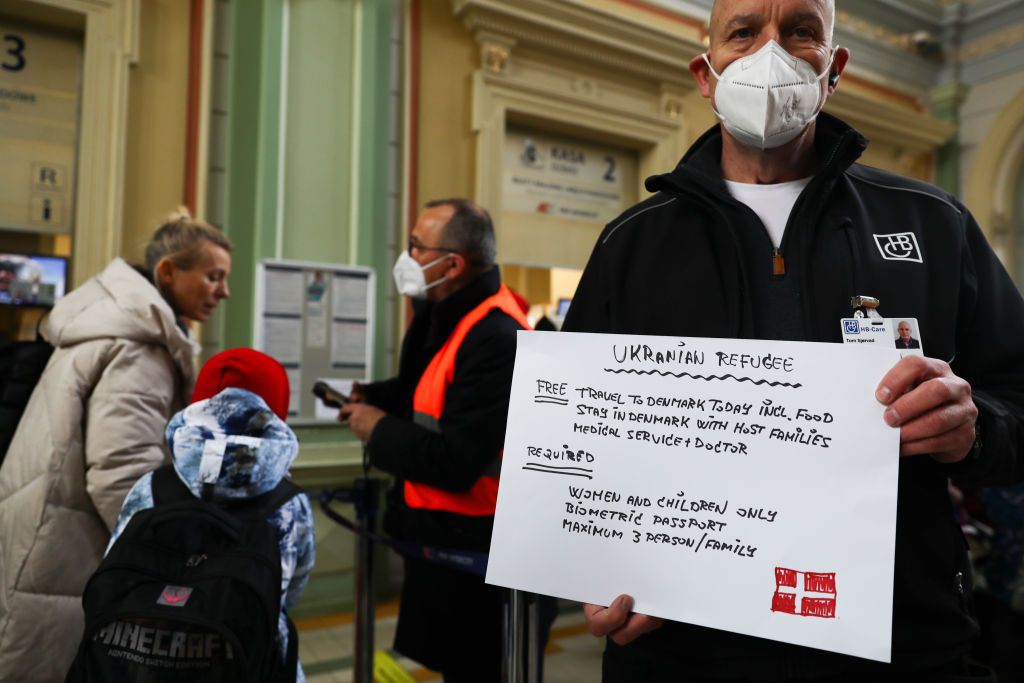
Europe wants to force Ukrainian refugees to return home to fight

Naman Karl-Thomas Habtom
Jun 12, 2026

At a European Union summit earlier this month, Sweden’s migration minister revealed that there is “strong support” among European governments for excluding military-aged Ukrainian men from the bloc’s temporary protection scheme for Ukrainian refugees.

The policy, which allows Ukrainian citizens to live and work in the European Union, currently covers more than 4.3 million people. The majority of the beneficiaries are women, children, and the elderly since Ukrainian men between the ages of 23 and 60 are legally barred from leaving the country without prior authorization. Nevertheless, 26.6% of those in the EU are adult men, many of whom either were already in the bloc prior to the current conflict or left Ukraine in order to avoid mobilization and deployment to the front.

Despite a warm reception in early 2022, European publics and governments have started to sour on Ukrainian refugees. In a 2022 survey, 94% of Polish respondents supported accepting Ukrainians fleeing the conflict across the border, but that figure has since plummeted to 48%, with 46% opposing. In Germany, two-thirds support cancelling unemployment benefits to Ukrainians, and 62% support sending military-aged Ukrainian men back to their country. And, though the Czech Republic has generally been supportive of Ukraine, 47% of Czechs now believe that their country has accepted more Ukrainian refugees than they can handle, with only 23% in favor of allowing them to settle permanently.

Amid this growing weariness, some European leaders are pushing to repatriate Ukrainian men. In 2024, the Polish and Lithuanian defense ministers pledged to assist with repatriation of Ukrainian men. Last year, in response to the increased number of Ukrainian arrivals after Ukraine raised the exit ban age from 18 to 23, German Chancellor Friedrich Merz urged Ukrainian President Volodymyr Zelenskyy to ensure that young men did not leave the beleaguered and conflict-riddled country. Earlier this year, the Norwegian Directorate of Immigration announced that Ukrainian men between ages 18 and 60 who arrived after May 5 will no longer be covered by temporary collective protection and would instead have to apply individually.

Though drone warfare has altered the relative significance of conventional infantry units, Ukraine’s manpower shortage has continued to grow more acute. This trend could weaken Ukraine’s negotiating leverage and push the Ukrainian leadership to make concessions to reach a final peace agreement with Russia. This would run counter to the apparent preference of many Western policymaking elites, some of whom view the conflict as a valuable way of weakening Russia. As the long-time German diplomat and head of the Munich Security Conference Wolfgang Ischinger stated, “As long as this war is being fought, you know, vigilantly and courageously, by our Ukrainian friends, Europe is safe.”

By seeking to replenish Ukraine’s manpower through an infusion of men living in the EU, European governments risk simply extending the conflict while increasing the number of combatant deaths on both sides. Though European Commissioner for Migration Magnus Brunner argues that this is “what the Ukrainians want us to do,” a prolongation of the conflict will likely exacerbate Ukraine’s already catastrophic demographic crisis and trajectory. A brief swelling of the Ukrainian ranks is unlikely to meaningfully alter the course of the conflict, especially when one takes into account the time it would take to repatriate, train, and deploy a cohort of unenthusiastic conscripts.

The collapse in the number of volunteers in the Ukrainian military is an overlooked aspect of the conflict, one that reflects a wider, structural challenge that officials in Kyiv have so far been unable to resolve. While there was an uptick in volunteer enlistments in the spring of 2022, by June 2024 three-quarters of the Ukrainian military consisted of those who were there not by choice but by force. Meanwhile, domestically many are avoiding military service. By January of this year, according to Defense Minister Mykhailo Fedorov, approximately 200,000 soldiers were absent without official leave, and an additional two million men have been avoiding the draft.

As the journalist Peter Korotaev and sociologist Volodymyr Ishchenko have noted, the failure to mobilize more troops is rooted in decades of poor governance. “This failure to deliver meaningful opportunities and protections for the majority of Ukrainians has left the state unable to demand much from them in return,” Korotaev and Ischchenko wrote. “As a result, today, Ukraine is unable to fully mobilise its people who are divided by a profound sociopolitical disconnect.”

It remains unclear what a cancellation of temporary protection for Ukrainian men will actually entail. Under the current scheme, most Ukrainians in the EU have not applied for asylum, which is determined by national governments, so a policy reversal here might lead to a surge in asylum applications that may take months if not years to assess.

Differences between EU member states may also result in Ukrainian men moving around the bloc. Many may simply find themselves as undocumented migrants who are unable to access public services and are therefore forced to live underground. This is already the case for many within Ukraine, where men live in hiding out of fear of being apprehended by mobilization officers. Some European governments may even wish to carry out formal deportations.

Rather than trying to address domestic political pressure by fueling conflict in Eastern Europe while further destroying Ukraine’s prospects for postwar reconstruction, EU leaders need to focus their efforts on addressing the root causes of the fighting.

While European leaders have become increasingly supportive of direct talks with Russia, this has largely been reactive, emanating from a fear of being excluded by US-Russia talks. A proactive approach can save lives instead of resorting to sex-based discrimination against refugees.


oil&gas

Well-known member
Apr 16, 2002
17,030
3,424
113
Ghawar
I was referring to the Middle Eastern refugees they took in en masse in 2015.
They need those Syrian and Afghan refugees to take all the
menial low-wage jobs to serve the locals. Ukrainian refugees
would better be sent home to serve as NATO cannon fodder.
 

nottyboi

Well-known member
May 14, 2008
27,633
5,336
113
I know, it's only ok for Putin to do it. LMAO
Putin set reasonable terms for peace. i.e no NATO expansion and constitutional autonomy for the Donbas region. He did not even demand Ukraine recognize annexation of Crimea or not join the EU. But noo the US and Europe felt that war was preferable. AND Russians are still a volunteer force. Russian men are not being hunted down like stray dogs on the street.
 

squeezer

Well-known member
Jan 8, 2010
29,042
24,108
113
Putin set reasonable terms for peace. i.e no NATO expansion and constitutional autonomy for the Donbas region. He did not even demand Ukraine recognize annexation of Crimea or not join the EU. But noo the US and Europe felt that war was preferable. AND Russians are still a volunteer force. Russian men are not being hunted down like stray dogs on the street.


CLICK HERE!!!!
 

silentkisser

Master of Disaster
Jun 10, 2008
5,664
7,831
113
It's more ok if NATO leaders can do what Putin is doing.
So far they are being humane by killing Russians through only
economic and military aid to Ukraine. It is time for NATO sissies
to do some real killing on the frontline.
So, you want a broader war that could involve nuclear weapons? Like, I seriously don't understand your take. Are you saying Ukraine should just give up and let Russia annex the country? Are you saying that the EU should escalate things? I really is nonsensical.

To be honest, if push came to shove, like Russia attacking a NATO member, the European armies would mobilize. Russia could send drones and missiles, but here's a shocking development: so could Europe. So, don't think for a second that Russia would want that fight. Hell, they couldn't even take out Ukraine, which is on their fucking border. How the hell would they push into Germany or France? Which is why Putin has constantly sabre rattled about using nukes.

While I wish Europe would send troops to help push Russia out of Ukraine, the reality is that would lead to a MUCH bigger war.

But, here is the dark truth to all of this, and some historical perspective. In 1904-05 Russia and Japan had a war. It famously saw the entire Russian naval fleet sunk in the battle of Tsushima Strait. Besides that embarrassment, this was also the first war where both sides had machine guns, artillery and rifles. It was bloody, violent and with a huge death toll. In many ways, it resembled WWI, just a decade before. European armies sent observers and mistakenly thought that the blood stalemate battles with trenches happened because the two armies were inept (I mean, Russia maybe...and Japan, they were Asian so they didn't think much about their capabilities). The take away for them was that Calvary charges would win the fight. And, as we know, come 1914, that was a bloody disaster. What is happening in Ukraine is similar. This is a new type of war, with staggering casualties and new technology changing the battles. America apparently hasn't really been paying too much attention, because just as the Iran war started, Ukraine offered drone tech to help fight Iran....and it was rejected.

My long story short: Europe is paying attention. They do not want to escalate things with Russia and push Putin into using nukes. So, they arm Ukraine. If Ukraine wanted to surrender, they could. Europe is not forcing them to fight, but they are helping (maybe not as much as this author would like). But if push came to shove, Europe would fight like hell. While their armies are not as larger as they were, they are still very well trained. Russia is just throwing warm bodies into the fray and hoping for the best.
 
  • Like
Reactions: MaverickPunter

KingMus

New member
Apr 25, 2025
20
11
3
European armies are at best a farce and at worst functionally non existent. Even in the event the Europeans decide that deploying what paltry forces their are able to muster is a good idea, they will quickly come to the conclusion that was a bad idea when Russian drones and missiles start raining down on them
lol is this satire, this is satire right? the same russia struggling to fight against a massively under powered opponent?
 
  • Like
Reactions: Frankfooter
Ashley Madison
Toronto Escorts