Asian Sexy Babe

How High Could Oil Prices Go? A Reality-Based Look At The Ceiling

oil&gas

Well-known member
Apr 16, 2002
16,571
3,210
113
Ghawar
Robert Rapier
Mar 07, 2026


Oil prices are notoriously difficult to forecast. The market has a long history of humbling anyone who speaks with too much certainty. There are just too many complex variables involved.

At the end of 2025, the prevailing narrative was that a surplus of oil was in store for 2026. Several major banks and forecasting agencies expected global supply to exceed demand by multiple millions of barrels per day. Some projections—including those from JPMorgan Chase—anticipated Brent crude drifting into the $60 range by mid-2026.

How quickly things change.

Following a week of escalating conflict in the Middle East and a functional shutdown of commercial traffic through the Strait of Hormuz, West Texas Intermediate (WTI) climbed above $92 per barrel. That is its highest level since the 2022 price shock following Russia’s invasion of Ukraine.

While that price remains far below the record levels seen in 2008, the dynamics today are different. Instead of debating whether a disruption might occur, markets are reacting to one already unfolding.

The question many readers now ask is simple: How high could oil prices go?

The honest answer is that no one knows for certain. But we can evaluate the possibilities by looking at three physical constraints that ultimately govern oil markets: spare capacity, demand elasticity, and the limits of policy intervention.

Spare Capacity vs. The Hormuz Math

The first constraint is the global supply buffer.

At the end of 2025, the world had roughly 3 to 4 million barrels per day of effective spare production capacity, almost entirely held by Saudi Arabia and the United Arab Emirates.

Under normal conditions, that cushion helps stabilize prices during temporary disruptions.

But the scale of the Strait of Hormuz puts that buffer into perspective. Roughly 20 million barrels per day—nearly one-fifth of global oil consumption—moves through that narrow waterway.

Even if every barrel of spare capacity were brought online immediately, it would offset only a fraction of the volume currently at risk.

In other words, spare capacity can help smooth smaller disruptions. It cannot fully compensate for a systemic chokepoint affecting such a large share of global supply.

Sometimes when people ask me how high oil prices could go, I ask a different question: How expensive would gasoline have to become before you start driving less?

That thought experiment captures a fundamental truth about oil markets.

Demand is remarkably resilient in the short term. People still commute to work, trucks still deliver goods, and airplanes still fly.

But at some point, high fuel costs begin to change behavior. Consumers drive less, businesses cut discretionary travel, and economic growth slows.

History offers a useful benchmark. In 2008, WTI crude surged to $147 per barrel just before the global economy entered recession. Many analysts now view roughly $120 per barrel as a modern “recession trigger”—the level where energy costs begin to meaningfully erode consumer spending and economic momentum.

In that sense, high prices ultimately become their own correction mechanism. They suppress demand until the market rebalances. Or, as the saying goes, the solution to high prices is high prices.

The Strategic Petroleum Reserve: A Stabilizer, Not a Solution

Policy tools can also influence prices—but only within limits.

The U.S. Strategic Petroleum Reserve currently holds about 415 million barrels of crude oil.

While that is still one of the world’s largest emergency stockpiles, it is well below the peak level of more than 700 million barrels seen 15 years ago.

A coordinated release from the SPR can help calm markets and offset short-term disruptions, as it did after Russia’s invasion of Ukraine. For example, a drawdown of one million barrels per day could temporarily add supply during a crisis.

But compared to the roughly 20 million barrels per day that normally move through the Strait of Hormuz, even aggressive releases only partially offset the disruption.

The SPR can buy time for markets to adjust. It cannot replace the Persian Gulf.
Bounding The Scenarios

Instead of trying to predict a precise price target, it is more useful to think in terms of ranges tied to real-world developments.

Contained disruption ($90–$110 WTI). If the current disruption proves temporary and shipping through the Strait resumes relatively quickly, the current price spike could fade as the previously expected 2026 supply surplus reasserts itself.

Structural shock ($110–$130 WTI). If disruptions persist for several weeks—through tanker strikes, infrastructure damage, or prolonged insurance withdrawals—the market will begin pricing in a sustained supply risk.

Severe disruption ($140+ WTI). This scenario would likely require a major escalation, such as significant damage to key processing facilities in Saudi Arabia or the UAE. At that point the market would be driven less by trading sentiment and more by a global scramble for physical barrels. At that point, we really don’t know how high oil prices might rise, but at some point, they will trigger an economic response.
The Road Ahead

Oil markets are ultimately self-correcting. High prices tend to sow the seeds of their own reversal by slowing economic activity and reducing demand.

But that adjustment process can take time—and it can be painful while it unfolds.

The key question right now isn’t whether oil prices could spike further. History shows they can.

The real question is how long the global economy would have to live with those prices before demand destruction forces the market back toward equilibrium. And more importantly, what those impacts on the global economy will ultimately be.


oil&gas

Well-known member
Apr 16, 2002
16,571
3,210
113
Ghawar
New Gas Crisis Looms over Europe

  • Europe faces a renewed gas crisis as storage levels fall below 30%, prices surge, and Qatar shuts down the world’s largest LNG facility, disrupting global supply.
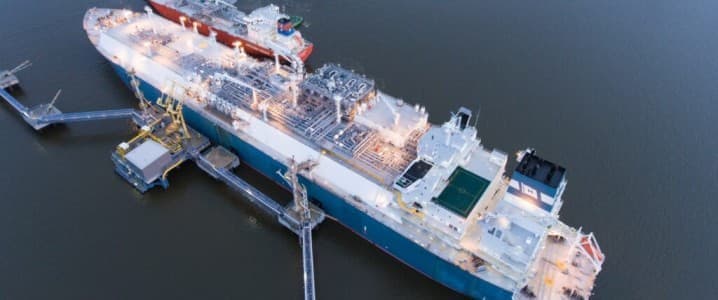
  • The Strait of Hormuz disruption and insurer pullbacks have slowed LNG shipping, while the EU must secure about 67 bcm of LNG (around 700 cargoes) to refill storage ahead of winter.
  • Europe’s shift away from Russian pipeline gas has increased reliance on expensive LNG, particularly from the U.S., potentially driving higher energy costs for industries and consumers.

The European Union’s gas in storage levels are below 30%, benchmark gas prices are the highest in over a year, and QatarEnergy just shut down the world’s single biggest LNG production facility. The situation looks like a recipe for disaster, and the chances of a painless solution are slim.

EU’s benchmark natural gas price has gained as much as 60% since the United States and Israel started bombing Iran on Saturday, and while some of these gains were erased this week, significant upside potential remains. Not only has QatarEnergy suspended LNG production and declared force majeure on exports, but insurers’ refusal to provide coverage for vessels traversing the Strait of Hormuz, along with Iranian warnings that enemy vessels will be legitimate targets, has resulted in severe disruption of tanker traffic in the chokepoint.

Of course, the EU could always lean more heavily on American liquefied gas. After all, it even made a commitment to buy $250 billion worth of it and oil annually until 2028 as part of the trade deal European Commission president Ursula von der Leyen signed with President Trump last summer. This is what it will likely have to do, in the absence of Qatari LNG for an unknown period of time. But there is a problem with that, and the problem is the price.

Liquefied natural gas is more expensive than pipeline gas to begin with. This was one reason why European industries have had a tough four years since the sabotage of the Nord Stream and the consequent drop in Russian gas flows to the continent. Alternative pipeline gas supplies from Northern Africa and Azerbaijan have yet to ramp up enough to replace the lost flows. And this year’s heating demand has been much stronger than the last four years.

Bloomberg sounded the alarm as early as January, reporting that below-average winter temperatures were driving the fastest pace of withdrawals from natural gas storage in Europe in five years, as heating demand soared. The gap between demand and supply was so significant that LNG cargo arrivals were at less than half of the daily volumes withdrawn from storage. What’s more, at the time and over the next month, the unfavorable price spread between winter and summer prices did not encourage early stockpiling.

This means that now, European energy buyers would need to revise their gas purchase plans for refill season—and their price assumptions. Reuters cited Kpler as saying the European Union would need LNG deliveries equivalent to 67 billion cu m just to refill gas storages. That would be equal to some 700 cargoes, the publication noted, or 180 cargoes (17 billion cu m) more than it needed last year.

These volumes are no small potatoes—especially with a war premium attached to them. Even if the war in the Middle East ends this week, restarting QatarEnergy’s LNG production would take more than a few days. In other words, whatever happens in the Middle East, the EU will be paying through the nose for its gas—because it has no alternative. Reuters has calculated that the additional cargoes would swell the EU’s LNG import bill by over $10 billion, per current prices.The full refill bill, according to the publication, could hit $40 billion. That’s a far cry from the $250 billion committed, and even that far cry would hit European industries.

Before 2022, Russia’s Gazprom notoriously supplied almost 40% of the European Union’s gas at the peak of deliveries. By last year, this had fallen to less than 20%, pumped through the one remaining operating pipeline, the TurkStream. Now, the EU has decided to suspend all Russian energy imports starting in 2027, including, notably gas, both pipeline and LNG. In the meantime, however, European buyers are in a rush to secure as much Russian LNG as possible, turning the country into its second-largest LNG supplier, after the United States. The rather ironic situation may also get a twist, after Russia’s president said parliament would discuss pre-empting the EU and suspending gas exports itself, given the presence of alternative markets and the EU’s own plans for an end to these exports.

This would only hasten an already deep dependence on American liquefied gas in Europe that has started to cause concern—after being celebrated as energy independence back in 2022. The problem is that, besides Russia, there is no gas producer large enough to serve as a source of stable diversification of supply. The situation will likely boost the appeal of wind and solar capacity, but that appeal has limits, too, because neither wind nor solar are as cheap as advertised when the costs of backup generation and battery storage are included in the tally. In short, the European Union is facing even more uncertain times than it has been struggling with for four years now.


xix

Time Zone Traveller
Jul 27, 2002
5,239
2,083
113
La la land
A pyramid has for pointy sides like the Egyptian pyramid. So I blame...

Israel, US (CIA+), Illuminati?, Banks? ; Aliens?
 

oil&gas

Well-known member
Apr 16, 2002
16,571
3,210
113
Ghawar
Great War in a Time of Economic Collapse

DAVID HAGGITH
MAR 04, 2026

When have we seen a Great War during a time of serious economic collapse. WWII comes to mind as a similar time, especially now that everyone is saying “WWIII.” Have we ever seen an oil crisis lead to a severe recession with soaring prices at the same time—an unusual concurrence? We don’t have to think that far back to recall those years that became defined as “stagflation.”

While President Trump and Treasury Secretary Scott Bessent have both vowed that the US navy will break Iran’s present siege on Gulf oil by shepherding tankers through the Strait of Hormuz, the US Navy already said au contraire today:

No escorts. No timeline. But even if they do they’re sitting ducks for Iran’s coastal defence forces, no Iranian Navy presence required. The petrodollar runs through a chokepoint the United States can no longer credibly protect, defended by interceptor systems now operating without their primary radar.

That’s because Iran managed to get a single missile through US defenses in the past 24 hours that knocked out some critical defensive radar used to by missile interceptors to target the missiles and decide which ones need to be knocked out of the air, then automatically take them down.

It’s unlikely that, unless the US military could prove it is able to protect merchant ships that any would be willing to make the run even with a navy escort because there is always a big risk in a war this hot that the enemy will find a way to make good on its threats. Would you walk into a roaring fire if someone said, “Here, I’ve got a good fire suit for you.” Not if you didn’t have to!

To offset that risk, both Trump and Bessent pledged that the United States would also double down on providing cheap insurance for any vessel ready to brave the journey through fiery seas. All that means for America is that Trump & Treasury are guaranteeing that US taxpayers will pay for every merchant ship and shipment that is sunk or burned in the gulf due to this war.

3,200 ships are sitting idle. European gas is up 50% and climbing fast. A global recession is no longer a forecast — it’s a Wednesday. The Gulf monarchs who rented their soil to Washington are watching their ports burn and their pipelines get threatened while the Navy says it needs more time….

Iran just destroyed a $1.1 BILLION US radar system at Al Udeid — the most fortified American base in the ENTIRE Middle East….

That radar was the backbone of US missile defense in the Gulf. Every Patriot battery. Every THAAD system. All of them relied on it. The US military is now operating blind in the region.

Qatar intercepted 101 missiles. TWO got through. One hit the ONLY target that mattered. That’s a 98% success [defensive] rate — and it wasn’t enough….

Every Patriot interceptor costs $4M. Every Iranian missile costs $300K. Iran can outspend us 10 to 1 in this war of attrition….

If the US couldn’t protect a $1.1 BILLION radar inside its OWN base — how is it going to protect:

→ Oil tankers in the Strait of Hormuz?

→ Saudi refineries?

→ Global shipping lanes?

→ YOUR economy?

Here is one economic scenario laid out in that story for the weeks ahead:

Week 1 (now): Oil refineries hit. Strait closed. Markets crashed $3.2T.

Week 2: Shipping lanes completely unusable. Oil hits $100+. Global supply chains break.

Week 3: Inflation spikes worldwide. Central banks forced to hike rates. Housing markets crack.

Week 4-5: Recession hits. Layoffs begin. The economic damage becomes permanent.

Following the headlines below, I’ll lay out the economic collapse scenarios that are actually happening right now to the US economy, which this war will pile on top of.
...........................................................
 

oil&gas

Well-known member
Apr 16, 2002
16,571
3,210
113
Ghawar
Oil-War Inflation Blows Up Bigly

Prices on crude and at the pump are rising relentlessly. Contracts abolished. Tankers and refineries on fire. Putin threatening Russian fuel cutoff. China embargoing its own oil from exports.

DAVID HAGGITH
MAR 05, 2026

War inflation is starting to hit hard. With WTI (West Texas Intermediate) oil prices having started at about $68/barrel a couple of weeks ago, oil shot up to over $80/bbl today and over $85 for Brent. That sent stocks tumbling—down 1,100 points on the Dow almost immediately, but stabilizing over the day to end about 800 points lower as projected increased costs for businesses from these surging oil price hikes became obvious to investors all over the world. Investors had been a little naive about it all in the first days of the Iran War (and probably will be again because they are dumb (greedy) like that).

China responded to Iran’s siege on oil by ordering the termination of nearly all of the nation’s oil export contracts in order to sequester short supply within China. Putin capitalized on the crisis by threatening to end the remaining fuel supply lines between Russia and Europe. Iran hit another refinery today and an oil tanker at port, and Qatar declared Force Majeure on its exports of liquid natural gas, after shutting down LNG production due to the high risks from the war.

While Qatar had already shut down production yesterday, exercising the Force Majeure clauses of all its contracts today voids the contracts completely, making it clear that Qatar will not be delivering any of the LNG it already has stored either. India, and China, which get a lot of LNG from Qatar are heavily impacted by the shutdown. China relies on Qatar for 30% of its LNG imports. India for 42-52%. So, this shutdown may have a domino effect in shutting down or partially shutting down Chinese and Indian businesses or utilities that are dependent on LNG.

The war is still running.

There is no security guarantee. There is no restart timeline. There is no floor.

Every LNG contract in Asia just became a spot market problem. Every spot market problem just became an inflation problem. Every inflation problem just became a central bank problem.

This started as a war in the Middle East.

It is now inside every factory, every power plant, and every gas bill across Asia.

Price that chain.

Talk by the US yesterday of shadowing tankers through the Strait of Hormuz for protection and insuring all shipments is immediately moot because the US military clearly cannot prevent all strikes on refineries or its own radar facilities, as a 100% defense success rate is impossible. In fact, the military responded yesterday that this would not be happening. After today’s additional explosions from Iranian weapons on oil-bearing interests, what tanker is going to attempt the journey through the strait?

Even if tankers did make the journey, one article today strongly highlights the risk this policy would have for the US, as I pointed out yesterday. The article says that Trump would be walking exactly into the trap Iran wants it to enter because Iran can, then, ignite the oil in those tankers with well-placed drone-delivered bombs and make the US responsible for covering all the costs of everyone’s lost oil and possibly lost ships. (Iran is talking of “burning” the ships, not sinking them, most likely because it doesn’t want massive oil spills all along its own beautiful gulf shores.)

Retail gasoline prices in the U.S. have jumped nearly 27 cents since last week to $3.25 per gallon on average, according to the motorist group AAA. The last time gas prices made a similar jump was in March 2022 after Russia invaded Ukraine, the group said.

This, reportedly, sent Susie Wiles, Trump’s gatekeeper in the White House, into a stark-raving rage, though Trump’s Press Secretary Karoline Leavitt, claims the reports of a flaming meltdown are fake news. However, the White House also claimed Trump was barely mentioned in the Epstain Files, and now the Trump DoJ has announced that claims against Trump exist in the thousands of pages of files that the DoJ released and then immediately pulled back and now is about to release again tomorrow, after some serious scrubbing to get them ready for public viewing, sans a lot of the Trump references, I suppose.

The White House is reportedly evaluating emergency consumer assistance on gas prices, such as cutting fuel taxes at the pumps.

Meanwhile, economist Wolf Richter published an article today about the tariff wars happening between US businesses as each business passes its tariffs along in the form of higher prices to the businesses it supplies. While businesses have not been able to master that maneuver with consumers, who are fighting back, they are doing their best to force the tariffs on to other businesses in the form of serious B-to-B price increases.

As I’ve said all along, that back pressure will eventually make its way to the consumer, too. It always does. This war will now amp up the back pressure in prices so much that they blow through the consumer barriers. No one is going to have a choice, and businesses will be able to blame it on the war (somewhat rightfully so, but the tariffs will come along for the ride.)


oil&gas

Well-known member
Apr 16, 2002
16,571
3,210
113
Ghawar
The Sky Is The Limit For The Current Oil Price Rally

Tom Kool
Mar 06, 2026

Brent tops $90 as the Strait of Hormuz closure halts Gulf oil flows and Iraq and Kuwait begin cutting output, fueling fears of a sharper price surge.

Friday, March 06, 2026

When a US President declares that there would be no deal with Iran except for ‘unconditional surrender’, the oil markets rally. Hence, there should be nothing surprising about ICE Brent jumping above $90 per barrel for the first time since April 2024, as the closure of Strait of Hormuz continues, with zero crude oil movement out of the Persian Gulf. With Iraq and Kuwait starting to cut production, it seems that the sky is the limit for the current oil price rally.

US Allows India to Buy Russian Oil, for a Month. The US Department of Treasury has authorized Indian refiners to temporarily increase their purchases of Russian oil, provided the cargoes were loaded onto vessels before March 5 and arrive to India within the next 30 days, boosting the price of Russian grades.

Shippers Reject Trump's Tanker Insurance Offer. US President Trump said that the US Navy could begin escorting commercial oil tankers through the Strait of Hormuz if necessary, reacting to insurance firms halting coverage in the region, however there are still no crude transits out of the Gulf since March 1.

Middle East Freight Rates Cost More than Ever. VLCC freight rates from the Middle East to northeast Asia continue to rise on the closure of the Strait of Hormuz, jumping to an equivalent of $16 per barrel this week, representing approximately 20% of the any grade's free-on-board value.

Japan’s Refiners Lobby for Strategic Oil Release. Japanese oil refiners have started to lobby their government to release crude from the country’s strategic petroleum reserves, wary of crude oil shortages as the island nation relies on the Middle East for 95% of its crude oil imports.

Following Iraq, Kuwait Starts to Curb Oil Output. After Iraq was forced to shut its West Qurna-2 and Rumaila fields this week, Kuwait’s state oil firm KPC started to cut production at some of its fields as storage tanks are filling up fast in the country, having already shut its 464,000 b/d Mina Abdulla refinery.

Qatar's Liquefaction Will Take Weeks to Restart. According to media reports, QatarEnergy intends to keep its Ras Laffan gas liquefaction plant offline for at least two weeks as it will take another two weeks to resume LNG production, shutting 20% of global LNG supply for the next month.

Russian Shadow LNG Tanker Sinks in the Med. The Arctic Metagaz LNG carrier sank in the Mediterranean after the ship, a ship used by Russia's Novatek to transport liquefied gas from the Arctic LNG 2 project, after an alleged drone attack by Ukraine's security services, launched from Libya.

Hungary's Oil Dearth Enflames European Tensions. Hungary's state-controlled oil firm MOL (BUD:MOL), more than a month into an outage that halted Russian oil flows to central Europe, reported Croatian pipeline operator JANAF to Europe's competition watchdog for refusing to transport Russian oil by sea.

Saudi Arabia's Refining Struck by Strikes. Saudi Aramco's (TADAWUL:2222) largest refinery in Ras Tanura was targeted by a second drone attack this week, hitting the 550,000 b/day plant a day after it temporarily stopped operations, adversely impacting the country's gasoline production.

Gulf War Aggravates World's Aluminium Problem. The constant bombardment of Bahrain by Iranian missiles and drones forced Aluminium Bahrain, one of the largest smelters globally, to halt all export shipments, sending the metal's price up 5% this week, to $3,420 per metric tonne.

Trump Flaunts Treasury Dept Oil Trading. Following intense media speculation that the US Treasury Department is considering measures to combat rising energy prices, potentially even trading oil futures to counteract the bullish rally, the Trump administration denied such plans, for now.

Where do We Get the Sulphur from Now? The prolongation of the US-Israel-Iran conflict threatens to disrupt nickel, copper and lithium miners globally as they require sulphur for their leaching and refining operations, with the Persian Gulf accounting for 50% of global supply.

Beijing Suspends Product Exports to Ensure Supply. China’s top economic planner NDRC has instructed the country’s refiners and traders to focus on supplying the domestic market as the closure of Strait of Hormuz drains Asia of crude feedstocks, suspending the issuance of product exports for April 2026.

Shell Wriggles Its Way into Venezuela. London-based energy major Shell (LON:SHEL) has signed several oil agreements with the Venezuelan government to boost offshore oil and gas output in the country, aiming to expedite the development of the Dragon gas field and export first gas to Trinidad by Q3 2027.

 
Toronto Escorts