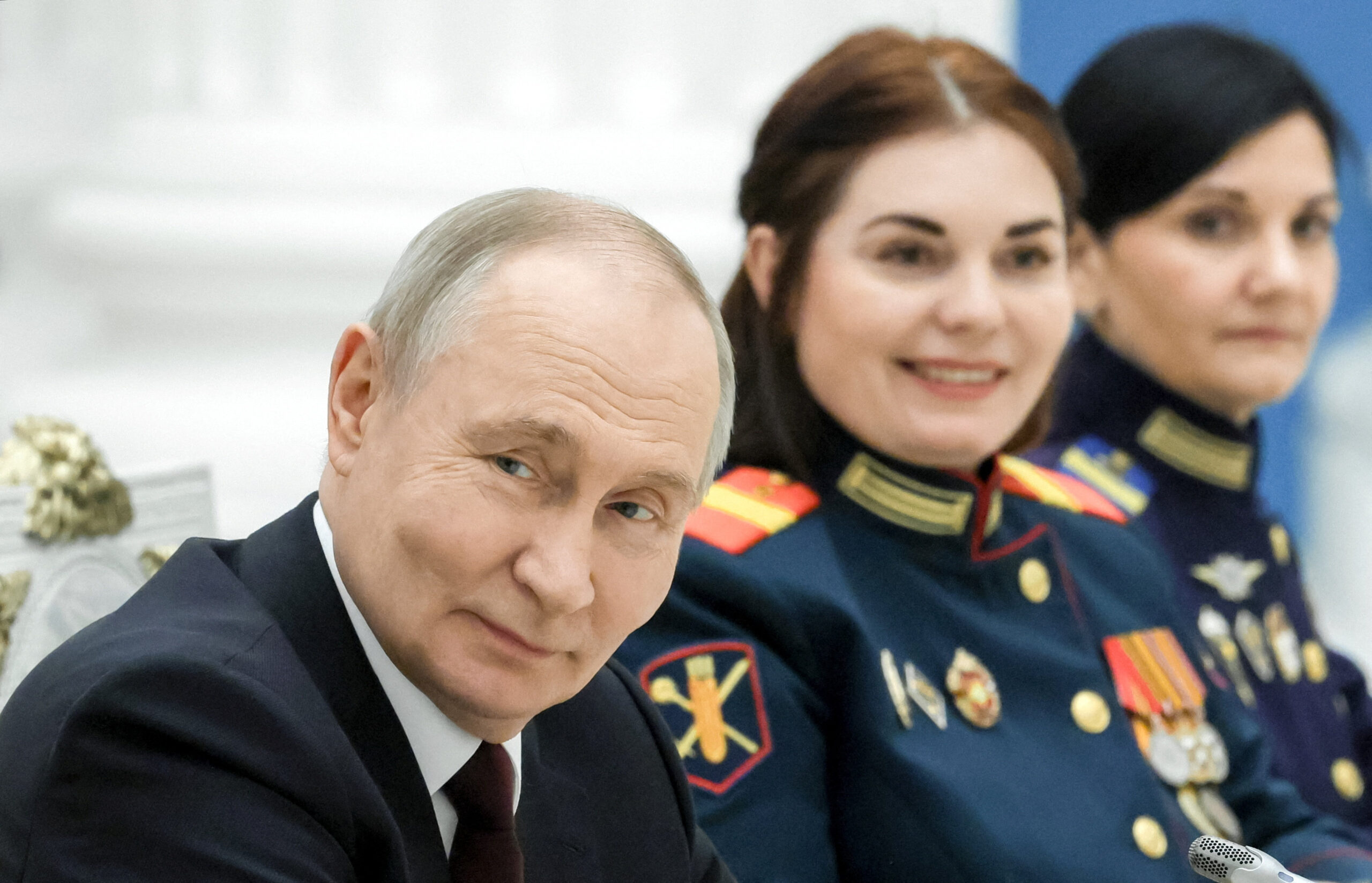
Vladimir Putin says Russia is and always has been the strongest nuclear power
March 1, 2026
Any attempt to use nuclear weapons against Russia and its allies will be regarded by Moscow as a nuclear attack and its retaliation will be instant, Russian President Vladimir Putin said in his annual State of the Nation Address to the Federal Assembly on Thursday.
"I believe it as my duty to say this: any use of nuclear weapons of any yield - small, medium or whatever - against Russia or its allies will be regarded as a nuclear attack against our country. Retaliation will be instant with all the ensuing consequences," Putin said to draw loud applause from the audience.
He warned that "nobody should have any doubts on that score." At the same time Putin cautioned against creating new threats to the world, "but on the contrary to come to the negotiating table to give thought to an updated, future system of international security and the civilization’s sustainable development."
"We’ve talked about that all the way. These proposals remain in effect. Russia is prepared for that," he concluded.
Russia is concerned about lowering the threshold for the use of nuclear weapons in the new US doctrine, Putin said.
"Some of the provisions of the updated US nuclear strategy review, which reduces the threshold for using nuclear weapons, trigger tremendous concern. One can try to calm down anyone behind the scenes as one chooses, but we read what has been written. It is written in such a way that it can be used in response to a conventional weapon strike or even in response to a cyberthreat," Putin noted.
He drew attention to the fact that, in its military doctrine, Russia "reserves the right to use nuclear weapons only in response to the use of nuclear and other types of weapons of mass destruction against it or its allies or in the event of aggression with the use of conventional weapons, when the very existence of the state is jeopardized."
"Everything is very clear and specific," the Russian leader stressed.
Russia has been and remains the strongest nuclear power as no other country currently has weapons such as Russia’s, Putin said.
The head of state pointed out that Russia had many times warned the United States and European NATO member states that reciprocal measures would be taken in response to the deployment of the US global missile defense system. Back in 2004, following strategic nuclear forces’ drills, which for the first time involved this system, the Russian president told reporters that "given the qualitative and quantitative increase in the military capabilities of other countries, Russia needs to make a breakthrough and develop new generation weapons and military equipment." "In this regard, I am pleased to inform you that tests conducted during military exercises have produced positive results, confirming that in the near future Russia’s Strategic Missile Forces will receive the newest technical complexes capable of achieving hypersonic speed and hitting targets at intercontinental distances with high accuracy, at the same time being able to fully manoeuvre, changing altitude and course," Putin said, adding that "no other country currently has such weapons."
"Every word matters, so the possibility of bypassing interception lines was addressed," Putin said. "What did we do that for, what is the reason we talked about it? As you see, we did not keep our plans secret, we spoke openly it to induce negotiations. I repeat, it happened in 2004," the Russian president noted.
According to him, "despite all the economic, financial and defense issues that we faced, Russia has been and still is the biggest nuclear power." "Back then, no one wanted to have substantive talks with us, no one was listening. So listen now," Putin added.
Military revival
Russia should blame itself that the United States believed its military and industrial complex could not be revived, Russian President Vladimir Putin said in his State of the Nation Address to the Federal Assembly.
The Russian leader recalled that after the collapse of the Soviet Union Russia lost 44.6% of its military potential since the USSR’s armed forces were divided between the former Soviet republics.
"The Russian army’s equipment was becoming outdated and the armed forces themselves were, frankly speaking, in a sad condition. There was a civil war in the Caucasus and US inspectors were at our leading uranium enrichment enterprises," Putin said.
"Once there was a question even not whether we will be able to develop the strategic armaments system but some even asked if our country was capable of safely maintaining and servicing nuclear weapons that we had after the Soviet Union’s collapse," he said.
In this situation, the US partners believed that it was impossible to revive Russia’s economy, industry, military and industrial complex and the armed forces as far as to the level ensuring the necessary strategic potential in the near future.
"If so, then there is no sense in taking into account Russia’s opinion and there is the need to take further steps and achieve a final unilateral military advantage and then dictate their conditions in all the other areas," he said.
"In principle, this position and logic can be understood given that situation," the president said. "It’s our fault here."
March 1, 2026
Any attempt to use nuclear weapons against Russia and its allies will be regarded by Moscow as a nuclear attack and its retaliation will be instant, Russian President Vladimir Putin said in his annual State of the Nation Address to the Federal Assembly on Thursday.
"I believe it as my duty to say this: any use of nuclear weapons of any yield - small, medium or whatever - against Russia or its allies will be regarded as a nuclear attack against our country. Retaliation will be instant with all the ensuing consequences," Putin said to draw loud applause from the audience.
He warned that "nobody should have any doubts on that score." At the same time Putin cautioned against creating new threats to the world, "but on the contrary to come to the negotiating table to give thought to an updated, future system of international security and the civilization’s sustainable development."
"We’ve talked about that all the way. These proposals remain in effect. Russia is prepared for that," he concluded.
Russia is concerned about lowering the threshold for the use of nuclear weapons in the new US doctrine, Putin said.
"Some of the provisions of the updated US nuclear strategy review, which reduces the threshold for using nuclear weapons, trigger tremendous concern. One can try to calm down anyone behind the scenes as one chooses, but we read what has been written. It is written in such a way that it can be used in response to a conventional weapon strike or even in response to a cyberthreat," Putin noted.
He drew attention to the fact that, in its military doctrine, Russia "reserves the right to use nuclear weapons only in response to the use of nuclear and other types of weapons of mass destruction against it or its allies or in the event of aggression with the use of conventional weapons, when the very existence of the state is jeopardized."
"Everything is very clear and specific," the Russian leader stressed.
Russia has been and remains the strongest nuclear power as no other country currently has weapons such as Russia’s, Putin said.
The head of state pointed out that Russia had many times warned the United States and European NATO member states that reciprocal measures would be taken in response to the deployment of the US global missile defense system. Back in 2004, following strategic nuclear forces’ drills, which for the first time involved this system, the Russian president told reporters that "given the qualitative and quantitative increase in the military capabilities of other countries, Russia needs to make a breakthrough and develop new generation weapons and military equipment." "In this regard, I am pleased to inform you that tests conducted during military exercises have produced positive results, confirming that in the near future Russia’s Strategic Missile Forces will receive the newest technical complexes capable of achieving hypersonic speed and hitting targets at intercontinental distances with high accuracy, at the same time being able to fully manoeuvre, changing altitude and course," Putin said, adding that "no other country currently has such weapons."
"Every word matters, so the possibility of bypassing interception lines was addressed," Putin said. "What did we do that for, what is the reason we talked about it? As you see, we did not keep our plans secret, we spoke openly it to induce negotiations. I repeat, it happened in 2004," the Russian president noted.
According to him, "despite all the economic, financial and defense issues that we faced, Russia has been and still is the biggest nuclear power." "Back then, no one wanted to have substantive talks with us, no one was listening. So listen now," Putin added.
Military revival
Russia should blame itself that the United States believed its military and industrial complex could not be revived, Russian President Vladimir Putin said in his State of the Nation Address to the Federal Assembly.
The Russian leader recalled that after the collapse of the Soviet Union Russia lost 44.6% of its military potential since the USSR’s armed forces were divided between the former Soviet republics.
"The Russian army’s equipment was becoming outdated and the armed forces themselves were, frankly speaking, in a sad condition. There was a civil war in the Caucasus and US inspectors were at our leading uranium enrichment enterprises," Putin said.
"Once there was a question even not whether we will be able to develop the strategic armaments system but some even asked if our country was capable of safely maintaining and servicing nuclear weapons that we had after the Soviet Union’s collapse," he said.
In this situation, the US partners believed that it was impossible to revive Russia’s economy, industry, military and industrial complex and the armed forces as far as to the level ensuring the necessary strategic potential in the near future.
"If so, then there is no sense in taking into account Russia’s opinion and there is the need to take further steps and achieve a final unilateral military advantage and then dictate their conditions in all the other areas," he said.
"In principle, this position and logic can be understood given that situation," the president said. "It’s our fault here."