I find it hard to believe that this is still around.
Adam Skelly, who led a protest against COVID restrictions at his Etobicoke eatery in late 2020, will have his say in a Toronto courtroom .
In a constitutional challenge years in the making, the Adamson Barbecue saga is due back in court this week.
The Etobicoke eatery was the site of the so-called Barbecue Rebellion in November 2020, when proprietor Adam Skelly served meals in defiance of a COVID lockdown.
While his restaurants have since closed and Skelly has decamped to Alberta, his lawyers are alleging charter-breaching overreaches by the governments of the day – and they say a “reckoning” is overdue.
A hearing will take place at the University Ave. courts from Wednesday to Friday, the Toronto firm representing Skelly, Perrys LLP, confirmed to the Toronto Sun.
Skelly’s lawyer Ian Perry provided the Sun with a court filing that outlines his argument against four respondents: the province of Ontario, the City of Toronto, Toronto’s board of health and former medical officer of health Eileen de Villa.
The filing alleges several infringements of the Charter of Rights and Freedoms against Skelly, including his freedom of peaceful assembly and against arbitrary detention.
Perry declined to speak to the Sun or provide a statement with the matter still to come before the courts. The City of Toronto likewise said as the matter is before the courts, it won’t comment on the case.
The Ministry of the Attorney General, meanwhile, did not respond to a request for comment.
The allegations in the filing have not been proven in court.
“This constitutional challenge is a reckoning with the unchecked exercise of state power that devastated small business owners, silenced peaceful dissent and trampled core constitutional protections, all without a shred of cogent evidence to justify the destruction,” the filing says.
While de Villa and an expert acting as a witness for the province, Dr. Matthew Hodge, spoke to lawyers for hours ahead of the hearing, the evidence provided by the other side, Perry’s filing alleges, “is alarmingly thin.”
“The record discloses no evidence that closing restaurants or prohibiting peaceful assembly would have meaningfully reduced COVID-19 transmission,” it says. “These respondents … did not balance harms. They simply acted, assuring the applicant, this court and the public at large that these crippling restrictions on businesses were justified.
“Now, when challenged, it seems they have nothing behind the curtain.”
In October 2020, de Villa publicly called for a prohibition on indoor dining, which Premier Doug Ford initially rejected. The next month, the province brought in a colour-coded framework to ease Ontario into another lockdown.
“This framework was widely criticized as confusing and inconsistent with Ontario’s earlier assurance it would not impose new lockdowns,” the filing says.
Skelly, “observing this intergovernmental discord and lack of disclosed evidence,” fearing for his business and judging an impending lockdown as not “grounded in rational, scientific justification,” decided to act, the filing says.
What followed was a protest that, while lacking the longevity of 2022’s Freedom Convoy demonstration in Ottawa, was perhaps Toronto’s biggest political flashpoint of late 2020. The restaurant’s parking lot became a circus.
On Nov. 25, Skelly was ticketed for violations of COVID rules and a trespass notice was “authorized and signed by Dr. de Villa, a measure she would later be unable to provide any support or precedent for,” the filing alleges.
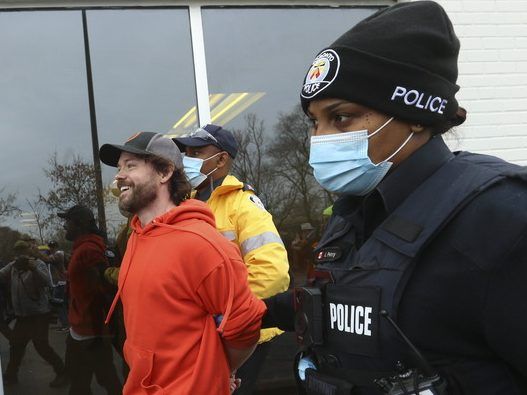
The next day, Skelly broke into his own property and was arrested by the swarm of Toronto Police officers already present.
“The operation involved over 200 officers, with the city later seeking more than $187,000 from Mr. Skelly in a civil action for policing costs,” the filing says.
Skelly has been tied up in litigation in the years since and has paid tens of thousands in costs, not counting the city’s $187,000 for policing, the filing says.
‘This was COVID-19’
While the Sun has heard no response from the city or province as to the filing’s version of events, transcripts of the examinations of de Villa and Hodge, as well as one of Skelly, have been posted online.
In those transcripts, de Villa and Hodge emphasize the dangers posed by COVID and the strain on Ontario’s medical system, and also concede that hindsight being 20-20, more is known today about the virus and public health’s response to it.
“The issue here is that we were in the middle of a communicable disease pandemic. … This was COVID-19,” de Villa said during questioning by Perry, according to the transcript, posted to canucklaw.ca. (While Perrys LLP did not confirm the authenticity of the transcript, the information within lines up with footnotes in the filing provided to the Sun.)
“We don’t need to hear the spiel on COVID-19 again, OK? I haven’t asked you about that,” Perry replied. “I have asked you about why the police took the actions they did, why $187,000 was incurred, and my client sued for in the weeks following this incident.”

 torontosun.com
Adam Skelly, who led a protest against COVID restrictions at his Etobicoke eatery in late 2020, will have his say in a Toronto courtroom .
In a constitutional challenge years in the making, the Adamson Barbecue saga is due back in court this week.
The Etobicoke eatery was the site of the so-called Barbecue Rebellion in November 2020, when proprietor Adam Skelly served meals in defiance of a COVID lockdown.
While his restaurants have since closed and Skelly has decamped to Alberta, his lawyers are alleging charter-breaching overreaches by the governments of the day – and they say a “reckoning” is overdue.
A hearing will take place at the University Ave. courts from Wednesday to Friday, the Toronto firm representing Skelly, Perrys LLP, confirmed to the Toronto Sun.
Skelly’s lawyer Ian Perry provided the Sun with a court filing that outlines his argument against four respondents: the province of Ontario, the City of Toronto, Toronto’s board of health and former medical officer of health Eileen de Villa.
The filing alleges several infringements of the Charter of Rights and Freedoms against Skelly, including his freedom of peaceful assembly and against arbitrary detention.
Perry declined to speak to the Sun or provide a statement with the matter still to come before the courts. The City of Toronto likewise said as the matter is before the courts, it won’t comment on the case.
The Ministry of the Attorney General, meanwhile, did not respond to a request for comment.
The allegations in the filing have not been proven in court.
“This constitutional challenge is a reckoning with the unchecked exercise of state power that devastated small business owners, silenced peaceful dissent and trampled core constitutional protections, all without a shred of cogent evidence to justify the destruction,” the filing says.
While de Villa and an expert acting as a witness for the province, Dr. Matthew Hodge, spoke to lawyers for hours ahead of the hearing, the evidence provided by the other side, Perry’s filing alleges, “is alarmingly thin.”
“The record discloses no evidence that closing restaurants or prohibiting peaceful assembly would have meaningfully reduced COVID-19 transmission,” it says. “These respondents … did not balance harms. They simply acted, assuring the applicant, this court and the public at large that these crippling restrictions on businesses were justified.
“Now, when challenged, it seems they have nothing behind the curtain.”
In October 2020, de Villa publicly called for a prohibition on indoor dining, which Premier Doug Ford initially rejected. The next month, the province brought in a colour-coded framework to ease Ontario into another lockdown.
“This framework was widely criticized as confusing and inconsistent with Ontario’s earlier assurance it would not impose new lockdowns,” the filing says.
Skelly, “observing this intergovernmental discord and lack of disclosed evidence,” fearing for his business and judging an impending lockdown as not “grounded in rational, scientific justification,” decided to act, the filing says.
What followed was a protest that, while lacking the longevity of 2022’s Freedom Convoy demonstration in Ottawa, was perhaps Toronto’s biggest political flashpoint of late 2020. The restaurant’s parking lot became a circus.
On Nov. 25, Skelly was ticketed for violations of COVID rules and a trespass notice was “authorized and signed by Dr. de Villa, a measure she would later be unable to provide any support or precedent for,” the filing alleges.
The next day, Skelly broke into his own property and was arrested by the swarm of Toronto Police officers already present.
“The operation involved over 200 officers, with the city later seeking more than $187,000 from Mr. Skelly in a civil action for policing costs,” the filing says.
Skelly has been tied up in litigation in the years since and has paid tens of thousands in costs, not counting the city’s $187,000 for policing, the filing says.
‘This was COVID-19’
While the Sun has heard no response from the city or province as to the filing’s version of events, transcripts of the examinations of de Villa and Hodge, as well as one of Skelly, have been posted online.
In those transcripts, de Villa and Hodge emphasize the dangers posed by COVID and the strain on Ontario’s medical system, and also concede that hindsight being 20-20, more is known today about the virus and public health’s response to it.
“The issue here is that we were in the middle of a communicable disease pandemic. … This was COVID-19,” de Villa said during questioning by Perry, according to the transcript, posted to canucklaw.ca. (While Perrys LLP did not confirm the authenticity of the transcript, the information within lines up with footnotes in the filing provided to the Sun.)
“We don’t need to hear the spiel on COVID-19 again, OK? I haven’t asked you about that,” Perry replied. “I have asked you about why the police took the actions they did, why $187,000 was incurred, and my client sued for in the weeks following this incident.”
Barbecue rebel’s COVID charter challenge coming to court
In a constitutional challenge years in the making, the Adamson Barbecue saga is due back in court this week. Read more.
torontosun.com