Asia Studios Massage

Israel eyes regime change in Iran - and is counting on Trump to make it happen

oil&gas

Well-known member
Apr 16, 2002
16,569
3,205
113
Ghawar
23 hours ago
Lucy Williamson

Amid the din of global speculation over US military build-up in the Middle East, Israel's leaders have remained unusually silent.

Aside from some remarks in support of Iran's anti-government protests this month, Israel's prime minister has had little to say publicly about his superpower ally taking on his biggest enemy. His government has remained equally silent.

"It shows you the importance Netanyahu puts on this moment," said Danny Citrinowicz, who served for 25 years in Israel's Defence Intelligence, and is now senior Iran researcher at Israel's Institute for National Security Studies.

"For Netanyahu, being in this position where the US has so many forces in the Gulf, being so close to Trump attacking Iran, this is - for him - a golden moment in time that he cannot forgo."

Asaf Cohen, a former deputy director of Israel's signals intelligence unit, says there's strategy in Israel's silence too.

"The [Israeli] leadership believes we should allow the Americans to lead the way this time, because they are stronger, have more capabilities, and have much more legitimacy in the world."

Benjamin Netanyahu has long seen Iran as the key threat facing Israel, and the biggest source of instability in the Middle East. His public silence does not signal a lack of private discussion with his key US ally.

This week, Israel's military intelligence chief, Shlomi Binder, met US intelligence agencies in Washington. According to Israeli media, the discussion focused on possible targets in Iran.

Citrinowicz believes Netanyahu is privately pushing the US towards maximalist strikes aimed at regime change in Iran, and that when Netanyahu reportedly urged Trump to hold back earlier this month, he says, it was because he viewed the planned US attack as "too small".

Netanyahu has previously urged Iranians to "stand up" to their regime, in an interview with Fox News last year.

US president Donald Trump is currently considering a range of actions against Iran – they are reported to include both limited symbolic strikes and full-blown regime change. In public, he has alternated military threats with the offer of fresh negotiations.

While many US allies are warning that trying to unseat Iran's leadership carries huge risks for the region, many in Israel see potential benefits for their security.

By changing the regime in Tehran, Israel would hope to end the threat from Iran's ballistic missiles, and the possibility that it would one day acquire nuclear weapons too.

It would also further weaken Iran's proxy militia around the region, including Hezbollah, which still has up to 25,000 missiles and rockets across the border in Lebanon according to Israel's Alma research institute.

In contrast, some Israeli lawmakers believe a limited strike, or even a new deal with Iran, could carry bigger risks for Israel's security by leaving the regime in place.

"When you deal with total evil, you don't act limited," said Moshe Tur-Paz, a member of the Yesh Atid opposition party who sits on the Defence Committee of Israel's parliament.

"There's a consensus that Israel should act much stronger and so should the Western world. When it comes to our worst enemies like Iran, there are no big differences. We all understand the threat."

Another round of conflict that left the regime intact would not be worth the price paid in Iran's retaliation, many say.

During the 12-day war last year, when Israel and the US attacked Iran's nuclear and ballistic missile sites, Iran fired back hundreds of ballistic missiles at Israeli towns and cities. Some evaded Israel's vaunted air-defences, slamming into apartment blocks in Tel Aviv and killing at least 28 people.

 

oil&gas

Well-known member
Apr 16, 2002
16,569
3,205
113
Ghawar
Iran, China and Russia sign trilateral strategic pact

January 29, 2026
Ranjan Solomon

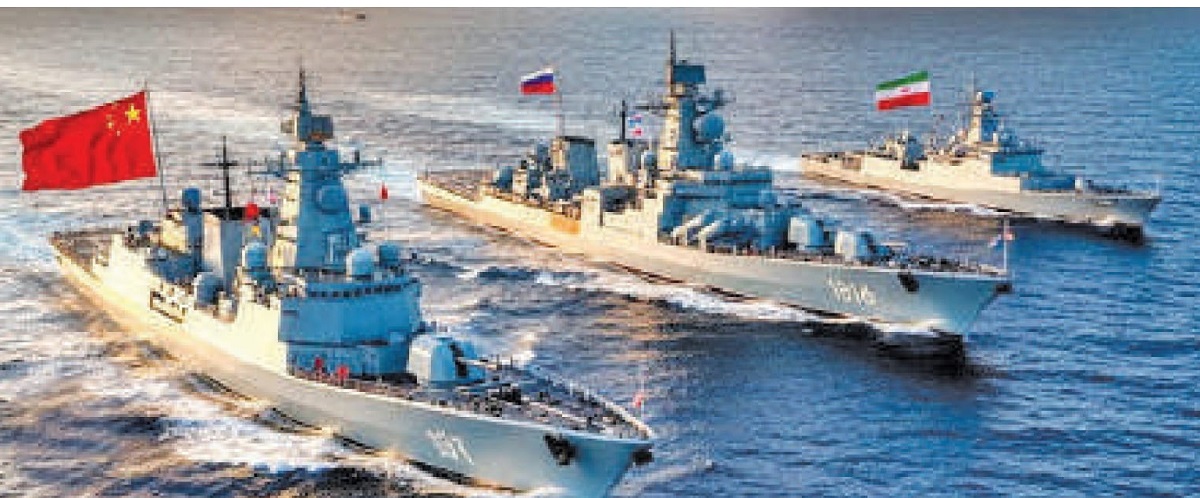
In a dramatic geopolitical development this afternoon, Iran, China and Russia formally signed a comprehensive strategic pact, marking one of the most consequential shifts in 21st-century international relations. While the full text of the agreement is being released in stages by the three governments, state media in Tehran, Beijing and Moscow have acknowledged the ceremony and described it as a cornerstone for a new multipolar order.

The pact comes against the backdrop of decades of growing cooperation between these three states. Iran and Russia earlier concluded a 20-year Comprehensive Strategic Partnership Treaty designed to deepen economic, political, and defence ties, and to blunt the impact of Western sanctions — a treaty that was signed in January 2025 and entered into force last year. Meanwhile, Iran and China have been bound by a 25-year cooperation agreement first signed in 2021, aimed at expanding trade, infrastructure, and energy integration.

What makes today’s signing significantly different, and newsworthy, is that it explicitly combines the three powers in a coordinated framework, aligning them on issues ranging from nuclear sovereignty and economic cooperation to military coordination and diplomatic strategy.

Officials in Tehran described the pact as a joint commitment to “mutual respect, sovereign independence and a rules-based international system that rejects unilateral coercion,” echoing similar statements issued by Beijing and Moscow.

What the pact represents

This agreement does not – at least from the initial public texts – constitute a formal mutual defence treaty akin to NATO’s Article 5, obligating one to defend the others militarily. Past pacts between Iran and Russia always carefully stopped short of a binding defence guarantee. Instead, the pact appears to link three major powers in a broader geopolitical coalition defined by shared opposition to Western military dominance and economic coercion.

Central to the agreement is a unified stance against reimposition of sanctions on Iran tied to its nuclear programme under the 2015 Joint Comprehensive Plan of Action (JCPOA). Tehran, Beijing and Moscow have previously issued joint statements rejecting European attempts to trigger “snapback” sanctions, and have declared the UN Security Council’s considerations of the nuclear deal terminated.

This trilateral pact is therefore as much about diplomatic leverage and strategic narrative as it is about concrete defence or economic mechanisms.

Immediate regional and global consequences

The pact’s signing coincides with heightened tensions between the United States and Iran. President Donald Trump has reiterated threats of military action against Iran absent a negotiated settlement on its nuclear activities, even deploying a US carrier strike group to the Middle East theatre. Against that backdrop, this new strategic pact serves both Tehran and its partners as a buffer against unilateral US military pressure. By presenting a united front, the three governments aim to compel Washington to negotiate from a position of constraint rather than dominance.

For the Middle East, the balance of power is reshaping. Iran, long isolated by Western policies — now claims the protection of two permanent members of the UN Security Council. This will embolden Tehran’s regional posture in theatres such as Iraq, Syria and the Persian Gulf, and complicate conventional deterrence strategies exercised by the United States and its Gulf allies.

For Europe, the pact undercuts Brussels’ ambitions to retain independent influence in Middle Eastern diplomacy. European powers have repeatedly attempted to revive elements of the JCPOA and threaten punitive measures against Tehran, but coordination by Iran, China and Russia has thwarted those efforts, exposing Europe’s diplomatic limitations in a world less anchored to Western consensus.

Economic repercussions

Economically, the deal signals deeper integration among three of the world’s most significant non-Western economies. Russia and China have already worked on investment protection and bilateral trade agreements designed to sidestep Western financial systems, such as SWIFT, which have been used as vectors for sanctions. A trilateral pact potentially accelerates the creation of alternative financial mechanisms and trade routes that further bleed Western economic leverage.

Iran — sitting on vast energy resources — gains broader access to markets and investment, especially as China continues its Belt and Road initiatives and Russia seeks alternatives to sanctions-laden European markets. In combination, these developments portend increased trade flows and reduced vulnerability to the US dollar-centric financial system.

Military and strategic dynamics

Although not a formal alliance, the pact strengthens military cooperation among the trio. China and Russia have conducted regular joint naval drills in the Indian Ocean and Gulf waters — exercises that Iran has participated in as well, signalling interoperability and shared security interests.

Strategically, the pact will likely lead to more coordinated defence planning and intelligence sharing, even if it stops short of a binding treaty that compels military intervention. For the United States and NATO partners, this raises the stakes in multiple regions: any escalation with Iran now risks broader strategic responses involving Beijing and Moscow, increasing the threshold for conflict and reducing the effectiveness of unilateral threats.

Longer-term global impact

In the long term, the pact accelerates the multipolar restructuring of international relations. For decades, the United States and its allies have dominated the architecture of global governance — from trade regimes to security pacts. A structured alignment of Iran, China and Russia signifies an alternative axis that challenges Western hegemony not through ideological competition but through pragmatic power balances.

Whether this pact evolves into a deeper defence agreement, or stays as a diplomatic and strategic framework, remains to be seen. What is indisputable is that the world’s power centre is shifting — not towards a simple “East vs West” dichotomy, but towards a more contested, multipolar world order where diplomatic leverage, economic resilience and military signalling converge in new and unpredictable ways.


kherg007

Well-known member
May 3, 2014
10,583
10,343
113
Getting rid of the Revolutionary Guard and the mullahs would be doing the world a gigantic favor.
The death toll expressed to me by Iranian ex pats with ties to the old country is 20-30,000 gunned down. Again, that's what these ex pats claim (they also fervently desire the usa to bomb the mullahs and RG security forces) . The RG corruptly controls everything so they know they're looking at the end of a rope so they'll slaughter as they feel they must.
 

Frankfooter

dangling member
Apr 10, 2015
109,852
33,345
113
Getting rid of the Revolutionary Guard and the mullahs would be doing the world a gigantic favor.
The death toll expressed to me by Iranian ex pats with ties to the old country is 20-30,000 gunned down. Again, that's what these ex pats claim (they also fervently desire the usa to bomb the mullahs and RG security forces) . The RG corruptly controls everything so they know they're looking at the end of a rope so they'll slaughter as they feel they must.
Getting rid of Netanyahu, trump and everyone tainted with Epstein would do the world a far larger favour.
 
  • Like
Reactions: Shaquille Oatmeal

nottyboi

Well-known member
May 14, 2008
26,844
4,727
113
Getting rid of the Revolutionary Guard and the mullahs would be doing the world a gigantic favor.
The death toll expressed to me by Iranian ex pats with ties to the old country is 20-30,000 gunned down. Again, that's what these ex pats claim (they also fervently desire the usa to bomb the mullahs and RG security forces) . The RG corruptly controls everything so they know they're looking at the end of a rope so they'll slaughter as they feel they must.
Those expats are all Pro Shah and believe any nonsense they are told. All the people that did well under the Shahs corrupt govt fled, and that is what most Iranian diaspora are.
 

oil&gas

Well-known member
Apr 16, 2002
16,569
3,205
113
Ghawar


oil&gas

Well-known member
Apr 16, 2002
16,569
3,205
113
Ghawar
Trump the poodle of Israel will likely chicken out. And that surely will
infuriate his master.
 

kherg007

Well-known member
May 3, 2014
10,583
10,343
113
No, it would be doing Israel a gigantic favor. And what comes after you get rid of them? A secular democracy? How'd that work out in Iraq and Afghanistan?
Iranian people are the most pro-west in the region maybe after Israel. The RG and the mullah are murderous corrupt people crushing the population. They are much more educatec than those other countries. And, one reason Iraq went to shit is because the mullahs undermined everything. So different. You can read about it, that info is everywhere.
 

kherg007

Well-known member
May 3, 2014
10,583
10,343
113
Those expats are all Pro Shah and believe any nonsense they are told. All the people that did well under the Shahs corrupt govt fled, and that is what most Iranian diaspora are.
So, back to gunning down women in the street?
 

WyattEarp

Well-known member
May 17, 2017
9,601
3,433
113
Those expats are all Pro Shah and believe any nonsense they are told. All the people that did well under the Shahs corrupt govt fled, and that is what most Iranian diaspora are.
Some of that is true, but the diaspora is much broader.
Many of the business and technical people left the country.
This is similar to the Cuban and Venzuelan diaspora.
 

WyattEarp

Well-known member
May 17, 2017
9,601
3,433
113
Getting rid of the Revolutionary Guard and the mullahs would be doing the world a gigantic favor.
The death toll expressed to me by Iranian ex pats with ties to the old country is 20-30,000 gunned down. Again, that's what these ex pats claim (they also fervently desire the usa to bomb the mullahs and RG security forces) . The RG corruptly controls everything so they know they're looking at the end of a rope so they'll slaughter as they feel they must.
Scary stuff one way or another.
The top mullahs and top generals allegedly have exit plans to head to Putin's Playhouse.
That will leave many Revolutionary Guard behind who will fight for their lives against the mobs.
I don't see a national reconciliation.
 
  • Like
Reactions: kherg007

Frankfooter

dangling member
Apr 10, 2015
109,852
33,345
113
Some of that is true, but the diaspora is much broader.
Many of the business and technical people left the country.
This is similar to the Cuban and Venzuelan diaspora.
The common denominator?
Big american sanctions.
 

nottyboi

Well-known member
May 14, 2008
26,844
4,727
113
Iranian people are the most pro-west in the region maybe after Israel. The RG and the mullah are murderous corrupt people crushing the population. They are much more educatec than those other countries. And, one reason Iraq went to shit is because the mullahs undermined everything. So different. You can read about it, that info is everywhere.
I don't buy that, when I saw how many people showed up for Gen Soleimani's funeral, there is definitely significant support for the revolution. Iranians know the bad economy is due to sanctions and the goal of the sanction is to enslave Iran again. Even those that dislike the Mullahs prefer them to being slaves of Israel and the USA. The West has inflicted DEACADES of hardship on the Iranian people. Its disgusting. They are a great and cultured people, and the world is poorer from their isolation. The current pressure is due to Russia, China and India deciding enough is enough. They are in the process of breaking Iran out of the grip of the West as they have plans for transformative projects that are in their interests.
 
Last edited:

kherg007

Well-known member
May 3, 2014
10,583
10,343
113
I don't buy that, when I saw how many people showed up for Gen Soleimani's funeral, there is definitely significant support for the revolution. Iranians know the bad economy is due to sanctions and the goal of the sanction is to enslave Iran again. Even those that dislike the Mullahs prefer them to being slaves of Israel and the USA. The West has inflicted DEACADES of hardship on the Iranian people. Its disgusting. They are a great and cultured people, and the world is poorer from their isolation. The current pressure is due to Russia, China and India deciding enough is enough. They are in the process of breaking Iran out of the grip of the West as they have plans for transformative projects that are in their interests.
Do you think the RG and mullahs have enslaved the people? Beating women on the street for their clothing?
 

Frankfooter

dangling member
Apr 10, 2015
109,852
33,345
113
Do you think the RG and mullahs have enslaved the people? Beating women on the street for their clothing?
It looked like this last summer that women were revolting and not wearing hijabs and the government wasn't cracking down.
But its still ridiculous that Israel, an apartheid state committing genocide, is critical of human rights elsewhere.
 

nottyboi

Well-known member
May 14, 2008
26,844
4,727
113
Do you think the RG and mullahs have enslaved the people? Beating women on the street for their clothing?
Yes they have, but the repression is worse because the regime is constantly under external attack and there are so many fissures in society. We have a fat guy in a cowboy hat wanting to sell AB to the USA, its quite different when you are under severe sanctions, currency attack, assassinations bombings and coup attempts.
 
Toronto Escorts