

For all the keyboard zionists, here's what the people fighting your battles think.
You are using an out of date browser. It may not display this or other websites correctly.
You should upgrade or use an alternative browser.
You should upgrade or use an alternative browser.


War with Iran
- Thread starter Butler1000
- Start date


Birds of a feather...Let this sink in. The US is being led by a man who been found liable by a court for committing sexual assault . The war in Iran is being led by a man found liable for committing sexual assault. His co-leader in the war in Iran is the leader of a country committing genocide and who has himself been charged with war crimes and is on the run from facing those charges.
Iran saying they can wait out trump, he'll be a lame duck in 6 months if he's not dead before then.
'Be quiet' 'You're fake news' 'Be quiet'.
All because you won't read the Haaretz article.
It's true though. The ADL link says the same thing that "most" were civilian.
There were approx. 400 military deaths.
And about 700 to 800 civilian deaths.
There have been accusations that Israel either activated the Hannibal Directive on October 7, or started firing indiscriminately, as they often tend to do, on people crossing the border, leading to additional Israeli deaths.
Oh, and also the ADL is pro-Israeli trash. They should be shut down imo.
Of course, no matter what is presented, it will be called fake. Denying what HAMAS did on OCT. 7th is like MAGA denying Jan.6th never happened. YOu also have video of it done by HAMAS themselves and celebrations of Palestinians cheering and taunting the hostages, but hey, that was a worthy cause.

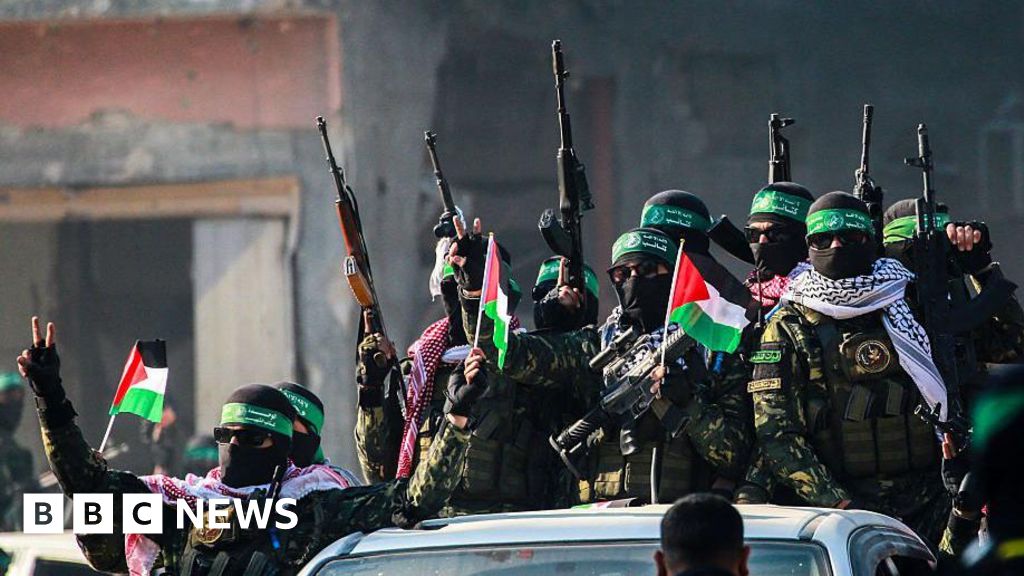
What is Hamas and why is it fighting with Israel in Gaza?
Hamas attacked Israel on 7 October 2023, killing about 1,200 people and taking 251 hostages.
 www.bbc.com
Last edited:
Who denied October 7 happened or that Hamas killed civilians? I literally said Hamas killed civilians.Of course, no matter what is presented, it will be called fake. Denying what HAMAS did on OCT. 7th is like MAGA denying Jan.6th never happened.
I am however separating civilian deaths from military deaths and pointing out to accusations, allegedly admitted to by former IDF personnel themselves that several civilian deaths occurred due to Israel's own response.
Of course I have no doubt that the Palestinians would have experienced schadenfreude for what the Israelis have done to them for 80 years.celebrations of Palestinians cheering...
I mean, Israelis sing and work out to songs celebrating Palestinian deaths, watch the bombing of Gaza like it’s a TV show from the border, and call it “Pallywood” when there are literally 1000s of images and 4K videos, not to mention 100s of hours of testimony from doctors, aid workers, and journalists in Gaza documenting the genocide.
These Zionists really are a death cult.
The cause is Israel's occupation of Palestine and the ongoing brutalization of the indigeneous population....cause....
Who denied October 7 happened or that Hamas killed civilians? I literally said Hamas killed civilians.
I am however separating civilian deaths from military deaths and pointing out to accusations, allegedly admitted to by former IDF personnel themselves that several civilian deaths occurred due to Israel's own response.
No, you didn't. Franky has.
Of course I have no doubt that the Palestinians would have experienced schadenfreude for what the Israelis have done to them for 80 years.
I mean, Israelis sing and work out to songs celebrating Palestinian deaths, watch the bombing of Gaza like it’s a TV show from the border, and call it “Pallywood” when there are literally 1000s of images and 4K videos, not to mention 100s of hours of testimony from doctors, aid workers, and journalists in Gaza documenting the genocide.
These Zionists really are a death cult.
I don't disagree and why for me, it's a case of it takes 2 to tango.
We would be happy dancing if Trump croaked; yeah, it happens.

Of course, no matter what is presented, it will be called fake. Denying what HAMAS did on OCT. 7th is like MAGA denying Jan.6th never happened. YOu also have video of it done by HAMAS themselves and celebrations of Palestinians cheering and taunting the hostages, but hey, that was a worthy cause.
What is Hamas and why is it fighting with Israel in Gaza?
Hamas attacked Israel on 7 October 2023, killing about 1,200 people and taking 251 hostages.
This is you calling the Haaretz article that you used as a source yourself, as fake. I'm not denying what Hamas did on Oct 7, I'm reporting on the most accurate information from Israeli sources, since Israel refuses to cooperate with the UN, OHCHR, HRW, Amnesty and instead kills all journalists and has a 5 year sentence if you report on the war. There were 1195 victims on Oct 7, 382 of whom were military. Only 828 civilian deaths, of which anywhere from 0-400 could have been killed by Israel through the Hannibal Doctrine, we'll never know because Israel will never hold an inquiry or investigate the numbers, instead they buried all the evidence in the desert.
Number are from here:

October 7 attacks - Wikipedia
 en.wikipedia.org
You continue to argue that 838 civilian deaths justifies killing between 75,000 and 750,000 Palestinians, which can only because of racial issues. Not the crimes committed, just old school racial supremacy.
Remember, Palestinians worked with the OHCHR and UN, Israel blocked all attempts.
Point 2 from the OHCHR
The Commission sent four requests for information to Israel and one request to the State of Palestine. Israel did not respond.
Limitations 8. The Commission faced several challenges in its investigation into acts committed in Israel on 7 October. Israeli officials have publicly announced on several occasions Israel’s refusal to cooperate with the Commission’s investigation into acts committed by Hamas Izz ad-Din al-Qassam Brigades2 and other Palestinian armed groups against Israelis.3 9. Israeli officials not only refused to cooperate with the Commission’s investigation but also reportedly barred medical professionals and others from being in contact with the Commission after it approached medical professionals in Israel in December 2023. 4 The Commission was not able to visit the sites of the violations as the Israeli Government has prevented it accessing Israel.
Lets take a look at one of your favourite accusations on Hamas, that they committed rape on Oct 7 in the one of attack, we won't even get into how you support Israelis raping Palestinians. According to your source, Israel refused to cooperate on these allegations and provided no proof of their allegations. Which is why the UN later reported that they could find no evidence and Israel's own prosecutor said there are no victims and no proof of rape.
Investigating sexual and gender-based violence is always difficult but the Commission has faced additional challenges in its investigation of sexual and gender-based violence on 7 October, including active attempts by Israeli authorities to obstruct the Commission’s access to information related to sexual violence. Such measures include instructing medical professionals not to cooperate with the Commission.
celebrations of Palestinians cheering and taunting the hostages, but hey, that was a worthy cause.
Post them, and we'll see who looks more evil.
I don't disagree and why for me, it's a case of it takes 2 to tango.
This isn't a dance, its a group of foreign racial supremacists killing people and taking their land.
This is where we are.
Iran is playing hardball because trump can no longer commit to a sustained attack.
trump either admits defeat or.....
Iran is playing hardball because trump can no longer commit to a sustained attack.
trump either admits defeat or.....
Meanwhile Israel attacked Syria and expanded their genocide in Lebanon.
"Iran’s parliament speaker and key negotiator, Mohammad Bagher Ghalibaf, issued a list of demands today in exchange for Tehran reopening the Strait of Hormuz. He also called on the US to implement the “other terms” Washington committed to as part of the memorandum of understanding, which expired yesterday. US President Donald Trump posted an image on social media showing the Strait of Hormuz labeled as “New US Territory.”
Shuttering US Military Bases
Sure starting to look like it. The one compelling reason might be the hosts' reluctance to keep footing the bill.
Pentagon weighing smaller U.S. military presence in Gulf once Iran war ends
An analysis, which the Defense Dept. said was not yet a formal review, will help address whether to rebuild strike-battered bases, said people familiar with the matter.
August 18, 2026 at 11:11 a.m. EDTToday at 11:11 a.m. EDT
By Noah Robertson
,
John Hudson
and
Susannah George
The Pentagon is evaluating its military footprint in the Middle East in an early sign of the Iran war’s potential to transform the U.S. presence in the region, according to eight people, including officials and others familiar with the matter.
One of the key areas the Defense Department is assessing is whether to pull back troops from the Persian Gulf, where America’s large overseas military bases have been battered by months of Iranian strikes, two people familiar with the ongoing analysis said.
The damage to these facilities has prompted a once-in-a-generation chance for the Pentagon to reconsider its presence in the region. The Defense Department has already signaled that it might not rebuild its bases as they were before the conflict.

U.S. military bases in and near the Middle East
Military base controlled by U.S. or with significant U.S. presence
Base where U.S. troops have been killed in the Iran war as of Aug. 17
BLACK SEA
Turkey
The U.S. has pledged to withdraw from Iraq by Sept 30.
U.S. European
Command
GREECE
CYPRUS
MED. SEA
Iran
IRAQ
JORDAN
U.S Central
Command
KUWAIT
EGYPT
Bahrain
QATAR
U.S Africa
Command
UAE
SAUDI
ARABIA
Red
Sea
OMAN
Camp Lemonnier in Djibouti is the largest U.S. military base in Africa, operated by U.S. Africa Command.
Djibouti
Sources: Post reporting, Council on Foreign Relations
DYLAN MORIARTY/THE WASHINGTON POST
The evaluation is being led by the Pentagon’s policy office, though a senior Pentagon official, who like others spoke on the condition of anonymity to discuss the sensitive analysis, said that the Joint Staff and U.S. Central Command were also studying the issue.
Defense Secretary Pete Hegseth had not yet ordered a formal review of U.S. posture in the region, the official said. Instead, the official cast the analysis as “prudent planning” that could eventually inform how the administration addresses whether to rebuild the bases damaged during the war.
“Decisions are going to have to be made on some of this stuff,” the official said.
U.S. Central Command, which runs U.S. military operations in the Middle East, normally stations about 40,000 troops across almost 20 sites in a 1,500-mile arc from Jordan to Oman.
Since early this year, the military has surged warships, fighters, air defense assets and other scarce military equipment to the region to defend U.S. forces and carry out more than 13,000 strikes against Iran.
America’s largest and most permanent bases in the Middle East are in the Persian Gulf, where Bahrain hosts the headquarters of the U.S. Fifth Fleet and where other states, such as Kuwait, house Army and Air Force assets.
Allies in the Gulf have for decades depended on U.S. forces for their defense. Any regional drawdown could leave states unable to defend themselves against Iranian attacks. Investing in domestic capabilities or partnering with other powers to offset the shortfall could take months to years.
People familiar with the Pentagon’s analysis said the issue is likely to intensify a debate between camps within the administration that support military interventions and others that have argued the Pentagon should curtail some of its security commitments to refocus on defending the U.S. homeland or deterring more powerful adversaries, like China.
The discussions have also involved Adm. Bradley Cooper, the head of U.S. Central Command, who supports deliberations about potentially moving U.S. troops west from the Persian Gulf, said a U.S. official.
A spokesperson for U.S. Central Command declined to comment.
Before the start of the war in February, U.S. Central Command evacuated many of its bases, judging them too vulnerable to Iranian missile and drone attacks to maintain normal staffing levels. Some of the shifts away from the major Gulf facilities might last after the war, a person familiar with the posture adjustments said.
“Iran thinks we are in the traditional places,” the person said, declining to specify the changes so as not to put U.S. service members at risk. “And we are not.”
Trump and first lady Melania Trump in Dover, Delaware, on March 7, as a U.S. Army team moves a flag-draped transfer case containing the remains of a service member killed in a March 1 attack on Port Shuaiba in Kuwait. (Anna Moneymaker/Getty Images)
Six U.S. service members were killed in a March strike on Port Shuaiba, a military facility in Kuwait, and more than 200 U.S. facilities have been damaged or destroyed during the conflict, The Washington Post reported in May.
While defending its personnel in the region, the U.S. military has also expended more than 1,000 sophisticated air-defense interceptors, draining the Pentagon’s stockpile of Patriot and Terminal High Altitude Area Defense missiles, The Post reported in March.
“The war really did highlight the vulnerability ... of U.S. forces in the region,” said Michael Ratney, a former diplomat who served as the U.S. ambassador to Saudi Arabia and the deputy chief of mission in Qatar.
Moving troops and equipment further west to Jordan, Israel or the Red Sea coast of Saudi Arabia could help alleviate some of the pressure, he argued, while noting the added distance wasn’t a “perfect solution to this problem.”
Iran has already demonstrated it can strike faraway targets in Jordan and Israel. Last month an Iranian attack on Jordan killed four U.S. service members.
Tehran’s retaliatory attacks against bases in the Persian Gulf plunged the region into crisis and are stoking frustration among core U.S. allies there, who feel they were not properly consulted by the Trump administration before starting the war.
Allison Minor, who served during the first Trump administration as the director for Arabian Peninsula affairs on the National Security Council, said the Gulf countries could maintain elements of their security partnership with the U.S. — such as arms sales and intelligence sharing — while hosting a smaller troop presence.
“But you need to be discussing all of those comprehensively and not just the question of the sheer number of troops,” she said.
The Pentagon has publicly estimated that the war’s cost will reach about $37.5 billion by the end of September, but that price tag does not account for the money it will take to rebuild bases in the region.
Jules Hurst III, the Defense Department’s comptroller, told the Senate in May that the reconstruction costs were being left out because the administration has not yet decided how it wants to rebuild from the damage.
Secretary of Defense Pete Hegseth with Israeli Prime Minister Benjamin Netanyahu at the Pentagon on Feb. 5, weeks before the start of the Iran war. (Manuel Balce Ceneta/AP)
In April, the center-right American Enterprise Institute estimated it would cost $5 billion to repair the U.S. bases that have been targeted.
Multiple people familiar with the Pentagon’s analysis cautioned that any permanent changes to U.S. posture were still distant and would require the approval of senior administration officials.
In June, President Donald Trump signed a preliminary peace deal with Tehran and signaled that the war was coming to a close. The agreement later collapsed, and the two sides have sporadically exchanged strikes in the months since.
A recent policy proposal from Defense Priorities, a think tank that advocates for military restraint, calls for closing U.S. bases in close striking range of Iran’s missiles and drones, such as Kuwait. The proposal also calls for moving forces dispersed in the United Arab Emirates, Jordan and Bahrain to more secure facilities such as the Prince Sultan Air Base near Riyadh.
More hawkish voices in Washington have sought to influence the Pentagon’s planning by proposing the movement of U.S. troops in the region to Israel. A report by the pro-Israel group Jewish Institute for National Security of America in March called for more U.S. military assets to be moved to Israel’s Ovda Airbase.
This winter, in the run-up to Operation Epic Fury, Washington sent F-22 Raptor fighter jets to the base in a sign of deepening U.S.-Israel military relations.
There is disagreement within the Trump administration over that recommendation given concerns that an expanded U.S. presence there could pose a counterintelligence vulnerability amid the Pentagon’s growing concern about Israeli espionage.
Also, the office of Undersecretary of Defense for Policy Elbridge Colby has launched a public review of America’s military presence in NATO, after the Trump administration announced it was pulling thousands of troops out of Germany and Poland. The study is set to conclude in December.
Tara Copp contributed to this report.
Sure starting to look like it. The one compelling reason might be the hosts' reluctance to keep footing the bill.
Pentagon weighing smaller U.S. military presence in Gulf once Iran war ends
An analysis, which the Defense Dept. said was not yet a formal review, will help address whether to rebuild strike-battered bases, said people familiar with the matter.
August 18, 2026 at 11:11 a.m. EDTToday at 11:11 a.m. EDT
By Noah Robertson
,
John Hudson
and
Susannah George
The Pentagon is evaluating its military footprint in the Middle East in an early sign of the Iran war’s potential to transform the U.S. presence in the region, according to eight people, including officials and others familiar with the matter.
One of the key areas the Defense Department is assessing is whether to pull back troops from the Persian Gulf, where America’s large overseas military bases have been battered by months of Iranian strikes, two people familiar with the ongoing analysis said.
The damage to these facilities has prompted a once-in-a-generation chance for the Pentagon to reconsider its presence in the region. The Defense Department has already signaled that it might not rebuild its bases as they were before the conflict.
U.S. military bases in and near the Middle East
Military base controlled by U.S. or with significant U.S. presence
Base where U.S. troops have been killed in the Iran war as of Aug. 17
BLACK SEA
Turkey
The U.S. has pledged to withdraw from Iraq by Sept 30.
U.S. European
Command
GREECE
CYPRUS
MED. SEA
Iran
IRAQ
JORDAN
U.S Central
Command
KUWAIT
EGYPT
Bahrain
QATAR
U.S Africa
Command
UAE
SAUDI
ARABIA
Red
Sea
OMAN
Camp Lemonnier in Djibouti is the largest U.S. military base in Africa, operated by U.S. Africa Command.
Djibouti
Sources: Post reporting, Council on Foreign Relations
DYLAN MORIARTY/THE WASHINGTON POST
The evaluation is being led by the Pentagon’s policy office, though a senior Pentagon official, who like others spoke on the condition of anonymity to discuss the sensitive analysis, said that the Joint Staff and U.S. Central Command were also studying the issue.
Defense Secretary Pete Hegseth had not yet ordered a formal review of U.S. posture in the region, the official said. Instead, the official cast the analysis as “prudent planning” that could eventually inform how the administration addresses whether to rebuild the bases damaged during the war.
“Decisions are going to have to be made on some of this stuff,” the official said.
U.S. Central Command, which runs U.S. military operations in the Middle East, normally stations about 40,000 troops across almost 20 sites in a 1,500-mile arc from Jordan to Oman.
Since early this year, the military has surged warships, fighters, air defense assets and other scarce military equipment to the region to defend U.S. forces and carry out more than 13,000 strikes against Iran.
America’s largest and most permanent bases in the Middle East are in the Persian Gulf, where Bahrain hosts the headquarters of the U.S. Fifth Fleet and where other states, such as Kuwait, house Army and Air Force assets.
Allies in the Gulf have for decades depended on U.S. forces for their defense. Any regional drawdown could leave states unable to defend themselves against Iranian attacks. Investing in domestic capabilities or partnering with other powers to offset the shortfall could take months to years.
People familiar with the Pentagon’s analysis said the issue is likely to intensify a debate between camps within the administration that support military interventions and others that have argued the Pentagon should curtail some of its security commitments to refocus on defending the U.S. homeland or deterring more powerful adversaries, like China.
The discussions have also involved Adm. Bradley Cooper, the head of U.S. Central Command, who supports deliberations about potentially moving U.S. troops west from the Persian Gulf, said a U.S. official.
A spokesperson for U.S. Central Command declined to comment.
Before the start of the war in February, U.S. Central Command evacuated many of its bases, judging them too vulnerable to Iranian missile and drone attacks to maintain normal staffing levels. Some of the shifts away from the major Gulf facilities might last after the war, a person familiar with the posture adjustments said.
“Iran thinks we are in the traditional places,” the person said, declining to specify the changes so as not to put U.S. service members at risk. “And we are not.”
Trump and first lady Melania Trump in Dover, Delaware, on March 7, as a U.S. Army team moves a flag-draped transfer case containing the remains of a service member killed in a March 1 attack on Port Shuaiba in Kuwait. (Anna Moneymaker/Getty Images)
Six U.S. service members were killed in a March strike on Port Shuaiba, a military facility in Kuwait, and more than 200 U.S. facilities have been damaged or destroyed during the conflict, The Washington Post reported in May.
While defending its personnel in the region, the U.S. military has also expended more than 1,000 sophisticated air-defense interceptors, draining the Pentagon’s stockpile of Patriot and Terminal High Altitude Area Defense missiles, The Post reported in March.
“The war really did highlight the vulnerability ... of U.S. forces in the region,” said Michael Ratney, a former diplomat who served as the U.S. ambassador to Saudi Arabia and the deputy chief of mission in Qatar.
Moving troops and equipment further west to Jordan, Israel or the Red Sea coast of Saudi Arabia could help alleviate some of the pressure, he argued, while noting the added distance wasn’t a “perfect solution to this problem.”
Iran has already demonstrated it can strike faraway targets in Jordan and Israel. Last month an Iranian attack on Jordan killed four U.S. service members.
Tehran’s retaliatory attacks against bases in the Persian Gulf plunged the region into crisis and are stoking frustration among core U.S. allies there, who feel they were not properly consulted by the Trump administration before starting the war.
Allison Minor, who served during the first Trump administration as the director for Arabian Peninsula affairs on the National Security Council, said the Gulf countries could maintain elements of their security partnership with the U.S. — such as arms sales and intelligence sharing — while hosting a smaller troop presence.
“But you need to be discussing all of those comprehensively and not just the question of the sheer number of troops,” she said.
The Pentagon has publicly estimated that the war’s cost will reach about $37.5 billion by the end of September, but that price tag does not account for the money it will take to rebuild bases in the region.
Jules Hurst III, the Defense Department’s comptroller, told the Senate in May that the reconstruction costs were being left out because the administration has not yet decided how it wants to rebuild from the damage.
Secretary of Defense Pete Hegseth with Israeli Prime Minister Benjamin Netanyahu at the Pentagon on Feb. 5, weeks before the start of the Iran war. (Manuel Balce Ceneta/AP)
In April, the center-right American Enterprise Institute estimated it would cost $5 billion to repair the U.S. bases that have been targeted.
Multiple people familiar with the Pentagon’s analysis cautioned that any permanent changes to U.S. posture were still distant and would require the approval of senior administration officials.
In June, President Donald Trump signed a preliminary peace deal with Tehran and signaled that the war was coming to a close. The agreement later collapsed, and the two sides have sporadically exchanged strikes in the months since.
A recent policy proposal from Defense Priorities, a think tank that advocates for military restraint, calls for closing U.S. bases in close striking range of Iran’s missiles and drones, such as Kuwait. The proposal also calls for moving forces dispersed in the United Arab Emirates, Jordan and Bahrain to more secure facilities such as the Prince Sultan Air Base near Riyadh.
More hawkish voices in Washington have sought to influence the Pentagon’s planning by proposing the movement of U.S. troops in the region to Israel. A report by the pro-Israel group Jewish Institute for National Security of America in March called for more U.S. military assets to be moved to Israel’s Ovda Airbase.
This winter, in the run-up to Operation Epic Fury, Washington sent F-22 Raptor fighter jets to the base in a sign of deepening U.S.-Israel military relations.
There is disagreement within the Trump administration over that recommendation given concerns that an expanded U.S. presence there could pose a counterintelligence vulnerability amid the Pentagon’s growing concern about Israeli espionage.
Also, the office of Undersecretary of Defense for Policy Elbridge Colby has launched a public review of America’s military presence in NATO, after the Trump administration announced it was pulling thousands of troops out of Germany and Poland. The study is set to conclude in December.
Tara Copp contributed to this report.
Shuttering US Military Bases
Sure starting to look like it. The one compelling reason might be the hosts' reluctance to keep footing the bill.
Pentagon weighing smaller U.S. military presence in Gulf once Iran war ends
An analysis, which the Defense Dept. said was not yet a formal review, will help address whether to rebuild strike-battered bases, said people familiar with the matter.
August 18, 2026 at 11:11 a.m. EDTToday at 11:11 a.m. EDT
By Noah Robertson
,
John Hudson
and
Susannah George
The Pentagon is evaluating its military footprint in the Middle East in an early sign of the Iran war’s potential to transform the U.S. presence in the region, according to eight people, including officials and others familiar with the matter.
One of the key areas the Defense Department is assessing is whether to pull back troops from the Persian Gulf, where America’s large overseas military bases have been battered by months of Iranian strikes, two people familiar with the ongoing analysis said.
The damage to these facilities has prompted a once-in-a-generation chance for the Pentagon to reconsider its presence in the region. The Defense Department has already signaled that it might not rebuild its bases as they were before the conflict.
U.S. military bases in and near the Middle East
Military base controlled by U.S. or with significant U.S. presence
Base where U.S. troops have been killed in the Iran war as of Aug. 17
BLACK SEA
Turkey
The U.S. has pledged to withdraw from Iraq by Sept 30.
U.S. European
Command
GREECE
CYPRUS
MED. SEA
Iran
IRAQ
JORDAN
U.S Central
Command
KUWAIT
EGYPT
Bahrain
QATAR
U.S Africa
Command
UAE
SAUDI
ARABIA
Red
Sea
OMAN
Camp Lemonnier in Djibouti is the largest U.S. military base in Africa, operated by U.S. Africa Command.
Djibouti
Sources: Post reporting, Council on Foreign Relations
DYLAN MORIARTY/THE WASHINGTON POST
The evaluation is being led by the Pentagon’s policy office, though a senior Pentagon official, who like others spoke on the condition of anonymity to discuss the sensitive analysis, said that the Joint Staff and U.S. Central Command were also studying the issue.
Defense Secretary Pete Hegseth had not yet ordered a formal review of U.S. posture in the region, the official said. Instead, the official cast the analysis as “prudent planning” that could eventually inform how the administration addresses whether to rebuild the bases damaged during the war.
“Decisions are going to have to be made on some of this stuff,” the official said.
U.S. Central Command, which runs U.S. military operations in the Middle East, normally stations about 40,000 troops across almost 20 sites in a 1,500-mile arc from Jordan to Oman.
Since early this year, the military has surged warships, fighters, air defense assets and other scarce military equipment to the region to defend U.S. forces and carry out more than 13,000 strikes against Iran.
America’s largest and most permanent bases in the Middle East are in the Persian Gulf, where Bahrain hosts the headquarters of the U.S. Fifth Fleet and where other states, such as Kuwait, house Army and Air Force assets.
Allies in the Gulf have for decades depended on U.S. forces for their defense. Any regional drawdown could leave states unable to defend themselves against Iranian attacks. Investing in domestic capabilities or partnering with other powers to offset the shortfall could take months to years.
People familiar with the Pentagon’s analysis said the issue is likely to intensify a debate between camps within the administration that support military interventions and others that have argued the Pentagon should curtail some of its security commitments to refocus on defending the U.S. homeland or deterring more powerful adversaries, like China.
The discussions have also involved Adm. Bradley Cooper, the head of U.S. Central Command, who supports deliberations about potentially moving U.S. troops west from the Persian Gulf, said a U.S. official.
A spokesperson for U.S. Central Command declined to comment.
Before the start of the war in February, U.S. Central Command evacuated many of its bases, judging them too vulnerable to Iranian missile and drone attacks to maintain normal staffing levels. Some of the shifts away from the major Gulf facilities might last after the war, a person familiar with the posture adjustments said.
“Iran thinks we are in the traditional places,” the person said, declining to specify the changes so as not to put U.S. service members at risk. “And we are not.”
Trump and first lady Melania Trump in Dover, Delaware, on March 7, as a U.S. Army team moves a flag-draped transfer case containing the remains of a service member killed in a March 1 attack on Port Shuaiba in Kuwait. (Anna Moneymaker/Getty Images)
Six U.S. service members were killed in a March strike on Port Shuaiba, a military facility in Kuwait, and more than 200 U.S. facilities have been damaged or destroyed during the conflict, The Washington Post reported in May.
While defending its personnel in the region, the U.S. military has also expended more than 1,000 sophisticated air-defense interceptors, draining the Pentagon’s stockpile of Patriot and Terminal High Altitude Area Defense missiles, The Post reported in March.
“The war really did highlight the vulnerability ... of U.S. forces in the region,” said Michael Ratney, a former diplomat who served as the U.S. ambassador to Saudi Arabia and the deputy chief of mission in Qatar.
Moving troops and equipment further west to Jordan, Israel or the Red Sea coast of Saudi Arabia could help alleviate some of the pressure, he argued, while noting the added distance wasn’t a “perfect solution to this problem.”
Iran has already demonstrated it can strike faraway targets in Jordan and Israel. Last month an Iranian attack on Jordan killed four U.S. service members.
Tehran’s retaliatory attacks against bases in the Persian Gulf plunged the region into crisis and are stoking frustration among core U.S. allies there, who feel they were not properly consulted by the Trump administration before starting the war.
Allison Minor, who served during the first Trump administration as the director for Arabian Peninsula affairs on the National Security Council, said the Gulf countries could maintain elements of their security partnership with the U.S. — such as arms sales and intelligence sharing — while hosting a smaller troop presence.
“But you need to be discussing all of those comprehensively and not just the question of the sheer number of troops,” she said.
The Pentagon has publicly estimated that the war’s cost will reach about $37.5 billion by the end of September, but that price tag does not account for the money it will take to rebuild bases in the region.
Jules Hurst III, the Defense Department’s comptroller, told the Senate in May that the reconstruction costs were being left out because the administration has not yet decided how it wants to rebuild from the damage.
Secretary of Defense Pete Hegseth with Israeli Prime Minister Benjamin Netanyahu at the Pentagon on Feb. 5, weeks before the start of the Iran war. (Manuel Balce Ceneta/AP)
In April, the center-right American Enterprise Institute estimated it would cost $5 billion to repair the U.S. bases that have been targeted.
Multiple people familiar with the Pentagon’s analysis cautioned that any permanent changes to U.S. posture were still distant and would require the approval of senior administration officials.
In June, President Donald Trump signed a preliminary peace deal with Tehran and signaled that the war was coming to a close. The agreement later collapsed, and the two sides have sporadically exchanged strikes in the months since.
A recent policy proposal from Defense Priorities, a think tank that advocates for military restraint, calls for closing U.S. bases in close striking range of Iran’s missiles and drones, such as Kuwait. The proposal also calls for moving forces dispersed in the United Arab Emirates, Jordan and Bahrain to more secure facilities such as the Prince Sultan Air Base near Riyadh.
More hawkish voices in Washington have sought to influence the Pentagon’s planning by proposing the movement of U.S. troops in the region to Israel. A report by the pro-Israel group Jewish Institute for National Security of America in March called for more U.S. military assets to be moved to Israel’s Ovda Airbase.
This winter, in the run-up to Operation Epic Fury, Washington sent F-22 Raptor fighter jets to the base in a sign of deepening U.S.-Israel military relations.
There is disagreement within the Trump administration over that recommendation given concerns that an expanded U.S. presence there could pose a counterintelligence vulnerability amid the Pentagon’s growing concern about Israeli espionage.
Also, the office of Undersecretary of Defense for Policy Elbridge Colby has launched a public review of America’s military presence in NATO, after the Trump administration announced it was pulling thousands of troops out of Germany and Poland. The study is set to conclude in December.
Tara Copp contributed to this report.
Also related to why the aircraft carriers are in such shape. Iran knocked out the naval base in Bahrain.
…yes, it’s for our children and grandchildren so they don’t have to grow up with the threat of a murderous theocracy and genocidal Marxists….When thugs are in charge
You mean the ones who are being groomed to be victim identifying ethno supremacist racists?…yes, it’s for our children and grandchildren so they don’t have to grow up with the threat of a murderous theocracy and genocidal Marxists….
…yes, it’s for our children and grandchildren so they don’t have to grow up with the threat of a murderous theocracy and genocidal Marxists….
Yes, countries where they teach their children hate are all doomed in the long term.
As trump considers using nukes its worth remembering who its for.
It’s for every person who wants to be free of murderous theocrats and kleptomaniac Marxists.
Have some more of the Kool Aid dude…You mean the ones who are being groomed to be victim identifying ethno supremacist racists?
Similar threads

